
Life at the Top of the World: Glimpses of the North Pole
Exploring the harsh yet fascinating environment of the Arctic, where extreme cold, unique wildlife, and resilient ecosystems reveal nature’s remarkable ability to survive.

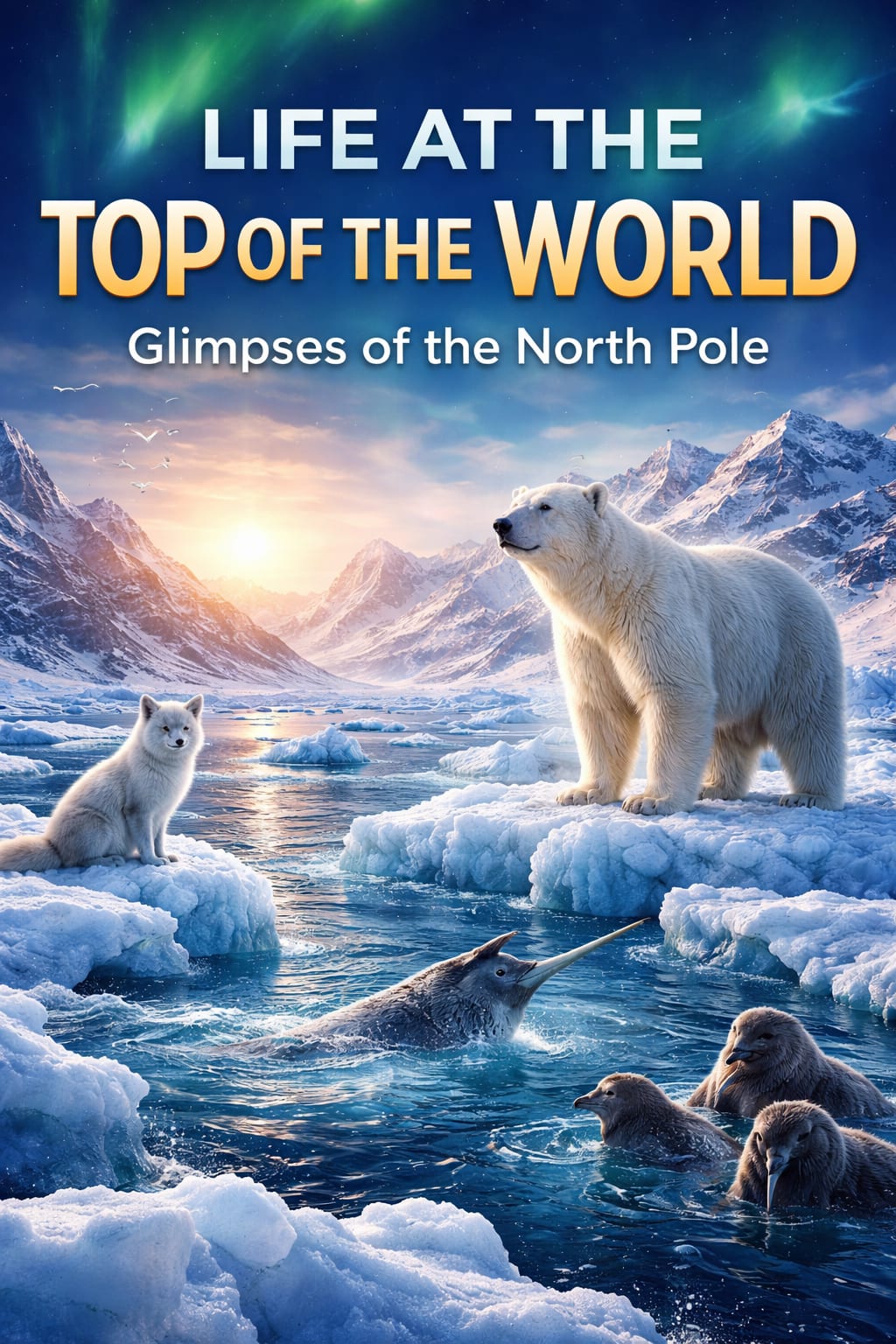
The North Pole is one of the most remote and mysterious places on Earth. Located at the northernmost point of the planet, it lies in the middle of the Arctic Ocean, surrounded by thick sheets of drifting sea ice. Temperatures here can fall far below freezing for most of the year, and for months at a time the region is plunged into darkness during the long polar night. Despite these harsh conditions, the North Pole and the surrounding Arctic region are home to a surprising variety of life. These glimpses of life in one of the world’s most extreme environments reveal the resilience of nature and the delicate balance of Arctic ecosystems.
Unlike Antarctica in the south, which is a landmass covered by ice, the North Pole sits on a floating layer of sea ice. This icy platform constantly shifts and drifts with ocean currents. While the exact geographic North Pole itself has no permanent residents, the broader Arctic region supports diverse wildlife and is closely connected to the lives of indigenous communities living in nearby Arctic territories.
One of the most iconic inhabitants of the Arctic is the polar bear. These powerful predators are perfectly adapted to life in the freezing environment. Their thick layers of fat and dense fur provide insulation against the cold, while their large paws help them move across the ice and swim long distances in icy waters. Polar bears rely heavily on sea ice as a hunting platform, primarily feeding on seals that come up through breathing holes in the ice. As the Arctic climate changes and sea ice melts earlier each year, scientists are closely monitoring the future of these majestic animals.
Another remarkable Arctic resident is the Arctic fox. Much smaller than the polar bear, this resilient animal survives by adapting its fur to seasonal conditions. During winter, its coat becomes thick and pure white, allowing it to blend into the snowy landscape. In summer, the fur changes to a brown or gray shade that matches the rocky terrain. Arctic foxes are opportunistic feeders, consuming birds, fish, small mammals, and even leftovers from polar bear hunts.
Marine life also plays a crucial role in the Arctic ecosystem. Beneath the ice-covered waters live a variety of fish, plankton, and crustaceans that form the foundation of the food chain. These tiny organisms thrive during the Arctic summer when sunlight returns after months of darkness. The sunlight triggers blooms of phytoplankton—microscopic plants that grow rapidly in the cold ocean waters. These plankton support fish populations, which in turn feed seals, whales, and seabirds.
Several species of whales migrate through Arctic waters, including the beluga whale and the narwhal. The narwhal is particularly famous for its long spiral tusk, which can grow up to three meters in length. Scientists believe this tusk may play a role in communication, sensing the environment, or attracting mates. Beluga whales, often called “sea canaries” because of their vocal sounds, are highly social animals that travel in groups through icy channels.
Birdlife is also abundant during the Arctic summer. When temperatures rise and daylight lasts for nearly 24 hours a day, millions of migratory birds travel north to breed. Species such as Arctic terns, snowy owls, and puffins take advantage of the rich feeding grounds. The Arctic tern is especially remarkable—it completes one of the longest migrations of any animal, traveling from the Arctic to Antarctica and back each year.
Human presence near the North Pole is limited, but indigenous peoples such as the Inuit have lived in Arctic regions for thousands of years. They developed deep knowledge of the environment, learning how to hunt, fish, and travel safely across the ice. Traditional practices, including building shelters from snow and navigating icy landscapes, reflect a profound connection between people and the Arctic environment.
Today, scientists from around the world conduct research in the Arctic to better understand climate change and its global impacts. Because the Arctic is warming faster than many other parts of the planet, it has become a critical region for studying environmental changes. Melting sea ice, shifting wildlife patterns, and warming oceans are all signals of transformations that could affect ecosystems far beyond the polar region.
The North Pole may appear empty and frozen at first glance, but a closer look reveals a vibrant and complex world. From powerful polar bears roaming the ice to microscopic plankton drifting beneath it, life continues to adapt and survive in extraordinary ways. These glimpses of life at the top of the world remind us that even in the most extreme environments, nature finds a way to endure.
About the Creator
Irshad Abbasi
Ali ibn Abi Talib (RA) said 📚
“Knowledge is better than wealth, because knowledge protects you, while you have to protect wealth.
Keep reading
More stories from Irshad Abbasi and writers in Earth and other communities.
Global Agreement to Limit Greenhouse Gases Enters into Force
A major step in the global fight against climate change has begun as countries around the world start implementing a landmark agreement designed to limit greenhouse gas emissions. The agreement represents years of negotiations, scientific warnings, and increasing public concern about the growing impacts of global warming on ecosystems, economies, and human life.
By Irshad Abbasi 4 days ago in Earth
Silken Chains
Silhouettes of the female form were given flesh and bone. Silken skin glistened under the spotlight. Dry ice rose around our Icons as they danced atop their podiums in the Square. Heralded for their beauty, their movements were slight, powerful, and sensual.
By Paul Stewart7 days ago in Fiction


Comments
There are no comments for this story
Be the first to respond and start the conversation.