
City of plague:A new Yorker’s pandemic chronicle Pt 10.
The Beauty of Showing Up
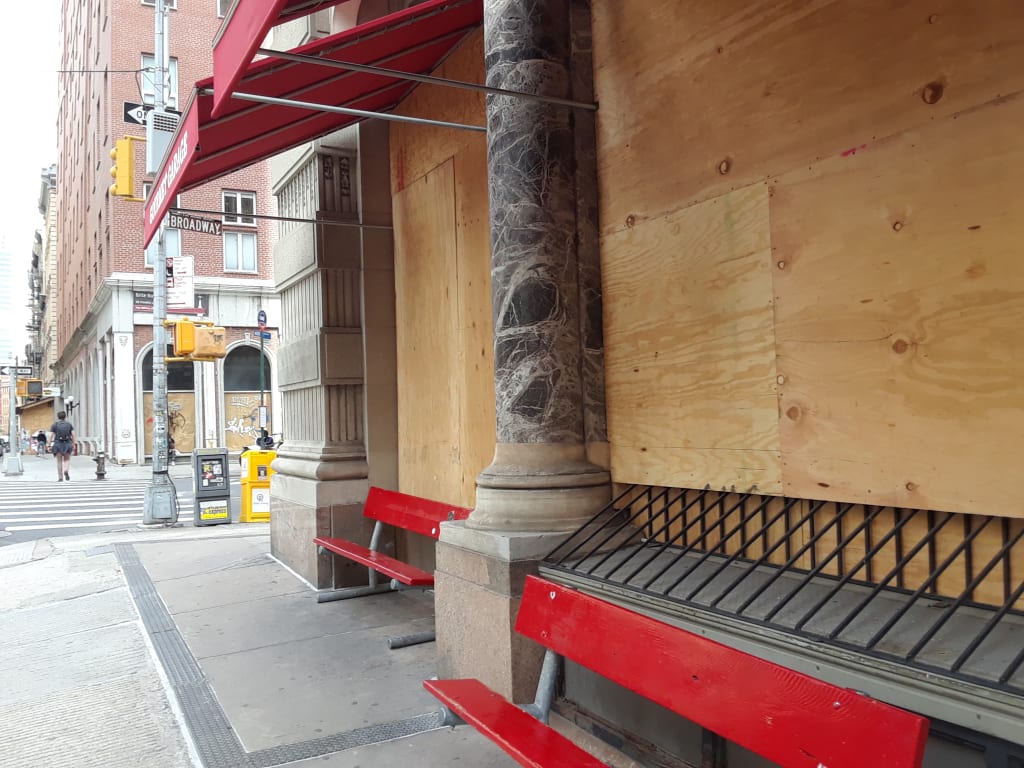
Manhattan, the commercial heart of New York City, had always pulsed with motion. Now it felt like a drained reservoir—cracked, hollow, emptied of life. Traffic lights changed for no one. Storefronts were shuttered. Office towers stood like abandoned fortresses.
City buses continued their routes, but often with only a driver aboard, circling through near-empty streets as if performing a ritual no one had the heart to cancel. Watching them pass gave me a strange ache. They were like arteries pumping through a body that had fallen still. If the city’s blood stopped flowing, what would happen to the rest of us?
The streets were so quiet it seemed even the air hesitated to move. Pigeons—once fearless and plentiful—had disappeared, likely searching for food in outer borough parks. The crowds that had filled sidewalks only days earlier were gone, as though erased overnight.
Distance became the new measure of morality. Six feet. A rule repeated in press briefings, printed in signs, drilled into public consciousness. It was an awkward yardstick—pressed into our chests, hung over our heads, written into policy reports. Even those who resisted it had little choice. To protect yourself was to protect others.
Along with the crowds vanished jobs—livelihoods, savings, plans for the future.
“Kaide, are you afraid?” Ms. Lin asked me one afternoon, just before the citywide stay-at-home order was to begin. Her voice carried a fatigue that hadn’t been there before.
“Of course I’m afraid,” I answered. “But what can fear do? I’m not a doctor. I can’t stop a virus.”
“No one expected it to move this fast,” she said quietly. “Or spread like this.”
What individuals thought hardly mattered now. What government leaders believed—and how they acted—mattered far more. Some officials had appeared calm, even confident. Weeks earlier, they had encouraged New Yorkers to keep living normally—eat at restaurants, see movies, support the economy. With hindsight, that confidence felt unsettling.
Ms. Lin tried to reassure me. “The United States has one of the most advanced healthcare systems in the world,” she said. “That’s probably why they seemed confident.”
I wanted to believe that. Truly, I did.
But doubt lingered.
Then came word from our boss, Jesse. After New York ordered non-essential businesses to close, our company would have to adjust.
Ms. Lin relayed the plan: employees over fifty-five would work from home for their safety. Younger staff would continue on-site, but with major schedule changes—three days a week instead of five, flexible hours, and permission to leave once daily tasks were complete. With most tenants in our building staying home, the workload had dropped anyway.
“That way,” she explained, “you can avoid peak commute hours and reduce exposure.”
I nodded, relieved. Then I asked the question hovering in the air.
“What about our pay?”
Ms. Lin smiled. “Full salary. Jesse said everyone keeps their regular pay.”
I stared at her. “Really?”
“Really.”
In that moment, my perception of Jesse shifted. He wasn’t merely protecting the business; he was protecting us. Generosity during prosperity is easy. Generosity during crisis is character.
Ms. Lin herself would work remotely. As office manager and translator, she could perform her duties from home. Before leaving, she handed me the office keys and walked me through every detail of operations. The responsibility felt heavy—but meaningful.
A week later, infections in New York surged into the tens of thousands. Anxiety became a constant companion. Then Ms. Lin messaged me again: another adjustment. We would now work only two days a week to further reduce risk.
I thanked her repeatedly, almost forgetting to thank Jesse directly. Despite the uncertainty of my subway commute, I felt a surge of warmth. To be valued during a crisis—there is dignity in that.
Then came another offer.
“If you’re uncomfortable taking the subway,” Ms. Lin wrote, “Jesse says you can take a taxi. He’ll reimburse the full fare.”
The generosity stunned me. A daily subway ride cost only a few dollars; a taxi would cost close to a hundred round trip. Still, I declined.
“The subway cars are large and ventilated,” I replied. “Taxis are enclosed spaces. I’ll be careful.”
It wasn’t just practicality. It was pride. I didn’t want fear to dictate every decision.
“Then protect yourself,” Ms. Lin urged. “Be careful.”
Her words lingered with me long after our messages ended.
Those weeks were heavy. Each commute felt like a negotiation with risk. Yet beneath the fear was something else—a quiet conviction that work itself held value beyond income.
To work was to remain connected to purpose.
To show up was to resist paralysis.
To keep the building running—even at half capacity—was to affirm that the city’s pulse had not completely stopped.
In a time when so much beauty had drained from Manhattan’s streets, I began to see beauty elsewhere: in responsibility, in resilience, in small acts of leadership.
Two weeks later, as the darkest days of infection numbers began to plateau, there were faint signs of hope. Ambulance sirens were still frequent, but no longer constant. Conversations shifted from panic to cautious endurance.
The skyline had not moved. The subways still ran. And I was still working.
In a wounded city, showing up became its own kind of grace.
Work, I realized, is beautiful—not because it is easy, but because it anchors us when everything else feels adrift.
About the Creator
Peter
Hello, these collection of articles and passages are about weight loss and dieting tips. Hope you will enjoy these collections of dieting and weight loss articles and tips! Have fun reading!!! Thank you.


Comments
There are no comments for this story
Be the first to respond and start the conversation.