
Rye Market Report: USD 2.0 Billion by 2032 at 2.2% CAGR
Global Rye Market Report: Trends, Segments, and Outlook to 2032

Overview
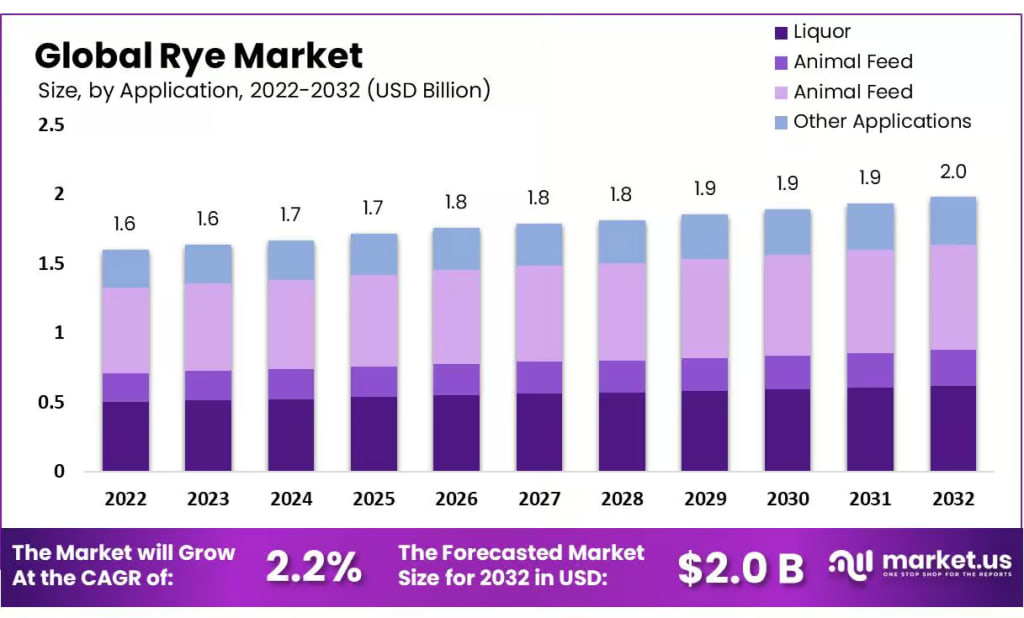
The Global Rye Market was valued at approximately USD 1.6 billion in 2023 and is projected to reach USD 2.0 billion by 2032, expanding at a compound annual growth rate (CAGR) of 2.2% over the forecast period. Rye (Secale cereale) is a hardy cereal grain belonging to the wheat tribe, cultivated widely for both food and forage. Its ability to thrive in harsh winters, sandy or low-fertility soils, drought conditions, and even acidic environments gives it a significant agronomic advantage over many competing grains.
Rye grains — consumed whole or processed — are recognized for their distinctive nutty, earthy flavor and meaningful nutritional profile, including dietary fiber, B vitamins, iron, and magnesium. Rising consumer interest in digestive health, blood sugar management, and diverse whole-grain options continues to drive demand across bakery, beverage, and snack applications.
Key Takeaways
- The Global Rye Market was valued at USD 1.6 billion in 2023 and is projected to reach USD 2.0 billion by 2032, at a steady CAGR of 2.2% during the forecast period.
- Bakery products held the largest segment share at 38.6% in 2022, led by rye-based breads, rolls, pastries, and muffins.
- Supermarkets and hypermarkets were the leading distribution channel with a 40.1% share in 2022.
- Retail stores (including online platforms) accounted for 35.7% of distribution, boosted by rising e-commerce and better logistics.
- Europe dominated the global rye market with a 33.5% share in 2022.
By Application
Bakery products led the market in 2022 with a 38.6% share. Rye flour's hearty flavor, lower gluten content relative to wheat, and nutritional density make it well-suited for breads, rolls, pastries, and muffins — both in artisanal settings and mainstream retail. Cultural significance across many European regions further anchors this segment's dominance.
The liquor segment held the second-largest share at 31.3%. Rye's spicy, earthy character lends itself naturally to premium whiskeys and vodkas, with its compatibility with oak barrel aging contributing to refined spirit profiles. Growing interest in craft distilleries and the resurgence of classic rye-based cocktails have both accelerated this segment.
Animal feed and plant-based applications — including rye milk and nutritional supplements — round out the remaining market, with rye's hardiness and nutrient density supporting its use in sustainable livestock farming and functional food products.
By Distribution Channel
Supermarkets and hypermarkets dominated distribution in 2022 with a 40.1% share, benefiting from wide product range, convenience, competitive pricing, and effective promotional strategies. Retail stores — including online platforms — accounted for 35.7%, driven by growing e-commerce adoption and improved cold-chain logistics that help maintain product freshness.
Regional Breakdown
Europe led all regions in 2022 with a 33.5% market share. Centuries of rye cultivation have produced specialized agronomic expertise, and the crop's resilience in temperate climates makes it a natural fit for the continent's farming conditions. Rye holds deep cultural significance across Northern and Eastern European food traditions.
Asia-Pacific followed as the second-largest region at 28.5%, driven by population growth, shifting dietary preferences in China and India, and the incorporation of rye into local staples such as bread and noodles. Favorable trade agreements have also improved supply chain efficiency across the region.
Industry Developments
Several major players have recently advanced their rye-focused strategies:
- Puratos Group is leveraging its Sapore sourdough line to analyze rye's flavor contribution to whole-grain and ancient grain breads through "Taste Tomography" research, helping commercial bakers optimize rye's fermented character for clean-label products.
- Bob's Red Mill has expanded its organic and non-GMO whole grain rye range, with consumer education on rye's fiber content and home baking applications as a central focus.
- Bay State Milling is sourcing rye as a regenerative cover crop through its GOOD MILLING program, building a traceable, sustainable supply chain for identity-preserved rye flour aimed at eco-conscious commercial bakers.
- King Arthur Baking Company has launched new rye baking guides and recipes under its "Bake for Good" initiative, promoting organic pumpernickel and medium rye flours to the growing artisan home baking segment.
- GoodMills Group has introduced high-performance rye mixes through its CraftMills segment, enabling industrial bakeries to produce authentic rye bread at scale with improved volume, softness, and shelf life — without sacrificing clean-label standards.
Outlook
The rye market is positioned for steady, sustained growth through 2032. Its versatility across bakery, spirits, animal nutrition, and emerging plant-based categories — combined with strong alignment to consumer trends around health, sustainability, and whole-grain diversity — supports a positive long-term outlook. As both artisan and industrial food producers continue to invest in rye innovation, the grain's role in the global food system is likely to deepen.
About the Creator
Hayden Kulas
I am blogger, digital marketing pro since 5 years and writes for Market.us. Computer Engineer by profession. I love to find new ideas that improve websites' SEO. He enjoys sharing knowledge and information about many topics.
Keep reading
More stories from Hayden Kulas and writers in Futurism and other communities.
Alternative Fuels Market Insights: USD 688.2 Billion by 2034
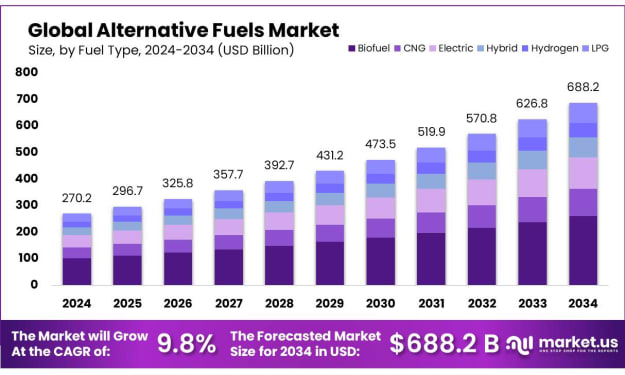
Overview The Global Alternative Fuels Market is on a strong growth trajectory, projected to expand from USD 270.2 billion in 2024 to USD 688.2 billion by 2034, representing a compound annual growth rate of 9.8% over the forecast period. North America currently leads the market, accounting for a 43.2% share of global revenue in 2024.
By Hayden Kulas4 days ago in Futurism
APAC Creator Economy Market to hit USD 390.7 Billion By 2034
APAC Creator Economy Market Overview The Asia Pacific Creator Economy Market is projected to reach approximately USD 390.7 Billion by 2034, increasing from USD 41.6 Billion in 2024, reflecting a strong CAGR of 25.1% during the forecast period from 2025 to 2034.
By Roberto Crum2 days ago in Futurism
The Refactor Command in Claude: Code 8 Underrated Tricks I Wish I Knew on Day One
I remember the exact moment I realized I’d been using Claude Code all wrong. It was 1:13 a.m., my third cup of coffee was going cold, and I was staring at a function so bloated it should’ve come with its own zip code. I typed a desperate prompt into Claude about “cleaning this up” and expected the usual: some polite suggestions, maybe a renamed variable or two.
By abualyaanart5 days ago in Futurism



Comments
There are no comments for this story
Be the first to respond and start the conversation.