
The 71% Secret: What a Rogue Battery Swap Reveals About the Future of Foldables
Why Samsung’s most ambitious device is falling behind on power—and how a simple chemistry shift changes everything.

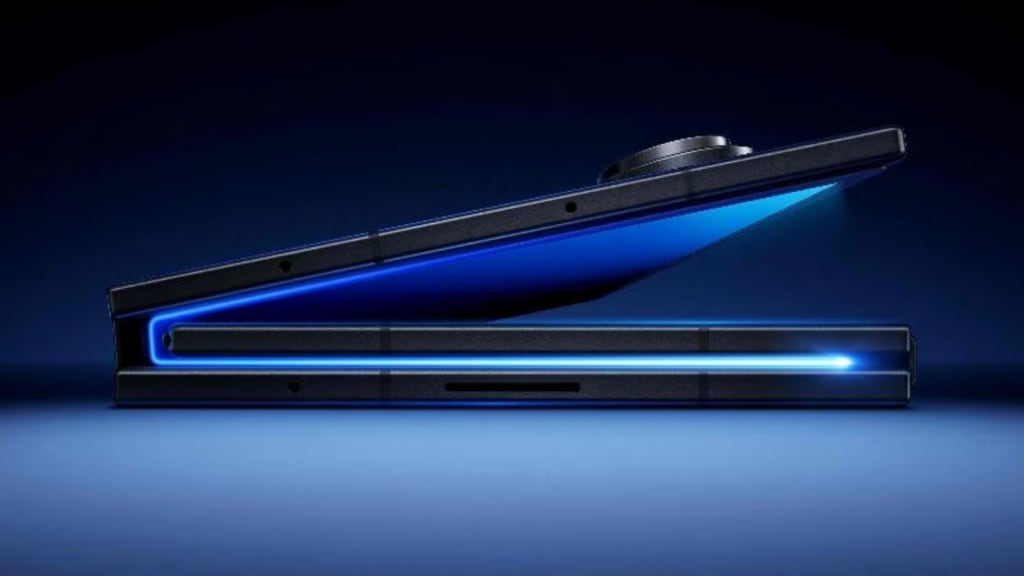
1. Introduction: The Foldable Power Paradox
When Samsung unveiled the Galaxy Z TriFold last December, it was hailed as a masterclass in hinge engineering and ambitious industrial design. Yet, beneath that expansive, three-paneled display sat a specification that felt surprisingly timid: a modest 5,600 mAh battery.
In a 2026 mobile landscape where standard slabs are pushing higher limits and rival foldables are already crossing the 6,000 mark, Samsung’s choice feels like playing it safe in a category that demands radicalism. Why would the most advanced device in the lineup settle for less endurance than its peers? The answer isn’t found in the device's physical dimensions, but in the conservative chemistry of the cells hidden inside.
2. Takeaway 1: The Chemistry Gap (Lithium-Ion vs. Si/C)
The primary tension in mobile hardware today is the brutal struggle between energy density and physical volume. While the industry is sprinting toward the future, Samsung remains tethered to traditional lithium-ion technology for its current foldable fleet.
This refusal to evolve fundamentally dictates the limits of what a Galaxy device can achieve. Meanwhile, aggressive Chinese manufacturers have pivoted to silicon-carbon (Si/C) batteries, a move that allows them to effectively bypass the physical constraints of older chemistry.
"These cells store more energy in the same physical space."
By clinging to traditional lithium-ion, Samsung is effectively leaving performance on the table. They are forcing a trade-off between device thickness and battery life that their competitors have already begun to ignore.
3. Takeaway 2: The "Strange" 71% Breakthrough
To see just how much potential is being squandered, the team at Strange Parts conducted a rogue experiment that serves as a wake-up call for the engineering giants in Suwon. They bypassed official channels to see what happens when you pair Samsung’s elite hardware with the competition’s superior chemistry.
The team sourced Si/C batteries originally intended for Honor devices and modified them to fit the TriFold’s internal cavities. The results were a total paradigm shift for the hardware footprint:
Original Capacity: 5,600 mAh
Modified Capacity: 9,600 mAh
Total Increase: 71%
The insanity of this jump is that it required no extra bulk and no thicker chassis—just pure chemical efficiency. It proves that the bottleneck isn't the physical size of the phone; it is a self-imposed ceiling created by Samsung's choice of technology.
4. Takeaway 3: Honor’s Thin-and-Powerful Blueprint
While Samsung stays conservative, Honor has provided a blueprint for balancing high-end aesthetics with raw power. The recently unveiled Honor Magic V6 serves as the primary case study for the Si/C advantage in the current market.
Despite its remarkably slim foldable body, the Magic V6 packs a 6,600 mAh Si/C battery. By adopting this chemistry early, Honor has gained a strategic lead in hardware efficiency, proving that "ultra-thin" no longer has to be a synonym for "low endurance."
"The shift to silicon-carbon cells creates room for bigger batteries without thicker designs."
This proactive adoption highlights a growing divide in the 2026 market. While one brand focuses on refined, traditional reliability, the other is leveraging chemical engineering to redefine the physical limits of the smartphone.
5. Takeaway 4: The 2026 Competitive Crossroads
As foldables transition from niche luxuries to mainstream workhorses, battery chemistry is emerging as the ultimate differentiator. This unofficial modification reveals a broader truth: Samsung’s conservatism is likely a calculated play for long-term cell stability and supply chain safety—a lingering ghost of past battery failures—whereas Chinese brands are using Si/C to win the spec war.
However, in 2026, where massive, high-refresh-rate screens demand more juice than ever, this strategic gap is becoming impossible to ignore. The difference between 5,600 mAh and 9,600 mAh isn't just a stat on a sheet; it is the difference between a device that barely survives the workday and one that thrives for forty-eight hours of heavy use.
6. Conclusion: A Question of Strategy
The rogue battery swap on the Galaxy Z TriFold has exposed the most significant open secret in mobile engineering. Hardware design is no longer the primary factor holding back the "all-day" foldable; the choice of chemistry is the only thing standing in the way.
Samsung’s 5,600 mAh limit is a strategic choice, not a physical necessity. As we move further into the year, the question for the consumer is simple: Would you prefer the official brand reliability of yesterday's technology, or are you ready to demand the 71% capacity boost that cutting-edge chemistry clearly offers?
About the Creator
Tech Horizons
Exploring the future of technology, AI, gadgets, and innovations shaping tomorrow. Stay updated with Tech Horizons!
Keep reading
More stories from Tech Horizons and writers in Futurism and other communities.
The Future is Here, But Is It Ready for Us? 5 Surprising Realities of the Samsung Galaxy S26 Era
It is March 2026, and the annual "flagship fever dream" has reached its peak with the arrival of the Samsung Galaxy S26 series and the Tab S11. As these devices migrate from the glossy renders of keynote presentations to the pockets of early adopters, we are reminded of a fundamental truth in tech: every leap forward creates a ripple in the opposite direction. While we chase the horizon of the "ultimate" device, the reality of the S26 era is defined as much by its brilliant innovations as it is by its unexpected hardware quirks and the inevitable trade-offs of engineering at the edge of possibility.
By Tech Horizons4 days ago in Futurism
Castor Oil Market in 2026: Global Supply Chains, Trade Disruptions, and the Impact of Geopolitical Conflicts
Castor Oil Market in 2026: Navigating Global Conflict and Market Shifts The castor oil market has long been an essential part of the global industrial and agricultural ecosystem. Extracted from castor seeds, castor oil is widely valued for its unique chemical composition and versatility. It is used in a wide range of applications including pharmaceuticals, cosmetics, lubricants, coatings, plastics, and bio-based chemicals.
By James Smith2 days ago in Futurism
TUS NUA - ch 53
TUS NUA – ch 53 New Beginnings – Mia and Midnight (*)(*)(*) Finola knew Ali’s brother-in-law needed to put his mind at rest. She fed her arm through his and led him outside. “We’ll sit here. If you like, I can put a block around us so our conversation will be private.”
By Margaret Brennan4 days ago in Fiction




Comments
There are no comments for this story
Be the first to respond and start the conversation.