
Ancient Egyptian Tomb Unearthed: 3,000-Year-Old Remains of Four Children Discovered
Archaeologists uncover remarkably preserved mummies, shedding new light on ancient Egyptian funerary practices and childhood life.

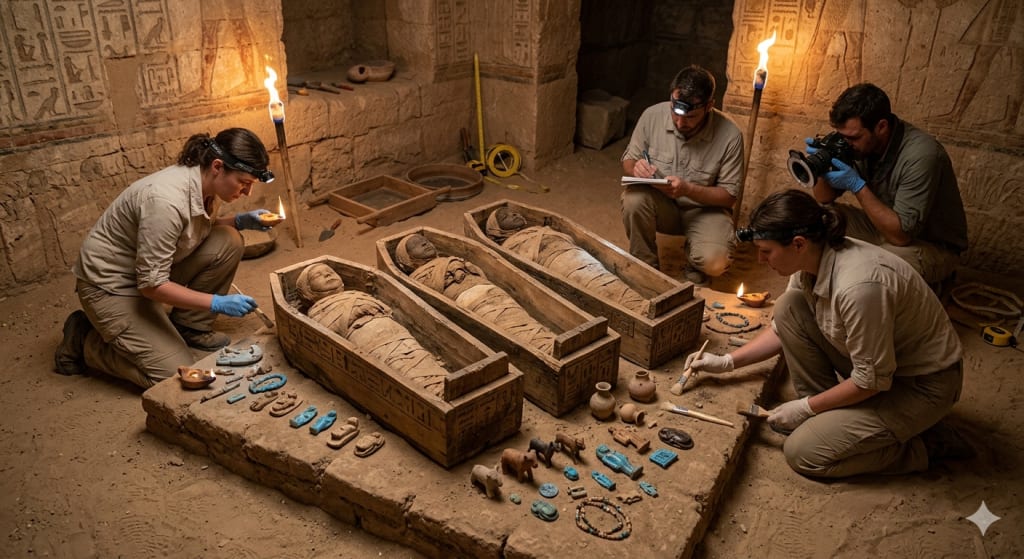
In a remarkable archaeological discovery in Egypt, researchers have uncovered the mummified remains of four children dating back nearly 3,000 years. The find, located in the southern region of Luxor, offers a rare glimpse into the lives, deaths, and funerary customs of young Egyptians during the New Kingdom period.
The excavation, carried out by a team of Egyptian archaeologists in collaboration with international experts, revealed the children buried together in a single tomb. According to preliminary assessments, the ages of the children ranged between five and ten years old, suggesting they may have been siblings or members of the same community. Their mummies were found carefully wrapped in linen and placed in wooden coffins adorned with simple yet intricate carvings, a practice indicative of the period’s funerary traditions.
Dr. Nabil Farag, the lead archaeologist on the project, expressed astonishment at the condition in which the remains were found. “Despite being over 3,000 years old, the mummies are remarkably well-preserved,” he said. “This allows us to study not only their physical features but also the methods and rituals involved in preparing children for the afterlife.”
Analysis of the burial site suggests that the children may have belonged to a family of modest means. Unlike royal tombs, which are often richly decorated with gold and elaborate hieroglyphics, the coffins here are relatively simple, yet they display careful craftsmanship and symbolic protective motifs. These include images of protective deities and prayers intended to safeguard the children on their journey to the afterlife, reflecting the deeply spiritual nature of Egyptian society.
The discovery also provides insights into childhood in ancient Egypt. Through the examination of teeth and bones, researchers can estimate the health, nutrition, and even the daily activities of the children. Preliminary studies indicate that while the children had access to sufficient nutrition, signs of minor illnesses and injuries were present, highlighting the challenges faced by young Egyptians even in prosperous periods.
Another intriguing aspect of the find is the assortment of funerary objects buried alongside the children. Small amulets, charms, and toys were found inside the coffins, suggesting that Egyptians believed these items would provide comfort and protection in the afterlife. Such artifacts offer scholars valuable information about the symbolic and emotional world of children in ancient Egyptian culture.
Experts are also investigating the cause of death for each child. While natural causes such as illness or malnutrition cannot be ruled out, forensic analysis may reveal more about potential diseases or environmental factors that affected child mortality rates in that era. “Every discovery like this enriches our understanding of daily life and social structures in ancient Egypt,” noted Dr. Farag.
This recent excavation adds to Egypt’s growing list of remarkable archaeological finds, reaffirming the country’s reputation as a treasure trove of ancient history. The Luxor region, often referred to as the world’s greatest open-air museum, continues to yield discoveries that challenge our assumptions about life in antiquity, from royal tombs to humble family burials.
In addition to its historical significance, the find is expected to bolster cultural tourism in Egypt. Authorities have emphasized the importance of preserving the site while providing the public with educational opportunities about ancient Egyptian civilization. Plans are underway to document the mummies digitally and potentially create exhibits that allow visitors to explore the intricacies of burial practices and the lives of children in the New Kingdom period.
The discovery of these four child mummies underscores the universality of human experiences such as family, loss, and the desire for remembrance. Thousands of years later, the children’s story resonates across time, connecting modern viewers to the daily realities and spiritual beliefs of a civilization long past but still vividly present in Egypt’s archaeological landscape.
As researchers continue to study the mummies, further revelations are expected to emerge, shedding light on health, rituals, and social life in ancient Egypt. Each find not only enriches our understanding of the past but also highlights the meticulous care and spiritual devotion that defined one of the world’s most fascinating civilizations.
About the Creator
Irshad Abbasi
Ali ibn Abi Talib (RA) said 📚
“Knowledge is better than wealth, because knowledge protects you, while you have to protect wealth.
Keep reading
More stories from Irshad Abbasi and writers in History and other communities.
🐊 Ancient Egyptian Crocodile Discovery Astonishes Experts
In a remarkable scientific and archaeological breakthrough, researchers studying fossils and ancient remains in Egypt have uncovered new evidence that is rewriting parts of reptile evolutionary history and providing fresh insights into how ancient Egyptians interacted with and revered crocodiles. This remarkable finding, which links cutting‑edge paleontology with ancient cultural practices, has captured the attention and curiosity of experts around the world.
By Irshad Abbasi 2 days ago in History



Comments
There are no comments for this story
Be the first to respond and start the conversation.