
Saddam Hussein: The Final Hours of Iraq’s Iron Leader
From the Golden Palace to the Gallows: The Human Complexity of a Dictator’s End

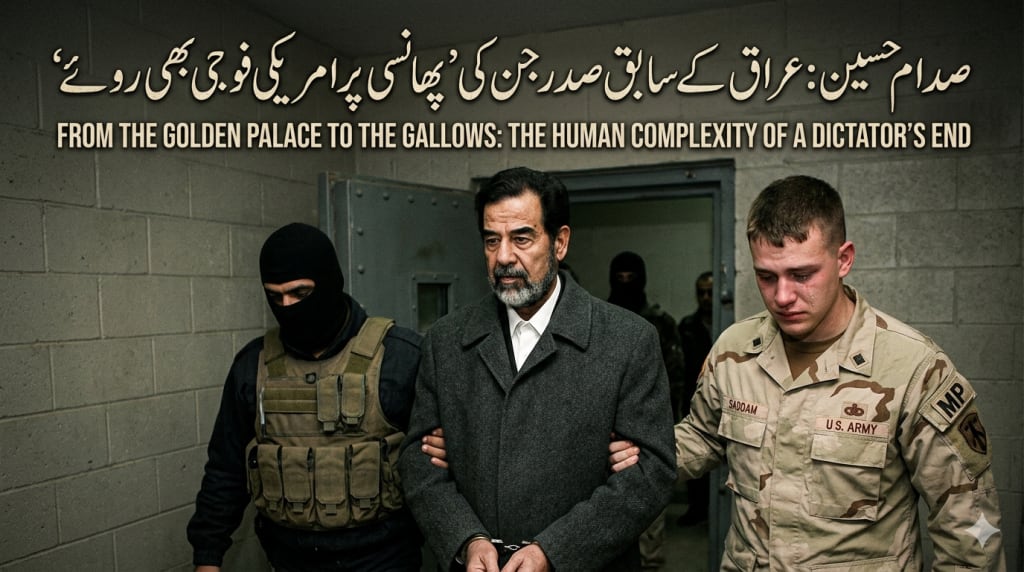
The history of the 21st century has few images as stark as the fall of Saddam Hussein. For decades, he was the "Lion of Babylon," a man whose portrait hung in every office and whose shadow loomed over every street in Iraq. However, the narrative of his final moments—specifically the claim that even his American jailers wept during his execution—reveals a haunting layer of human complexity often lost in the geopolitical discourse of war and regime change.
The Captive and the Guardians
After his capture in a "spider hole" near Tikrit in December 2003, Saddam was placed under the supervision of the 511th Military Police Company, a group of American soldiers who came to be known as "The Super Twelve." Their mission was straightforward: keep the high-value detainee alive and healthy for trial.
What followed was an unexpected psychological shift. In the confines of a prison cell, the man who had ordered the deaths of hundreds of thousands became a grandfatherly figure to his guards. He shared stories of his childhood, offered advice on marriage and exercise, and even developed a fondness for American snacks like Doritos. To the soldiers, he was no longer the "Butcher of Baghdad"; he was a human being with a sense of humor and a surprising amount of dignity.
The Midnight Walk to the Gallows
On December 30, 2006, the Eid al-Adha holiday, the order for execution was finalized. When the time came for the American soldiers to hand Saddam over to the Iraqi authorities, the atmosphere was thick with tension and uncharacteristic grief.
Reports from those present, including memoirs from the guards, suggest that several of the American soldiers were visibly moved. Having spent months protecting him, they found it difficult to reconcile the "man in the cell" with the "monster on trial." As Saddam prepared for his end, he remained remarkably calm, refusing a hood and reciting the Shahada (the Islamic declaration of faith) with a steady voice.
> "He was dignified to the end," one former guard later noted. "He didn't scream, he didn't beg. Seeing a man face death with that kind of composure... it stays with you."
> A Controversial Legacy
The execution itself was chaotic. Leaked cell phone footage showed Iraqi officials and onlookers taunting Saddam in his final seconds, shouting the name of his rival, Moqtada al-Sadr. In contrast to the dignity Saddam attempted to maintain, the surrounding environment appeared vengeful and disorganized.
This contrast fueled the narrative that Saddam had "won" the moral battle of the execution room, even as he lost his life. For his supporters, and even some critics, the undignified nature of the hanging—and the genuine sadness shown by his American captors—transformed him from a fallen tyrant into a martyr of Western intervention.
The Impact on the Guards
The emotional toll on the "Super Twelve" was significant. Many returned to the United States struggling to process the bond they had formed with a man the world had labeled pure evil. Their tears weren't necessarily for the dictator's crimes, but for the loss of a human connection forged in the strangest of circumstances. It serves as a profound reminder that even in the theater of war, the lines between "enemy" and "friend" can become dangerously blurred through proximity.
Summary of the Final Moments
| Aspect | Observation
| Demeanor | Calm, stoic, and prayerful. |
| Last Words | The Shahada and a call for Iraqi unity. |
| Guard Reaction | Several American MPs reported feeling a sense of loss and somberness. |
| Public Reception | Polarized; celebrated by many, but viewed as a "sectarian execution" by others. |
Saddam Hussein's life was defined by absolute power and brutal repression. Yet, his death remains a study in human psychology—proving that even at the gallows, the human spirit can evoke empathy from the most unlikely of sources.
About the Creator
Irshad Abbasi
Ali ibn Abi Talib (RA) said 📚
“Knowledge is better than wealth, because knowledge protects you, while you have to protect wealth.
Keep reading
More stories from Irshad Abbasi and writers in History and other communities.
The Transformation of Saddam Hussein’s Basra Palace
For decades, the sprawling palatial complexes of Saddam Hussein were synonymous with fear, exclusion, and the absolute grip of a dictator. Built with opulent marble, intricate carvings, and vast artificial lakes during times of extreme economic hardship for the Iraqi people, these structures were forbidden zones—monuments to an ego that loomed over the Tigris and Euphrates. Today, however, one of these former bastions in the southern port city of Basra has undergone a radical metamorphosis. What was once a lakeside fortress for a tyrant has been reborn as the Basra Museum, a premier cultural institution dedicated to preserving Iraq’s 5,000-year-old history.
By Irshad Abbasi a day ago in History
The Year 1975 in Review: Fun Facts, Trivia, and Historic Highlights
This quick read is a collection of fun facts, trivia, and historical events from the year 1975. Discover the year’s top news stories, most influential people, sports facts, computer history, entertainment trivia, and much more.
By Gregory DeVictor4 days ago in History



Comments
There are no comments for this story
Be the first to respond and start the conversation.