
The Colonial Powerhouse: Quetta’s British-Era Grid Station
A look into the historic electrical infrastructure built during British rule that helped power the growth of Quetta and shaped the city’s early modernization.

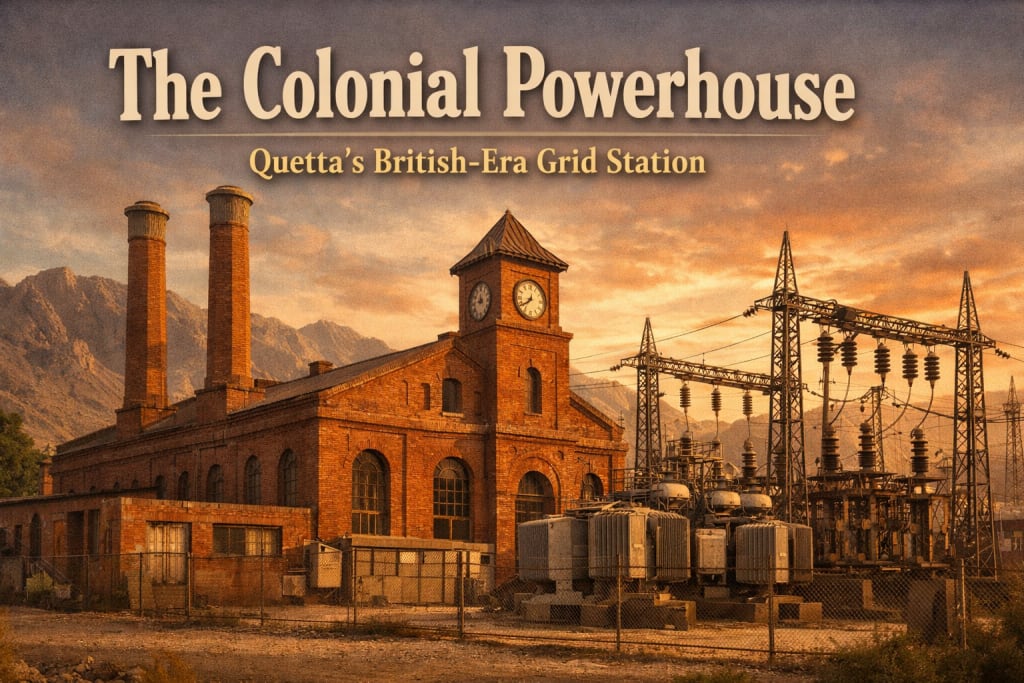
The city of Quetta, often called the “Fruit Garden of Pakistan,” has a long and fascinating history shaped by trade, culture, and colonial influence. Among the lesser-known historical structures of the city is a British-era grid station that once played a crucial role in supplying electricity to the region. Built during the period of British colonial rule in the Indian subcontinent, this early electrical facility reflects a time when modern infrastructure was beginning to transform cities like Quetta.
During the late nineteenth and early twentieth centuries, the British administration invested heavily in infrastructure across the region that was then part of British India. Railways, telegraph lines, roads, and electrical systems were developed to support military operations, administration, and urban development. Because of its strategic location near the borders of Afghanistan and Iran, Quetta became a key military and administrative hub for the British Empire. This importance led to the construction of various facilities, including cantonments, communication networks, and early power stations.
The British-era grid station in Quetta was built to meet the growing demand for electricity in the city and surrounding cantonment areas. At a time when electricity was still a relatively new technology in South Asia, such installations represented cutting-edge infrastructure. The facility helped power government buildings, military installations, railway stations, and later residential neighborhoods.
The design and architecture of the grid station reflected typical colonial engineering standards. British engineers focused on durability, efficiency, and practicality. Thick brick walls, large ventilation openings, and sturdy steel structures were used to house transformers, generators, and electrical equipment. Many such buildings across former British territories still stand today because of the quality of materials and construction methods used.
Electric power was vital to the modernization of Quetta. Street lighting, administrative offices, telecommunication systems, and railway operations all depended on reliable electricity. The presence of the grid station allowed the city to gradually expand its infrastructure and services. Markets stayed open later, public offices operated more efficiently, and communication systems became more reliable.
However, Quetta’s development faced a major setback during the devastating 1935 Quetta Earthquake. The powerful earthquake destroyed much of the city and caused widespread loss of life. Many buildings, including infrastructure facilities, were severely damaged. In the years that followed, the British administration undertook extensive reconstruction efforts. During this rebuilding phase, several facilities—including electrical installations—were repaired, upgraded, or rebuilt to restore essential services.
Over time, technological advancements transformed the electricity system in Pakistan. After the creation of Pakistan in 1947, new power plants and transmission networks were established across the country. Modern grid stations gradually replaced older facilities built during the colonial period. Nevertheless, some British-era structures survived and continued to operate for decades, serving as reminders of the early stages of electrification in the region.
Today, the historic grid station in Quetta is not just an engineering structure; it represents a piece of the city’s heritage. For historians and urban researchers, such sites provide insight into how colonial powers developed infrastructure in strategic cities. They also illustrate the technological progress that transformed everyday life in South Asia during the twentieth century.
Unfortunately, many historic industrial structures receive little attention compared to monuments, forts, or religious buildings. As cities expand and modern infrastructure replaces old facilities, some of these colonial-era sites face the risk of neglect or demolition. Preservation experts argue that such structures should be documented and, where possible, preserved as part of the region’s architectural and technological history.
The British-era grid station in Quetta stands as a silent witness to more than a century of change. From the days when electricity was a rare luxury to the modern era of advanced power networks, the facility symbolizes the evolution of energy infrastructure in the region. It also reminds us that behind every modern city lies a history of innovation, engineering, and adaptation.
As Quetta continues to grow and modernize, remembering and preserving such historical landmarks can help future generations understand how the city developed. The old grid station may no longer be the backbone of Quetta’s power supply, but its legacy remains an important chapter in the story of the city’s journey toward modernization.
About the Creator
Irshad Abbasi
Ali ibn Abi Talib (RA) said 📚
“Knowledge is better than wealth, because knowledge protects you, while you have to protect wealth.
Keep reading
More stories from Irshad Abbasi and writers in History and other communities.
Umerkot: The Historic City Where Courage and Romance Live On
In the southeastern region of Sindh lies the historic city of Umerkot, a place where history, bravery, and romance blend together to create a unique cultural heritage. Surrounded by desert landscapes and ancient traditions, Umerkot has witnessed some of the most fascinating moments in the history of the subcontinent. From royal births to legendary love stories, the city holds a special place in the hearts of historians, poets, and travelers alike.
By Irshad Abbasi a day ago in History
The Year 2012 in Review: Fun Facts, Trivia, and Historic Highlights
This quick read is a collection of fun facts, trivia, and historical events from the year 2012. Discover the year’s top news stories, most influential people, sports facts, historic firsts, entertainment trivia, and much more.
By Gregory DeVictor4 days ago in History
A Transparent Look at Vocal Challenges and Top Stories
Almost three years ago, we shared a resource article that served as a place for people to suggest new challenge prompts. We thought it would be a good idea to refresh that thread, and take the opportunity to answer a few common questions about top stories, how challenges are judged and how submissions are reviewed.
By Vocal Curation Teamabout 18 hours ago in Resources




Comments
There are no comments for this story
Be the first to respond and start the conversation.