
The Year 1916 in Review: Fun Facts, Trivia, and Historic Highlights
This quick read is a collection of fun facts, trivia, and historic events from the year 1916.
This quick read is a collection of fun facts, trivia, and historic events from the year 1916. Discover the year’s top news stories, most influential people, sports trivia, grocery prices, entertainment news, and much more.
- In 1916, Woodrow Wilson was the 28th president of the United States, and Thomas R. Marshall was the nation’s 28th vice president.
- The U.S. unemployment rate was 5.1%, and the nation’s inflation rate was 7.7%.
- Adjusted for inflation, $1.00 in 1916 is equivalent in spending power to about $30.00 today.
- At the grocery store, bacon cost 12 cents a pound, fig bars were 10 cents for a one-pound package, and mincemeat was 39 cents for a three-gallon pail. Eggs were 20 cents a dozen, Brussels sprouts cost 10 cents a quart, and Florida oranges were 25 cents a dozen.
- American companies and brands established in 1916 included the Boeing Company, Federal Premium Ammunition, Oxxford Clothes, Sinclair Oil, and Wegmans Food Markets, Inc.
- January 24: In Browning, Montana, the temperature dropped from 44°F to −56°F in one day. It was the greatest temperature change ever recorded in a single day in the U.S. up until that time.
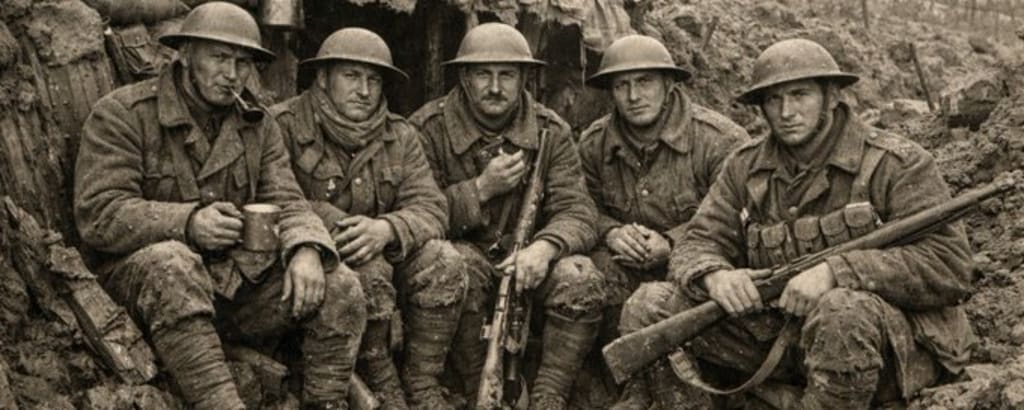
- World War I: On February 21, the Battle of Verdun began in France. According to Britannica.com, over the next 10 months, the French and German armies suffered over 700,000 casualties, including 300,000 deaths. By the battle’s conclusion, entire French villages had been wiped from the map. “More than a century after the battle’s conclusion, over 10 million shells remained in the soil around Verdun, and bomb-clearing units continued to remove some 40 tons of unexploded munitions from the area annually.”
- On April 20, the Chicago Cubs played their first MLB game at Weeghman Park, beating the Cincinnati Reds 7-6 in 11 innings. Weeghman Park later became known as Wrigley Field.
- World War I: On April 30, Germany introduced daylight saving time as a wartime measure to save fuel.
- World War I: On May 17, Great Britain introduced daylight saving time to conserve energy resources.
- World War I: On May 31, the British and German fleets met 60 miles off the coast of Jutland, Denmark, “in the war’s only major encounter between the world’s two largest sea powers.”
- World War I: On July 1, the First Battle of the Somme began in France. According to Britannica.com, the British offensive was intended to draw German attention from Verdun. July 1 marked the bloodiest day in the history of the British Army, with nearly 20,000 soldiers killed in action. By the time the Somme campaign came to an end some four and a half months later, the combined casualties of both sides topped 1,000,000.
- On July 22, a bomb exploded on Market Street in San Francisco during a Preparedness Day parade, killing 10 and injuring 40. (The Preparedness Movement “argued that the United States needed to build up its military strength to defend its interests and potentially deter conflict” and also “advocated American entry into World War I.”)
- World War I: On July 30, German agents “set off a series of explosions at a munitions depot in Jersey City, New Jersey. The Black Tom explosion was an act of sabotage during World War I to prevent the U.S. from supplying munitions to the Allies in Europe.”
- On August 25, President Wilson signed legislation creating the National Park Service.
- On September 1, Congress passed the Keating–Owen Act, the first federal law to restrict child labor.
- On November 1, the first 40-hour workweek in the U.S. began at the Endicott-Johnson factories in western New York. (Just so you know, Endicott-Johnson was a successful shoe manufacturer for many years.)
- November 7: In the 1916 presidential election, incumbent Democratic President Woodrow Wilson “narrowly” defeated Charles E. Hughes, the Republican candidate.
- On November 7, Republican Jeannette Rankin of Montana became the first woman elected to the U.S. House of Representatives.
- On December 31, the five-story, 300-room Hampton Terrace Hotel in North Augusta, South Carolina, one of the most luxurious hotels in the U.S. at the time, was destroyed by a fire.
- In 1916, an estimated 2,223 Americans died in mining-related accidents.
- The United States had an estimated 254,000 miles of railroad tracks from coast to coast.
- Electric refrigerators went on sale for $900—which is equivalent in purchasing power to about $26,500 today.
- Polish immigrant Nathan Handwerker “started a nickel hot dog stand on Coney Island with a $300 loan from two friends and his wife's secret spice recipe.” It became known as Nathan’s of Coney Island.
- Kellogg’s All-Bran breakfast cereal and Domino sugar first appeared in the marketplace.
- Sir Hiram Maxim, an American-born inventor, passed away. His hundreds of inventions included a hair-curling iron, a mousetrap, and a machine gun.
- Other famous people who died in 1916 were Alice Ball (chemist), Henry James (novelist), Hetty Green (entrepreneur), Jack London (author), James Whitcomb (children’s author), and Richard Harding Davis (novelist).
- Popular music artists included the American Quartet, Henry Burr, Albert Campbell, Enrico Caruso, Arthur Collins, Arthur Fields, Charles Harrison, Al Jolson, Charles King, Harry Macdonough, Billy Murray, the Peerless Quartet, Prince’s Orchestra, the Taylor Trio, and the Victor Military Band.
- America’s best-loved songs were Somewhere a Voice Is Calling (John McCormack), Pretty Baby (Billy Murray), and I Sent My Wife to the Thousand Isles (Al Jolson).
- Popular movies included 20,000 Leagues Under the Sea, Behind the Screen, Hell’s Hinges, One A.M., Police, Snow White, The End of the World, The Floorwalker, The Pawnshop, The Rink, and The Vagabond.
- In 1916 as well, the words "bakeware," "bathing beauty," "belly laugh," "big boy," "birdbrain," "birth control pill," "blimp," "blood group," "body clock," "boot camp," "bozo," "broadscale," "bunny suit," and "byline" all appeared in print for the first time.
- Boston Marathon winner: Arthur Roth
- Kentucky Derby winner: George Smith
- NCAA football champions: University of Pittsburgh
- Stanley Cup champs: Montreal Canadiens
- U.S. Open Golf: Chick Evans
- U.S. Tennis (men/women): Richard Norris Williams/Molla Bjurstedt
- World Series champions: Boston Red Sox
References:
- https://popculturemadness.com/1916-history-trivia-and-fun-facts/
- https://www.merriam-webster.com/time-traveler/1916
- https://www.flickchart.com/charts.aspx?year=1916
- https://playback.fm/charts/top-100-songs/1916
- https://www.infoplease.com/year/1916
- https://en.wikipedia.org/wiki/1916_in_the_United_States
- https://www.famousbirthdays.com/year/1916.html
- https://www.foodreference.com/html/html/food-timeline-1916.html
- https://www.onthisday.com/events/date/1916
- https://www.mclib.info/Research/Local-History-Genealogy/Historic-Prices/Historic-Prices-1910s/Historic-Prices-1916
- https://www.britannica.com/list/timeline-of-world-war-i
Disclaimer: In writing and editing this article, Gregory DeVictor has made every effort to ensure historical accuracy and not to mislead his audience. In addition, the contents of this article, including text, graphics, and captions, are for general informational purposes only.
© 2026 Gregory DeVictor
About the Creator
Gregory DeVictor
Gregory DeVictor is a trivia buff who writes articles about American history and nostalgia. He focuses on historic firsts, pop culture snapshots, and sports milestones and has written over 250 articles that are categorized by calendar year.
Keep reading
More stories from Gregory DeVictor and writers in History and other communities.
The Year 1883 in Review: Fun Facts, Trivia, and Historic Highlights
This quick read presents a collection of fun facts, trivia, and historical events from the year 1883. Discover the year’s top news stories, most influential people, historic facts, sports trivia, famous weddings, grocery prices, and much more.
By Gregory DeVictor4 days ago in History
Saddam Hussein’s Fascination with the Ruins of Babylon
The ancient city of Babylon has long captured the imagination of historians, archaeologists, and travelers. Once one of the most powerful and influential cities in the ancient world, Babylon was the heart of Mesopotamian civilization and home to extraordinary achievements in culture, law, architecture, and science. Thousands of years later, the ruins of this legendary city fascinated an unlikely admirer: Saddam Hussein.
By Irshad Abbasi a day ago in History
Why Didn't Anyone Tell Us
Men, move along. This is not for you. This is for the women. I was forty-five when I began menopause. It is pretty young for that to be going on in a woman’s life, but I had undiagnosed PCOS, my entire life. Thank you to all the gynecologists I had seen my entire life. That in itself should encourage women to keep seeking second opinions, especially when you are not getting correct answers or any at all.
By Alexandra Grant2 days ago in Humans


Comments
There are no comments for this story
Be the first to respond and start the conversation.