
Wheels of Energy: Understanding the Seven Main Chakras and Their Role in Well-Being.
Chakra System Basics.


The chakra system forms a foundational concept in many Eastern spiritual traditions, particularly yoga, Ayurveda, and Tantra. The Sanskrit word "chakra" translates to "wheel" or "disk," referring to spinning vortexes of energy within the subtle body. These centers are believed to regulate the flow of prana (life force energy) throughout the body, influencing physical health, emotional balance, mental clarity, and spiritual growth.
While some ancient texts describe up to 114 chakras, the most widely recognized and discussed system focuses on the seven main chakras. These align vertically along the spine, from the base to the crown of the head, each corresponding to specific physical locations, colors, elements, emotions, and aspects of consciousness. When energy flows freely through balanced chakras, individuals experience harmony and vitality. Blockages or imbalances—often caused by stress, trauma, negative beliefs, or lifestyle factors—can manifest as physical ailments, emotional disturbances, or spiritual disconnection.
The seven chakras build upon one another like a ladder of consciousness: lower chakras govern survival and earthly needs, while higher ones connect to intuition, love, expression, and transcendence.
To visualize the alignment of these energy centers, consider this clear illustration of the seven main chakras positioned along the human body, each glowing in its associated color.
Here’s a breakdown of each chakra, including its Sanskrit name, location, color, element, primary functions, and common signs of imbalance.
1. Root Chakra (Muladhara)
- Location: Base of the spine, near the tailbone.
- Color: Red.
- Element: Earth.
- Functions: Governs survival, security, stability, grounding, and basic needs like food, shelter, and safety. It connects us to the physical world and our sense of belonging.
- Imbalance Signs: Fear, anxiety about money or survival, feeling ungrounded, lower back pain, leg issues, constipation, or fatigue.
2. Sacral Chakra (Svadhisthana)
- Location: Lower abdomen, below the navel.
- Color: Orange.
- Element: Water.
- Functions: Rules creativity, sexuality, emotions, pleasure, and relationships. It influences passion, joy, and the ability to adapt to change.
- Imbalance Signs: Emotional instability, guilt, low libido, reproductive issues, hip or lower back pain, creative blocks, or addiction tendencies.
3. Solar Plexus Chakra (Manipura)
- Location: Upper abdomen, around the stomach/solar plexus.
- Color: Yellow.
- Element: Fire.
- Functions: Center of personal power, self-esteem, confidence, willpower, and identity. It drives ambition, decision-making, and transformation.
- Imbalance Signs: Low self-worth, digestive problems, ulcers, anger issues, control problems, or difficulty asserting boundaries.
4. Heart Chakra (Anahata)
- Location: Center of the chest, near the heart.
- Color: Green (sometimes pink).
- Element: Air.
- Functions: Bridge between lower and upper chakras; governs love, compassion, forgiveness, empathy, and relationships. It fosters unconditional acceptance of self and others.
- Imbalance Signs: Heart-related issues, grief, jealousy, fear of intimacy, loneliness, or difficulty giving/receiving love.
5. Throat Chakra (Vishuddha)
- Location: Throat area.
- Color: Blue.
- Element: Ether/Sound.
- Functions: Governs communication, self-expression, truth, authenticity, and listening. It enables clear verbal and creative expression.
- Imbalance Signs: Sore throat, thyroid problems, difficulty speaking up, fear of judgment, or excessive talking/gossip.
6. Third Eye Chakra (Ajna)
- Location: Between the eyebrows, center of the forehead.
- Color: Indigo.
- Element: Light.
- Functions: Center of intuition, insight, imagination, wisdom, and inner vision. It connects to perception beyond the physical senses.
- Imbalance Signs: Headaches, vision problems, poor intuition, confusion, overthinking, or disconnection from reality.
7. Crown Chakra (Sahasrara)
- Location: Top of the head.
- Color: Violet or white.
- Element: Thought/Consciousness.
- Functions: Represents spiritual connection, enlightenment, unity, and higher consciousness. It links to divine wisdom and universal awareness.
- Imbalance Signs: Depression, spiritual disconnection, cynicism, neurological issues, or feeling isolated from purpose.
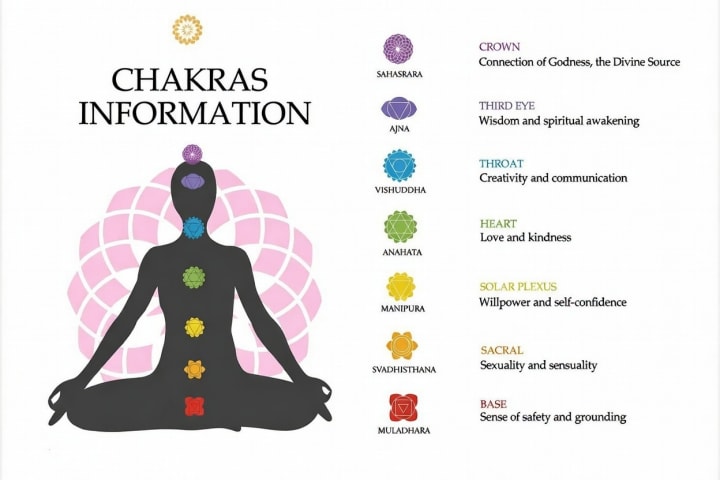
Another helpful visual shows the chakras with their traditional symbols and meanings overlaid on a meditative figure.
The chakras interact dynamically: energy rises from the root upward (ascending current) and descends from the crown downward (descending current), creating a balanced flow. Practices like yoga asanas, pranayama (breathwork), meditation, sound healing (mantras or chanting), crystals, essential oils, and affirmations help activate and harmonize them.
While the chakra system lacks empirical scientific validation in Western medicine, it serves as a powerful metaphorical and practical framework for holistic wellness. Many find that addressing chakra imbalances through mindful practices leads to greater emotional resilience, physical vitality, and spiritual insight.
Understanding the basics of the chakra system empowers individuals to cultivate inner balance, fostering a more integrated and awakened life.
About the Creator
Wilson Igbasi
Hi, I'm Wilson Igbasi — a passionate writer, researcher, and tech enthusiast. I love exploring topics at the intersection of technology, personal growth, and spirituality.
Keep reading
More stories from Wilson Igbasi and writers in Journal and other communities.
Unlock Your Inner Scientist (or Artist!): The Best Museums for Hands-On Learning.
In a world dominated by screens and passive consumption, the importance of hands-on learning cannot be overstated. It's about actively engaging with the world, experimenting, questioning, and discovering through direct experience. And where better to embark on such a journey of discovery than in a museum? Gone are the days of hushed hallways and "Do Not Touch" signs. A new wave of museums is emerging, dedicated to fostering curiosity and understanding through interactive exhibits and engaging programs. These are not just places to look at artifacts; they are spaces to experiment, build, create, and truly learn.
By Wilson Igbasi8 days ago in Journal
Athletic Footwear Industry Is Racing Toward $269 Bn
The pavement is still cool from the morning air. A runner tightens their laces, taps their smartwatch, and begins the first stride of the day. Each step feels lighter, faster, more responsive — thanks to years of innovation packed into a single pair of shoes.
By Harvey Specter2 days ago in Journal
Why Didn't Anyone Tell Us
Men, move along. This is not for you. This is for the women. I was forty-five when I began menopause. It is pretty young for that to be going on in a woman’s life, but I had undiagnosed PCOS, my entire life. Thank you to all the gynecologists I had seen my entire life. That in itself should encourage women to keep seeking second opinions, especially when you are not getting correct answers or any at all.
By Alexandra Grant2 days ago in Humans




Comments
There are no comments for this story
Be the first to respond and start the conversation.