
Mirza Ghalib: The First Modern Mind in Urdu Literature
How Ghalib’s poetry and thought transformed Urdu from classical expression to modern intellectual reflection

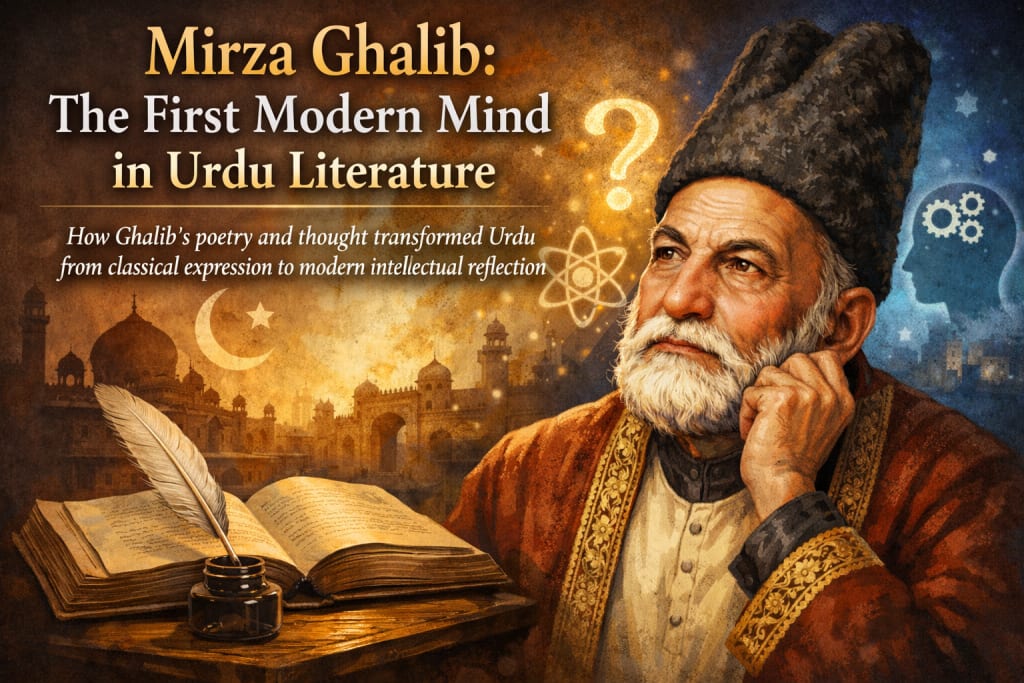
In the long and rich history of Urdu literature, few names shine as brightly as Mirza Ghalib. Often celebrated as one of the greatest poets of the Urdu language, Ghalib is also widely regarded as the first modern mind in Urdu literature. His poetry did more than express emotions; it questioned existence, challenged traditions, and explored the complexities of the human mind. At a time when most poets followed conventional themes and forms, Ghalib introduced a new intellectual depth that reshaped Urdu poetry forever.
Mirza Asadullah Khan Ghalib was born in 1797 in Agra during a period of immense political and cultural change in the Indian subcontinent. The Mughal Empire was declining, and British colonial power was expanding. This transition created an atmosphere of uncertainty and transformation. Ghalib lived through these historical upheavals, and his poetry reflects the philosophical struggles of an age caught between tradition and modernity.
Before Ghalib, much of Urdu poetry revolved around established themes such as romantic love, beauty, and separation. While these themes were expressed with elegance and artistic mastery, they often remained within the boundaries of tradition. Ghalib did not reject these themes entirely, but he expanded them in remarkable ways. For him, love was not merely a romantic sentiment; it became a metaphor for the human search for meaning, identity, and truth.
One of the most distinctive aspects of Ghalib’s poetry is its intellectual complexity. His verses are layered with philosophical ideas, subtle irony, and deep introspection. Instead of offering simple emotional expressions, he invites the reader to think. His poetry often raises questions rather than providing clear answers. In this sense, Ghalib’s work resembles modern philosophical literature, where ambiguity and reflection are central elements.
Ghalib’s poetry frequently deals with existential themes such as the nature of existence, the mystery of the universe, and the limitations of human understanding. He was fascinated by the contradictions of life—hope and despair, faith and doubt, presence and absence. These ideas were rarely explored in such depth in Urdu poetry before him. By addressing these themes, Ghalib transformed the ghazal from a purely lyrical form into a medium for intellectual exploration.
Another reason Ghalib is considered a modern thinker is his individualistic voice. Traditional poetry often emphasized collective cultural values and familiar poetic conventions. Ghalib, however, placed the individual experience at the center of his work. His poetry reflects his personal struggles, doubts, ambitions, and disappointments. This emphasis on the self is one of the defining characteristics of modern literature across the world.
Moreover, Ghalib’s attitude toward religion and spirituality also reflects a modern sensibility. While deeply aware of Islamic philosophy and mysticism, he approached religious ideas with questioning curiosity rather than unquestioning acceptance. His poetry often explores the tension between belief and skepticism. This intellectual openness allowed him to express thoughts that were bold and unconventional for his time.
Ghalib was also innovative in language and expression. His style combined classical Persian influences with the evolving beauty of Urdu. He used complex metaphors, unexpected imagery, and subtle wordplay to create verses that were both challenging and rewarding. Many readers find that Ghalib’s poetry reveals deeper meanings each time it is read, which is a hallmark of great literature.
In addition to poetry, Ghalib’s letters played a crucial role in shaping modern Urdu prose. Unlike the formal and ornate style common in earlier writing, Ghalib’s letters were conversational, witty, and personal. They brought written Urdu closer to everyday speech and made literature more accessible. In doing so, Ghalib helped modernize not only Urdu poetry but also its prose tradition.
The tragic events of the 1857 uprising deeply affected Ghalib. He witnessed the destruction of Delhi and the collapse of the Mughal cultural world he had known. His writings from this period capture the pain of a civilization in decline. Yet even in the face of despair, Ghalib’s work remained intellectually vibrant and emotionally profound.
Today, more than a century after his death in 1869, Mirza Ghalib continues to influence poets, writers, and thinkers across South Asia and beyond. His poetry is quoted in literature, music, and popular culture, proving that his ideas remain relevant in the modern world.
To call Ghalib the first modern mind in Urdu is not merely a tribute to his poetic brilliance. It is a recognition of his courage to think differently, to question deeply, and to transform a literary tradition through intellect and imagination. Through his work, Ghalib opened the door for modern Urdu literature, ensuring that poetry would remain not only beautiful but also profoundly thoughtful.
About the Creator
Irshad Abbasi
Ali ibn Abi Talib (RA) said 📚
“Knowledge is better than wealth, because knowledge protects you, while you have to protect wealth.
Keep reading
More stories from Irshad Abbasi and writers in Poets and other communities.
The Munshi Whom Even Kings Admired
Throughout history, the power of knowledge has often stood quietly beside the power of the throne. While kings ruled with authority and armies, there were individuals whose influence came not from swords but from words. Among them were the Munshis—scholarly scribes, advisors, and masters of language—whose intellect and skill earned them admiration even from the most powerful rulers.
By Irshad Abbasi about 9 hours ago in History
Early March 2026: 4 Goals Accomplished
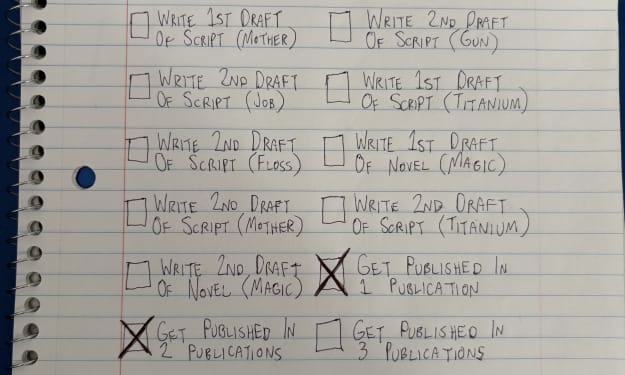
It's early March and I've now accomplished my 4th writing goal for the year of 2026. Before diving into the behind-the-scenes of it... why not tell you up front what that accomplishment was? I was published in a 2nd publication for this year. Published in Helix Literary Magazine out of Central Connecticut State University. You can read it for free right now!
By Stephen Kramer Avitabile7 days ago in Writers


Comments
There are no comments for this story
Be the first to respond and start the conversation.