
5 Scenarios for How the Iran War Could End
Experts outline five possible outcomes as the conflict unfolds, highlighting the complex interplay of military, political, and diplomatic factors.
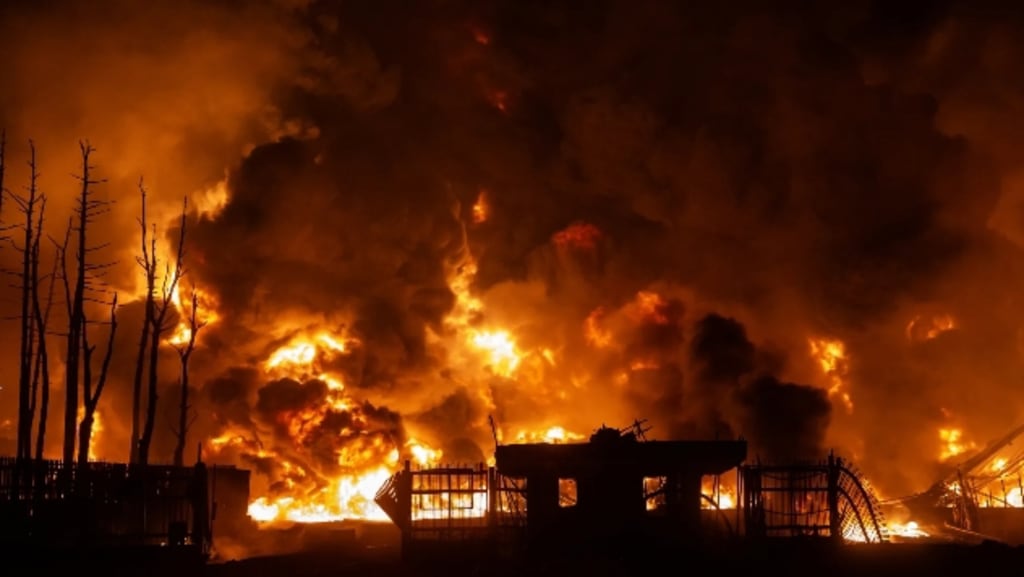
The ongoing war involving Iran, United States, and Israel has rapidly escalated into one of the most serious crises in the Middle East in years. Missiles, drones, and regional spillovers are creating humanitarian and geopolitical instability. While battlefield events continue to dominate immediate outcomes, analysts and policymakers are increasingly focused on a crucial question: how could this war actually end?
Multiple pathways exist, each shaped by military realities, internal political dynamics, and international pressures. Here are five potential scenarios that experts say could determine the ultimate outcome.
1. Negotiated Ceasefire and Nuclear Deal
A negotiated ceasefire paired with a renewed nuclear agreement is one of the most discussed possibilities. Before the recent escalation, indirect talks aimed at curbing Iran’s nuclear program were already underway. While those talks stalled, diplomacy could re-emerge if both sides recognize the high costs of ongoing conflict.
Mediators — potentially regional actors like Oman or Qatar — could broker a settlement, offering sanctions relief in exchange for Iran limiting nuclear enrichment and missile development.
A ceasefire would provide immediate relief to the region, stabilize global energy markets, and create conditions for monitored nuclear compliance. The challenge, however, lies in bridging the significant trust deficit between Tehran and its adversaries.
2. Military Degradation and Strategic Weakening
Another scenario envisions sustained military operations gradually degrading Iran’s strategic capabilities, including missiles and nuclear infrastructure. Precision strikes could weaken Tehran’s ability to sustain offensive operations without requiring regime change.
In this pathway, the U.S. and allies might declare operational success once key military objectives are achieved. While the Iranian regime may remain intact, its regional influence and retaliatory capability could be significantly reduced.
This approach carries the risk of prolonged hostilities and does not guarantee a permanent resolution, potentially leaving the region tense and unstable even after fighting subsides.
3. Popular Uprising and Regime Collapse
Some analysts consider that internal pressures could trigger a collapse of the Iranian government. Prior protests indicate underlying societal discontent, and sustained military pressure combined with economic hardship might exacerbate political fractures.
Opposition figures, including exiled leaders, could emerge as focal points for dissent, though a unified alternative leadership is uncertain. While regime collapse could abruptly end hostilities, it would also create a power vacuum, potentially sparking civil unrest and complicating international relations.
Historically, Iran’s security and religious institutions have demonstrated resilience, suggesting that while this scenario is possible, it is not the most probable.
4. Direct Intervention by Special Forces
A high-risk scenario involves direct U.S. or allied intervention inside Iran to target strategic sites or even attempt to topple leadership structures. This approach would involve ground operations or precision raids on nuclear and military facilities.
While potentially decisive, such intervention carries enormous risks: protracted guerrilla resistance, high casualties, and possible escalation into a wider regional war, drawing in Russia or China.
Experts consider this the least likely pathway due to the high political and military costs, as well as potential global condemnation.
5. U.S. Declares Objectives Met and Withdraws
Finally, a political resolution could occur if the United States declares that Iran’s offensive capabilities — missiles, drones, or nuclear infrastructure — have been sufficiently degraded and withdraws forces.
This scenario could be influenced by domestic political pressure, economic concerns, or a desire to stabilize energy markets. While hostilities may end temporarily, Iran could rebuild capabilities over time, leaving a persistent, underlying risk for future conflicts.
This outcome emphasizes the political calculus in war termination and highlights the balance between immediate military success and long-term regional stability.
Beyond the Five Scenarios
Real-world outcomes may combine elements from multiple scenarios. For example, a ceasefire might follow significant military degradation, or a political withdrawal could coincide with a partially negotiated agreement on Iran’s nuclear activities.
A prolonged stalemate is also possible, where major combat operations subside but regional tensions, sporadic attacks, and strategic competition persist indefinitely.
Each potential outcome has profound implications for regional security, global energy markets, and international diplomacy, underscoring the complexity of resolving the conflict.
Conclusion
Understanding potential endgame scenarios is critical for policymakers, analysts, and the global public. The Iran war could conclude through diplomacy, military pressure, internal political change, direct intervention, or political calculation.
While the exact pathway remains uncertain, each scenario highlights the interplay of military, political, and economic factors shaping the conflict. The consequences — for civilian populations, regional stability, and global systems — will be significant, no matter which path emerges.
As the war evolves, monitoring these scenarios helps clarify not only what might happen next but also how nations might prepare for a range of possible futures in the Middle East.
About the Creator
A Gathering of Evil Bosses
“I’m the queen of chin jutting while I smooth my hair, attacking, insulting, and deflecting to protect my appointer.” “Oh, please, Blondi, my hair is curled, highlighted, and longer than yours. I feature television commercials telling immigrants that we will give them a free plane ride home, and if they voluntarily turn themselves in, they will be allowed to legally apply for re-entry. It runs everywhere, and I look good in it! You can’t compete because of your blond hair. Mine is nicer, and my lips are prettier than yours.”
By Andrea Corwin 23 days ago in The Swamp
Becca
"Everything is so... flat." Denille said stupidly as she looked around her new neighborhood. She looked around at the muted desert where even the smallest sign of life seemed to have given up. The plant life was shrubs that were half cooked by the heat and where there should have been a lawn, a mess of white rocks laid glistening in the sun. Even the sky looked stretched thin, like the sun had ironed it smooth. She’d moved from Riverside, where at least there were hills, but here in Barstow, everything felt baked and brittle.
By Sara Wilson7 days ago in Fiction



Comments
There are no comments for this story
Be the first to respond and start the conversation.