
Iran is not Venezuela, despite Trump’s hopes of repeating ‘regime capture’ strategy
Experts say Washington’s Venezuela playbook is poorly suited to Iran’s complex theocratic system as U.S. war goals remain unclear.


Some analysts say the U.S. administration under Donald Trump has hinted at using a strategy in Iran similar to its campaign in Venezuela, where officials recently ousted President Nicolás Maduro and installed a transitional leadership. But experts warningly note that Iran’s political structure, society and military are fundamentally different from Venezuela’s, and what worked — or appeared to work — in Caracas is unlikely to be replicated in Tehran.
Trump’s Venezuela Analogy
In early 2026, after U.S. forces and allied partners carried out operations in Venezuela that led to Maduro’s capture and removal from office, Trump publicly suggested that a similar outcome could be desirable in Iran. He framed the initial military actions against Iranian nuclear sites and leadership as an opening for Iranians to “take over their government,” implying that the United States might encourage a transition away from hardline rule.
This rhetoric drew immediate attention from analysts because it seemed to borrow from the so‑called “Venezuela model” — where the top leader is removed, while much of the existing government infrastructure is kept intact to avoid full occupation and governance burdens. That approach appeared in some U.S. media analyses of the Venezuela operation earlier this year.
Why the Comparison Falls Short
However, experts emphasize that the analogy does not hold in practice. Iran’s regime is rooted in a highly institutionalized, theocratic system that relies on multiple centers of power — not just a single leader. The Assembly of Experts, a clerical body trained deeply in Iran’s religious governance framework, would appoint a new supreme leader long before any outside power could influence internal succession — and its interests are tightly tied to the Islamic Republic’s survival.
An Iranian political analyst told Turkish Minute that unlike in Venezuela, “leadership removal alone cannot collapse the Iranian regime.” Iran’s political and military structures — particularly the Islamic Revolutionary Guard Corps (IRGC) — are deeply unified and resilient. Absent foreign troops on the ground or a clear internal push from powerful factions, regime collapse remains unlikely.
Regional and Structural Differences
The socio‑political landscapes of Venezuela and Iran also differ dramatically. Venezuela’s recent political crisis occurred in a small, economically struggling oil state with significant internal dissent and fractured elite cohesion. Iran, by contrast, is a populous nation of roughly 88 million with a strong ideological orientation, complex regional alliances, and a security apparatus that has remained intact despite U.S. and Israeli strikes.
Tehran’s nationalist sentiment, religious legitimacy and historical focus on self‑reliance make it far less amenable to externally mediated regime restructuring. Even after the death of Supreme Leader Ayatollah Ali Khamenei, analysts say regime continuity is plausible because Iran’s power structures emphasize ideological stability over individual leadership.
Trump’s Shifting Rhetoric on Regime Change
Trump himself has been inconsistent about the goal of regime change in Iran. In his campaign and early presidency, he criticised open‑ended foreign interventions and said that the U.S. should avoid trying to remake other governments. But his statements after U.S. strikes in Iran — including encouraging Iranians to seize control of their government — blurred the line between weakening Tehran’s military and pushing for political change.
While some U.S. officials frame the conflict as focused more narrowly on dismantling nuclear and missile capabilities, others openly discuss the possibility of new Iranian leadership that might be more conciliatory. Former CIA Director David Petraeus noted this scenario could emerge but said it would represent a dramatic departure from the current hardline leadership’s ideological commitments.
The Risks of Misapplied Strategy
Applying the Venezuela playbook to Iran risks misreading structural realities on the ground. Analysts warn that assuming comparable outcomes could lead to miscalculated expectations and deeper conflict, rather than successful political transition. The danger is that a strategy designed for one context — a small Latin American state with a fragile elite consensus — is being applied to a Middle Eastern theocracy with stronger internal cohesion and regional influence.
Critics also say that such misapplication could harden Iran’s resolve, making it more likely to resist external pressure and widen the conflict further, rather than capitulating to U.S. objectives.
Conclusion
While some leaders have floated the idea of using a “Venezuela‑like” approach in Iran, political analysts and regional experts emphasize that Iran’s theocratic structures, military unity and social dynamics make it very different from Venezuela. What may have appeared to work in one context cannot be assumed to work in another, and policymakers risk underestimating the complexity and resilience of Iran’s political system if they rely on such analogies.
About the Creator
Fiaz Ahmed
I am Fiaz Ahmed. I am a passionate writer. I love covering trending topics and breaking news. With a sharp eye for what’s happening around the world, and crafts timely and engaging stories that keep readers informed and updated.
Keep reading
More stories from Fiaz Ahmed and writers in The Swamp and other communities.
Royal Navy Wildcat helicopters arrive to defend Cyprus
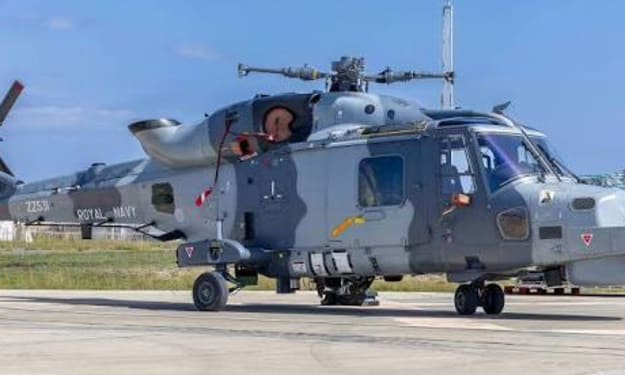
The United Kingdom has deployed advanced naval helicopters to Cyprus as part of a wider effort to strengthen defenses around the island amid rising tensions in the eastern Mediterranean. The arrival of the AgustaWestland AW159 Wildcat helicopters operated by the Royal Navy highlights growing concerns about regional security and the potential for further military escalation. The helicopters were transported to British sovereign bases in Cyprus, where they will support surveillance, air-defense coordination, and maritime security operations. British defense officials say the deployment is intended to protect personnel and infrastructure while ensuring that the United Kingdom can respond quickly to any emerging threats in the region. Strengthening Defenses at Strategic Bases Britain maintains two major sovereign base areas on Cyprus—RAF Akrotiri and Dhekelia—which have long served as strategic hubs for military operations in the Middle East and eastern Mediterranean. These installations allow the United Kingdom to conduct air operations, intelligence missions, and humanitarian support across a wide geographic area. The arrival of Wildcat helicopters enhances the defensive capabilities of these bases. Known for their advanced radar systems and agility, the helicopters are designed to conduct reconnaissance, maritime patrols, and anti-surface warfare operations. Their sensors allow crews to detect small vessels, drones, and other potential threats at sea or along coastlines. British officials say the aircraft will also work closely with naval vessels operating nearby, creating a layered defense network designed to protect both military personnel and regional shipping routes. Rising Regional Tensions The deployment comes at a time of heightened tensions across the Middle East and eastern Mediterranean. Conflicts involving Iran, Israel, and the United States have increased concerns that the conflict could spill into neighboring areas or threaten international shipping lanes. Cyprus, located at a crossroads between Europe, Asia, and the Middle East, has become an important staging point for military operations and evacuation missions. Western forces have used the island’s bases to support surveillance flights, humanitarian operations, and logistical support for regional allies. Security analysts note that Cyprus’s strategic location makes it both valuable and potentially vulnerable during periods of regional instability. Role of the Wildcat Helicopter The AW159 Wildcat represents one of the most modern helicopters currently used by the Royal Navy. Designed for multi-role operations, the aircraft can carry precision-guided missiles, torpedoes, and advanced surveillance systems. Its compact size allows it to operate from both naval ships and land bases. Military planners often deploy the Wildcat in situations where flexibility and rapid response are required. The helicopter’s sensors can track multiple targets simultaneously, while its communication systems allow it to coordinate with ships, aircraft, and ground forces. Experts say these capabilities make the Wildcat particularly valuable in scenarios involving drone threats, small attack boats, or other fast-moving targets that can challenge traditional air-defense systems. A Broader Security Strategy British defense officials emphasize that the helicopter deployment is part of a broader strategy aimed at maintaining stability in the region. The United Kingdom continues to work with NATO partners and regional allies to monitor security developments and deter potential threats. In addition to the Wildcat helicopters, Britain has strengthened naval patrols and increased intelligence-sharing efforts with partner nations operating in the Mediterranean. These measures are intended to protect international shipping routes and prevent further escalation of regional conflicts. For Cyprus, the presence of additional British military assets reflects both the island’s strategic importance and the growing complexity of the regional security environment. Looking Ahead While British officials describe the deployment as precautionary, analysts say it highlights the fragile state of security in the eastern Mediterranean. As conflicts elsewhere in the region continue to evolve, Cyprus is likely to remain a key operational hub for Western forces. The arrival of the Royal Navy’s Wildcat helicopters underscores the United Kingdom’s commitment to protecting its overseas bases and maintaining a military presence capable of responding to rapidly changing threats.
By Fiaz Ahmed 6 days ago in The Swamp
A Gathering of Evil Bosses
“I’m the queen of chin jutting while I smooth my hair, attacking, insulting, and deflecting to protect my appointer.” “Oh, please, Blondi, my hair is curled, highlighted, and longer than yours. I feature television commercials telling immigrants that we will give them a free plane ride home, and if they voluntarily turn themselves in, they will be allowed to legally apply for re-entry. It runs everywhere, and I look good in it! You can’t compete because of your blond hair. Mine is nicer, and my lips are prettier than yours.”
By Andrea Corwin 23 days ago in The Swamp
Becca
"Everything is so... flat." Denille said stupidly as she looked around her new neighborhood. She looked around at the muted desert where even the smallest sign of life seemed to have given up. The plant life was shrubs that were half cooked by the heat and where there should have been a lawn, a mess of white rocks laid glistening in the sun. Even the sky looked stretched thin, like the sun had ironed it smooth. She’d moved from Riverside, where at least there were hills, but here in Barstow, everything felt baked and brittle.
By Sara Wilson7 days ago in Fiction


Comments
There are no comments for this story
Be the first to respond and start the conversation.