
Israel Pounds Iran Missile Sites, Airport as Tehran Fires Back Repeated Salvos, Threatens Europe
A dramatic escalation in the U.S.–Israel campaign against Iran has seen deep strikes on Tehran’s missile infrastructure and a major airport, while Iran retaliates with waves of missiles and warns European nations against involvement.
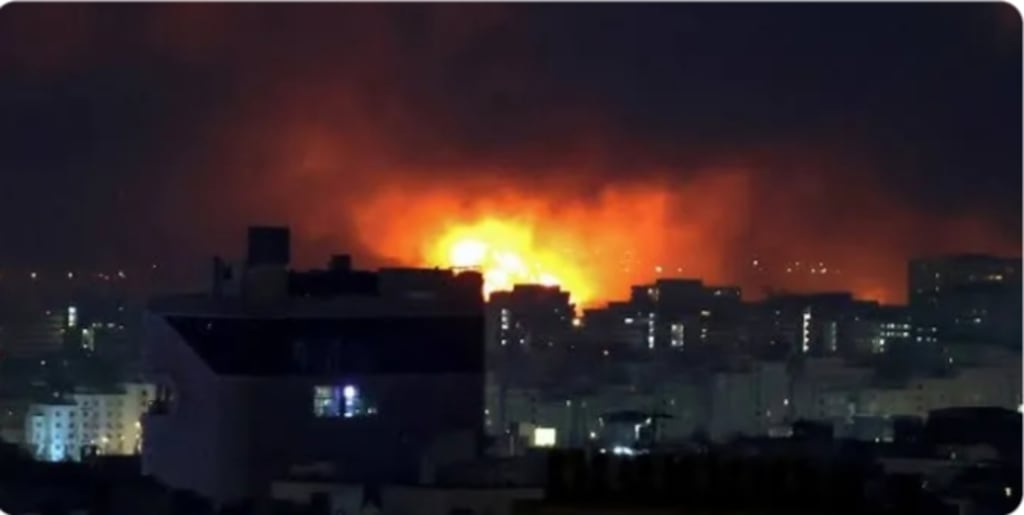
Tensions Escalate in the Middle East
The war between Israel and Iran, backed by the United States, has intensified sharply. Israeli forces launched renewed attacks targeting Iranian missile sites and Mehrabad International Airport, while Iran responded with repeated missile barrages and issued warnings to Europe about potential retaliation.
This escalation marks one of the most dangerous phases of the conflict, with both sides demonstrating a willingness to carry out deep strikes into each other’s territories.
Israeli Airstrikes Target Key Iranian Facilities
According to Israeli officials, more than 80 Israeli Air Force fighter jets participated in strikes on missile launch sites and underground command centers. The focus was on crippling Iran’s missile program and disrupting logistics used to supply allied militias such as Hezbollah.
A major target was Mehrabad International Airport, where at least 16 aircraft reportedly linked to the Islamic Revolutionary Guard Corps’ Quds Force were destroyed. Israeli officials claim these aircraft were used for transporting weapons and personnel to Iranian-backed groups in the region.
Other strikes included IRGC training camps and ballistic missile depots, highlighting Israel’s broader strategy to weaken Iran’s regional military capabilities.
Iran Retaliates with Missile Salvos
Iran responded swiftly to the Israeli attacks. Repeated missile salvos targeted Israeli territory and U.S. allied positions across the region, forcing emergency alerts and activating air defense systems.
Tehran’s statements emphasized that Iran would continue defending its sovereignty and retaliate against any further strikes. Officials also warned European nations against supporting deeper Western involvement, signaling the conflict’s potential to affect countries far beyond the Middle East.
The Conflict Spreads Regionally
The attacks mark the second week of intense military operations between the United States, Israel, and Iran. The conflict has already spilled beyond Iran and Israel, with Iranian-backed groups carrying out strikes in Lebanon and drone attacks reported in Gulf states hosting American bases.
Countries in the region, including the United Arab Emirates, Kuwait, and Qatar, have had to adjust their defenses to counter potential threats, while European governments began issuing advisories and evacuations for citizens in affected areas.
Civilian Toll and Humanitarian Concerns
Airstrikes and missile barrages have inflicted significant civilian casualties. In Iran, infrastructure including homes, schools, hospitals, and utilities has been damaged. In Lebanon, Israeli strikes on Hezbollah targets have led to displacement and casualties among civilian populations.
Civil defense systems in Israel are actively responding to incoming missile alerts, and humanitarian groups are struggling to provide support to displaced civilians.
Diplomatic Repercussions
Global leaders have expressed concern over the conflict’s escalation. While the U.S. reaffirmed support for Israel, European nations have urged restraint, emphasizing the need to avoid a wider regional war.
Energy markets are already reacting to instability, with prices surging due to fears of disruption in the Strait of Hormuz and other critical shipping routes. Countries in the Gulf are reinforcing defenses to protect energy and trade infrastructure, highlighting the conflict’s economic as well as military impact.
Strategic Implications
The strikes on missile sites and airports signal a shift in Israel’s military approach. Instead of targeting only border areas or proxies, Israel is now striking deeper into Iranian territory, aiming to degrade long-range missile capabilities and logistics hubs.
Iran’s retaliation demonstrates both military resilience and a message to deter further Western involvement. Warnings to Europe indicate Tehran’s willingness to leverage its influence regionally to shape the response of distant powers.
The Road Ahead
Analysts warn the conflict could draw in additional regional actors if strikes and counterstrikes continue. Proxy militias, neighboring states, and even NATO-aligned forces could become involved in the event of escalation.
International diplomats are advocating for dialogue, but the strong rhetoric and ongoing attacks suggest that neither side is ready for compromise.
As the conflict intensifies, the stakes remain high: control of regional military assets, the security of civilian populations, and the stability of international trade routes are all at risk.
For now, the cycle of Israeli strikes and Iranian retaliation underscores a precarious moment in Middle Eastern geopolitics, with global ramifications for security, energy, and diplomacy.
Key Points:
Israel carried out airstrikes on missile sites and Mehrabad Airport in Tehran.
Iran responded with repeated missile barrages and warnings to Europe.
Civilian populations in Iran, Lebanon, and Israel are experiencing casualties and displacement.
The conflict is affecting regional security and global energy markets.
The situation remains volatile, with both sides showing no signs of de-escalation.
About the Creator
A Gathering of Evil Bosses
“I’m the queen of chin jutting while I smooth my hair, attacking, insulting, and deflecting to protect my appointer.” “Oh, please, Blondi, my hair is curled, highlighted, and longer than yours. I feature television commercials telling immigrants that we will give them a free plane ride home, and if they voluntarily turn themselves in, they will be allowed to legally apply for re-entry. It runs everywhere, and I look good in it! You can’t compete because of your blond hair. Mine is nicer, and my lips are prettier than yours.”
By Andrea Corwin 23 days ago in The Swamp
Early March 2026: 4 Goals Accomplished
It's early March and I've now accomplished my 4th writing goal for the year of 2026. Before diving into the behind-the-scenes of it... why not tell you up front what that accomplishment was? I was published in a 2nd publication for this year. Published in Helix Literary Magazine out of Central Connecticut State University. You can read it for free right now!
By Stephen Kramer Avitabile7 days ago in Writers

Comments
There are no comments for this story
Be the first to respond and start the conversation.