
Ethiopia Pulses Market 2026: Protein Demand, Agricultural Exports & Sustainable Crop Growth
How rising global demand for plant-based protein, expanding agricultural production and export opportunities are shaping Ethiopia’s pulses industry

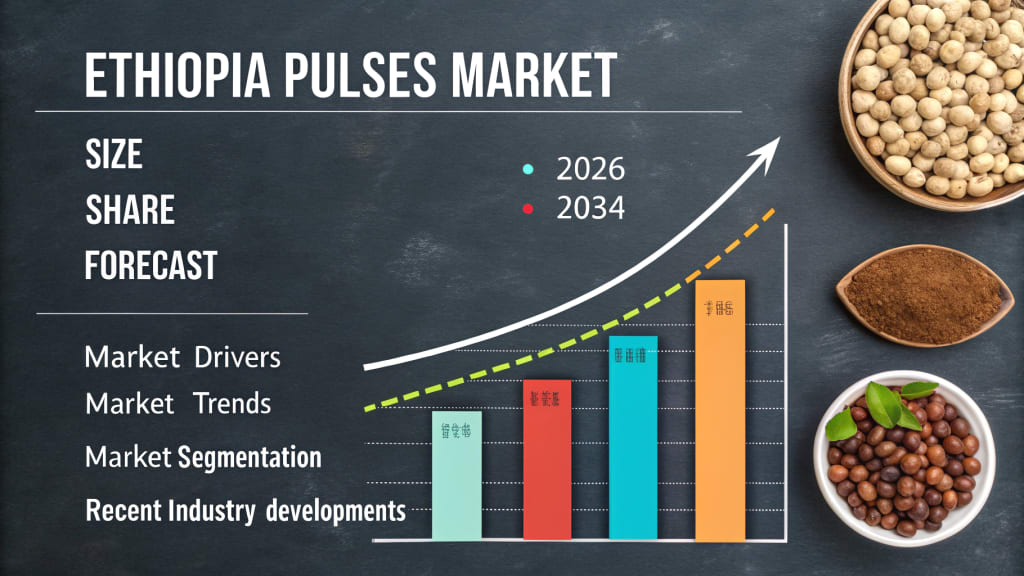
The Ethiopia pulses market plays a significant role in the country’s agricultural economy, supporting food security, rural livelihoods and export revenues. Pulses—including chickpeas, lentils, beans, peas and faba beans—are essential crops grown by millions of Ethiopian farmers and widely consumed both domestically and internationally.
According to market estimates, the Ethiopia pulses market size reached USD 110.50 Million in 2025 and is expected to reach USD 149.81 Million by 2034, exhibiting a CAGR of 3.44% during 2026–2034. The market’s steady growth is driven by increasing demand for plant-based protein, expanding global trade opportunities and improvements in agricultural productivity.
Pulses hold an important place in Ethiopia’s agricultural landscape. They are widely used in traditional Ethiopian cuisine and also serve as key export commodities to markets across Asia, the Middle East and Africa. In addition to providing an affordable source of protein and nutrients, pulses contribute to sustainable farming systems by improving soil fertility through nitrogen fixation.
As Ethiopia continues to modernize its agricultural sector and strengthen global trade partnerships, the pulses market is expected to remain a critical contributor to economic development and food security.
What’s Driving Market Growth?
Increasing Demand for Plant-Derived Protein
A significant factor influencing the Ethiopia pulses market is the increasing worldwide need for plant-derived protein options. Legumes like chickpeas, lentils, and beans are high in protein, fiber, and vital nutrients, which makes them favored by health-aware individuals.
With changing dietary preferences leaning towards healthier and more sustainable options, pulses are becoming increasingly popular in both local and global markets. Their cost-effectiveness and nutritional benefits establish them as a fundamental food in numerous homes.
Robust Agricultural Production Foundation
Ethiopia ranks among the top pulse producers in Africa, growing various crops such as faba beans, chickpeas, lentils, and field peas. These crops are cultivated in various agro-ecological zones, enabling farmers to grow pulses in both highland and lowland agricultural systems.
The nation's advantageous climate and extensive agricultural labor force enhance its production capabilities. Pulse cultivation aids farmers in diversifying their crops and enhancing soil fertility, promoting sustainable farming practices.
Expanding Export Prospects
Ethiopian pulses are extensively sold in international markets because of their quality and affordable prices. Key export destinations consist of nations in Asia and the Middle East, where the demand for pulses is notably strong.
For instance, India, Pakistan, the United Arab Emirates, and numerous Southeast Asian nations purchase significant amounts of Ethiopian pulses, emphasizing the country's increasing importance in global agricultural commerce.
Export demand motivates farmers and agribusiness firms to boost production and enhance quality benchmarks.
Government Agricultural Development Initiatives
The Ethiopian government has implemented various agricultural development programs aimed at improving productivity, strengthening rural economies and enhancing food security.
These initiatives include investments in improved seed varieties, modern farming techniques, irrigation systems and agricultural extension services. Such programs help farmers increase yields while improving the quality of pulse crops for both domestic consumption and export markets.
Market Segmentation & Key Insights
By Pulse Type
The Ethiopia pulses market includes several major crop categories:
• Chickpeas
• Lentils
• Faba beans
• Field peas
• Haricot beans
• Cowpeas and mung beans
Chickpeas and beans represent significant segments due to strong domestic consumption and export demand.
By Application
Pulses are used across multiple applications, including:
• Household food consumption
• Food processing and packaged foods
• Animal feed production
• Export markets
The food sector dominates the market because pulses are widely used in traditional Ethiopian dishes and international cuisines.
By Farming System
Pulse cultivation occurs across several agricultural systems:
• Smallholder farming
• Commercial farming
• Cooperative farming networks
Smallholder farmers account for the majority of production, making pulses an important source of rural income.
By Distribution Channel
Pulses reach consumers through various channels, including:
• Local agricultural markets
• Wholesale trading networks
• Food processing companies
• International export markets
Export trading networks play a particularly important role in the pulses value chain.
What the Opportunities Are?
Expansion of Global Export Markets
International demand for pulses continues to grow as more countries adopt plant-based diets and seek affordable protein sources. Ethiopian exporters can benefit from this trend by expanding trade partnerships and entering new international markets.
Value-Added Processing Industry
Although Ethiopia produces large volumes of pulses, much of the processing still occurs at small-scale facilities. Investments in modern processing technologies—such as cleaning, sorting, milling and packaging—can significantly increase product value and export competitiveness.
Value-added products like pulse flour and processed legumes also offer new opportunities for domestic food manufacturers.
Sustainable Agricultural Practices
Pulses play an important role in sustainable farming systems because they improve soil fertility and reduce the need for synthetic fertilizers. Promoting pulse cultivation within crop rotation systems can increase agricultural productivity while protecting soil health.
Sustainability initiatives and climate-resilient agricultural programs can help farmers maintain long-term productivity.
Agricultural Technology and Innovation
Modern agricultural technologies such as improved seed varieties, irrigation systems and digital farming tools can enhance pulse production efficiency. Technology adoption can help farmers increase yields while reducing production risks associated with climate variability.
Recent News and Developments in Ethiopia Pulses Market
May 2025: Agricultural analysts reported steady global demand for Ethiopian pulses, particularly chickpeas and beans, which continue to attract international buyers due to their quality and competitive pricing.
2024–2025: Ethiopia maintained strong export performance in pulses such as chickpeas, lentils and kidney beans, with India and China among the largest international buyers.
2025: Agricultural production forecasts indicated gradual growth in pulse production volumes, with output expected to reach nearly 3.9 million metric tons by 2028.
Why Should You Know About Ethiopia Pulses Market?
The Ethiopia pulses market represents an important component of the country’s agricultural economy and global trade portfolio. Pulses provide affordable nutrition for millions of consumers while also supporting rural employment and export revenue.
For investors and agribusiness companies, the market offers opportunities in agricultural technology, food processing, export trade and supply chain development.
For policymakers and agricultural planners, strengthening the pulses sector can improve food security, increase farmer incomes and enhance Ethiopia’s position in international agricultural markets.
Ultimately, the Ethiopia pulses market highlights the strategic importance of sustainable agriculture and global food trade. As demand for plant-based protein continues to grow worldwide, Ethiopia’s pulse industry is well positioned to benefit from expanding international markets and evolving consumer preferences.
About the Creator
Thomas
Market Research Analyst | Industry Trends & Forecasting | Turning market data into clear, actionable business insights across global sectors.
BTC USD: Secrets Traders Use to Predict Big Price Moves
BTC USD continues to be one of the most watched cryptocurrencies in the world. Every day, traders and investors look at BTC USD charts to understand where the price might go next. While many people only see price rises and falls, the real opportunities come from recognizing patterns and signals that most ignore. They will reveal simple BTC USD secrets that can help anyone watch the market more clearly. These tips are easy to follow and useful for beginners and experienced traders alike. For readers wanting more guidance on cryptocurrency trading, check our detailed guide on Crypto Trading Tips for Beginners.
By hamza mirza2 days ago in Trader
Becca
"Everything is so... flat." Denille said stupidly as she looked around her new neighborhood. She looked around at the muted desert where even the smallest sign of life seemed to have given up. The plant life was shrubs that were half cooked by the heat and where there should have been a lawn, a mess of white rocks laid glistening in the sun. Even the sky looked stretched thin, like the sun had ironed it smooth. She’d moved from Riverside, where at least there were hills, but here in Barstow, everything felt baked and brittle.
By Sara Wilson7 days ago in Fiction



Comments
There are no comments for this story
Be the first to respond and start the conversation.