
Europe Ice Cream Market Size & Forecast 2025–2033
Rising Demand for Premium, Artisanal, and Health-Focused Ice Cream Drives Market Expansion Across Europe

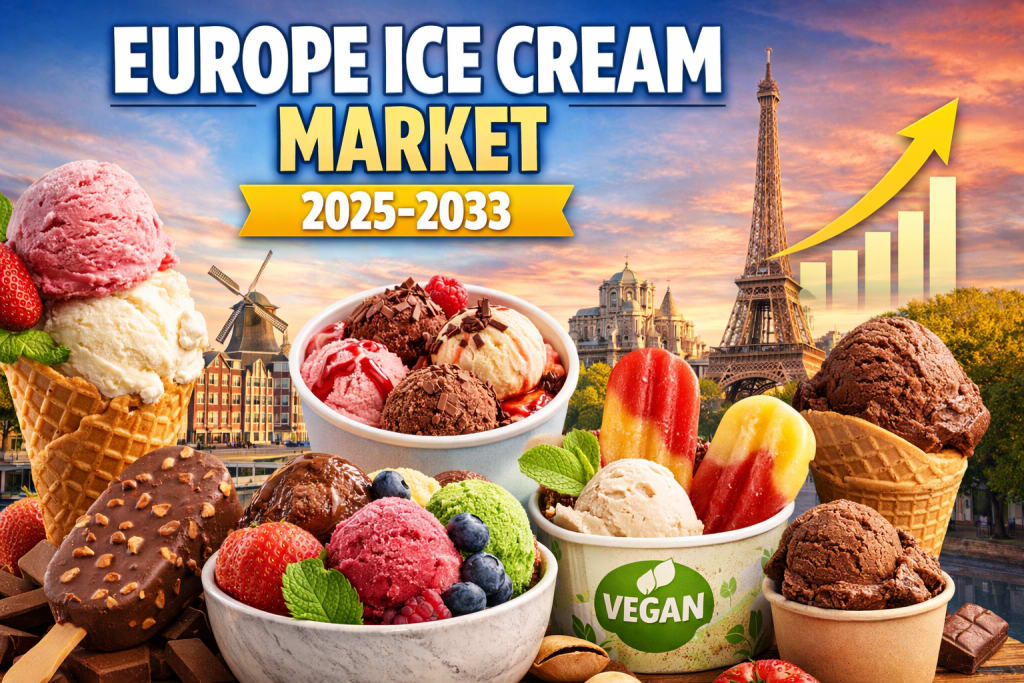
Europe Ice Cream Market Outlook
The European ice cream industry continues to evolve as consumer tastes shift toward premium, artisanal, and health-conscious frozen desserts. According to market insights from Renub Research, the Europe ice cream market is projected to grow from approximately US$ 21.95 billion in 2024 to around US$ 32.53 billion by 2033, registering a compound annual growth rate (CAGR) of 4.47% between 2025 and 2033.
This growth reflects changing consumer lifestyles, increasing demand for indulgent yet healthier dessert options, and continuous innovation in flavors, ingredients, and packaging. European consumers are not only looking for traditional favorites but also for unique experiences—whether through artisanal gelato, plant-based alternatives, or sustainably sourced products.
The report Europe Ice Cream Market & Forecast 2025–2033 examines market performance by product type, consumption type, flavor, distribution channel, and country, providing insights into the evolving dynamics shaping the region’s frozen dessert sector.
Understanding the Popularity of Ice Cream in Europe
Ice cream is a frozen dessert traditionally made from milk, cream, sugar, and flavoring ingredients such as fruits, nuts, chocolate, and syrups. Over time, the category has diversified into various formats including cones, bars, cups, scoops, and tubs, catering to different consumption occasions and consumer preferences.
Across Europe, ice cream is more than just a summer treat. Although sales typically peak during warm months, many countries enjoy year-round consumption due to cultural traditions, dessert culture, and increasing availability in retail outlets.
Different European regions also showcase distinctive flavor traditions. For instance:
Italy is famous for its authentic gelato with dense texture and natural ingredients.
Scandinavian countries often incorporate berry flavors such as lingonberry or cloudberry.
Western Europe commonly favors classic flavors like chocolate and vanilla while exploring gourmet variations.
At the same time, modern trends are reshaping the industry. Consumers are increasingly demanding vegan, sugar-free, organic, and low-calorie options, pushing manufacturers to innovate beyond conventional dairy-based ice cream.
Key Drivers Shaping the European Ice Cream Market
1. Rising Demand for Premium and Artisanal Ice Cream
One of the strongest forces behind market growth is the increasing popularity of premium and artisanal ice cream products.
Consumers are seeking higher-quality desserts made with natural ingredients, traditional recipes, and unique flavor combinations. Artisanal ice cream brands emphasize authenticity, craftsmanship, and locally sourced ingredients, which appeal strongly to European consumers who value culinary heritage and food quality.
Premiumization also extends to presentation and packaging. Many brands now focus on elegant, sustainable packaging and visually appealing designs that enhance the overall consumer experience.
In Western Europe especially, higher disposable income allows consumers to spend more on luxury dessert products, encouraging brands to launch gourmet collections and limited-edition flavors.
2. Growing Health-Conscious Consumer Trends
Health awareness has significantly influenced the development of new ice cream formulations across Europe.
Consumers are paying closer attention to the nutritional content of food products, including sugar levels, fat content, and calorie intake. As a result, the market has seen rapid expansion in:
Low-calorie ice creams
Plant-based dairy alternatives
Sugar-free or reduced-sugar products
High-protein ice creams
Plant-based ice creams made from oat milk, almond milk, coconut milk, and soy have gained remarkable traction among vegans and lactose-intolerant consumers. In addition, functional ingredients such as probiotics or protein fortification are becoming increasingly popular.
These innovations allow consumers to enjoy indulgent desserts while maintaining healthier lifestyles.
3. Continuous Innovation in Flavors and Formats
Innovation remains central to sustaining consumer interest in the European ice cream market.
Manufacturers constantly experiment with new flavors, textures, and product formats to attract attention and differentiate their brands. Examples include:
Multi-layered ice cream desserts
Filled cones with chocolate or caramel centers
Ice cream combined with cookies, brownies, or cakes
Seasonal and limited-edition flavors
Exotic flavors such as matcha, salted caramel, pistachio, lavender, and tropical fruit blends are increasingly popular among younger consumers seeking novel experiences.
This ongoing innovation helps brands stand out in a competitive marketplace while encouraging repeat purchases.
Challenges Facing the European Ice Cream Industry
Rising Health Concerns About Sugar and Fat
Despite its popularity, traditional ice cream faces criticism due to its high sugar, fat, and calorie content.
Health-conscious consumers may limit their consumption of indulgent desserts, particularly as awareness about obesity and lifestyle diseases grows. Although manufacturers are developing healthier alternatives, these products often require costly ingredients and advanced production processes.
Balancing indulgent taste with improved nutritional value remains a significant challenge for ice cream brands.
Sustainability and Environmental Pressures
Environmental sustainability is another key challenge for the European ice cream sector.
Consumers and regulators increasingly expect companies to adopt eco-friendly practices, including:
Sustainable dairy sourcing
Reduced carbon emissions
Recyclable or biodegradable packaging
Responsible ingredient procurement
The dairy industry has also faced scrutiny due to its environmental footprint. Ice cream manufacturers must therefore invest in sustainable production methods while maintaining product quality and affordability.
These sustainability initiatives can be particularly challenging for smaller producers with limited financial resources.
Product Segment Insights: Tubs & Bricks Dominate Household Consumption
Among the various product formats in the European ice cream market, tubs and bricks hold a significant share.
These formats are popular because they offer convenience and versatility. Consumers can easily scoop ice cream into bowls for family gatherings or enjoy it directly from the container as a personal treat.
Tubs and bricks also allow manufacturers to offer multiple flavors, larger quantities, and specialty formulations, making them ideal for home consumption.
Additionally, their affordability compared to individually packaged products contributes to their strong demand across European households.
Impulse Ice Cream: A Powerful Retail Segment
Impulse ice cream products—typically sold as single-serve cones, sticks, or bars—represent another important segment of the market.
These products benefit from strategic placement in retail environments such as:
Checkout counters
Convenience stores
Tourist locations
High-traffic urban areas
Impulse purchases are driven by convenience, portability, and instant gratification. Single-serve packaging also appeals to busy consumers seeking quick refreshment while traveling or shopping.
This segment is particularly popular among younger consumers and tourists across European cities.
Chocolate: Europe’s Favorite Ice Cream Flavor
Chocolate continues to be one of the most popular ice cream flavors in Europe.
Its rich and indulgent taste appeals to consumers across different age groups and cultural backgrounds. Chocolate ice cream is often used as the base for various desserts such as sundaes, milkshakes, and ice cream cakes.
Manufacturers continue to innovate within this flavor category by introducing dark chocolate varieties, chocolate-fudge combinations, and premium cocoa blends, ensuring that chocolate remains a consistent bestseller in the European ice cream market.
Supermarkets and Hypermarkets Lead Distribution Channels
Supermarkets and hypermarkets dominate the distribution landscape for ice cream in Europe.
These large retail outlets provide several advantages:
Wide product variety
Competitive pricing
Convenient accessibility
Well-organized freezer sections
Consumers often prefer purchasing ice cream alongside their regular grocery shopping, making supermarkets a one-stop destination for frozen desserts.
However, other channels such as specialty stores, convenience stores, and online platforms are gradually expanding their presence as consumer shopping habits evolve.
Country-Level Insights
France: Premium Ice Cream and Culinary Tradition
France holds a strong position in the European ice cream market due to its rich culinary culture and appreciation for artisanal craftsmanship.
French ice cream parlors emphasize high-quality ingredients, natural flavors, and creative presentation, attracting both locals and tourists. Premium desserts remain a hallmark of the French food industry, and ice cream producers continue to experiment with innovative flavor combinations.
This commitment to gastronomic excellence ensures steady growth for the French ice cream sector.
Germany: High Consumption and Diverse Product Range
Germany is one of the largest ice cream markets in Europe, characterized by high per-capita consumption and a wide range of product offerings.
Consumers in Germany enjoy both traditional and modern ice cream varieties, including vegan, organic, and low-calorie options. Seasonal demand peaks during summer months, but premium and artisanal products maintain steady year-round sales.
German manufacturers are also focusing heavily on sustainable packaging and environmentally responsible production methods.
Belgium: Gourmet Flavors and Premium Desserts
Belgium’s reputation for gourmet desserts has positively influenced its ice cream industry.
Local producers often incorporate Belgian chocolate, waffles, and regional ingredients into their frozen desserts, creating distinctive flavor experiences. Demand for organic, vegan, and low-fat options is also growing steadily.
While seasonal demand remains strong during warmer months, the country’s appreciation for premium desserts supports year-round consumption.
United Kingdom: Innovation and Health-Focused Products
The United Kingdom represents another dynamic ice cream market within Europe.
Consumers are increasingly drawn to plant-based, low-sugar, and functional ice cream products that align with healthier lifestyles. At the same time, premium artisanal brands continue to expand their presence in supermarkets and specialty dessert stores.
Sustainability initiatives, including recyclable packaging and locally sourced ingredients, also influence purchasing decisions among environmentally conscious British consumers.
Competitive Landscape
The European ice cream market is highly competitive, with global food companies and regional producers competing through innovation, branding, and product diversification.
Major industry participants include:
Froneri International Limited
General Mills
Meiji Co. Ltd.
Unilever Group
Mondelez International, Inc.
Nestlé SA
DMK Group
Danone S.A.
These companies invest heavily in product development, sustainability initiatives, and marketing strategies to maintain their market positions.
A notable example occurred in January 2022, when Unilever’s Magnum brand launched a new range of vegan bite-sized ice creams made with pea protein, targeting the growing segment of consumers adopting plant-based diets.
Such product innovations highlight the industry’s focus on adapting to evolving consumer preferences.
Future Outlook: A Market Defined by Innovation and Sustainability
Looking ahead, the European ice cream market is expected to continue its steady expansion through 2033.
Several key trends will shape future growth:
Expansion of plant-based and dairy-free products
Increasing demand for premium and artisanal desserts
Strong focus on sustainable sourcing and eco-friendly packaging
Continued flavor experimentation and limited-edition releases
As consumers increasingly seek both indulgence and wellness in their food choices, ice cream manufacturers will need to balance taste, nutrition, and sustainability.
Companies that successfully combine innovation, quality ingredients, and responsible production practices are likely to gain a competitive advantage in Europe’s evolving frozen dessert market.
Final Thoughts
The Europe ice cream market is entering an exciting period of transformation. While traditional flavors and formats continue to hold strong appeal, modern consumers are driving demand for healthier alternatives, artisanal quality, and environmentally responsible products.
With the market projected to grow from US$ 21.95 billion in 2024 to US$ 32.53 billion by 2033, the industry offers significant opportunities for both established global brands and emerging boutique producers.
Ultimately, innovation, sustainability, and premiumization will define the next chapter of Europe’s beloved frozen dessert industry.
About the Creator
Sakshi Sharma
Content Writer with 7+ years of experience crafting SEO-driven blogs, web copy & research reports. Skilled in creating engaging, audience-focused content across diverse industries.
Keep reading
More stories from Sakshi Sharma and writers in Trader and other communities.
United States Milk Powder Market Size and Forecast 2026–2034
The United States Milk Powder Market is expected to reach US$ 16.69 billion by 2034, rising from US$ 11.06 billion in 2025, expanding at a CAGR of 4.68% between 2026 and 2034. The steady growth of this market reflects increasing demand for convenient and shelf-stable dairy ingredients used in packaged foods, infant nutrition, bakery products, and sports nutrition formulations. Advancements in dairy processing technologies, expanding global demand for U.S. dairy exports, and strong growth in ready-to-eat foods are also strengthening the long-term outlook of the milk powder industry.
By Sakshi Sharmaa day ago in Trader
Australia Reverse Logistics Market Growth, Forecast, and Strategic Insights by 2034
Reverse logistics—the process of managing product returns, recycling, refurbishment, and disposal—has become a critical component of modern supply chains. As businesses expand their e-commerce operations and consumers expect flexible return policies, companies must build efficient systems to manage the flow of goods moving back through the supply chain.
By Rashi Sharmaabout 12 hours ago in Trader
Bomb Scare
It was 2027, and the world never thought it would happen. A missle hit the United States, but it wasn't where they had anticipated. A little town in the northeast was hit by a missile strike, they didn't know why, and they didn't know exactly where it hit, but they did know it was a coastal community, somewhere between Maine and Delaware.
By Gregory Payton8 days ago in Fiction


Comments
There are no comments for this story
Be the first to respond and start the conversation.