
United States Alcoholic Beverages Market Size and Forecast 2025–2033
Premiumization, Craft Innovation, and E-Commerce Transform America’s $800+ Billion Alcohol Industry

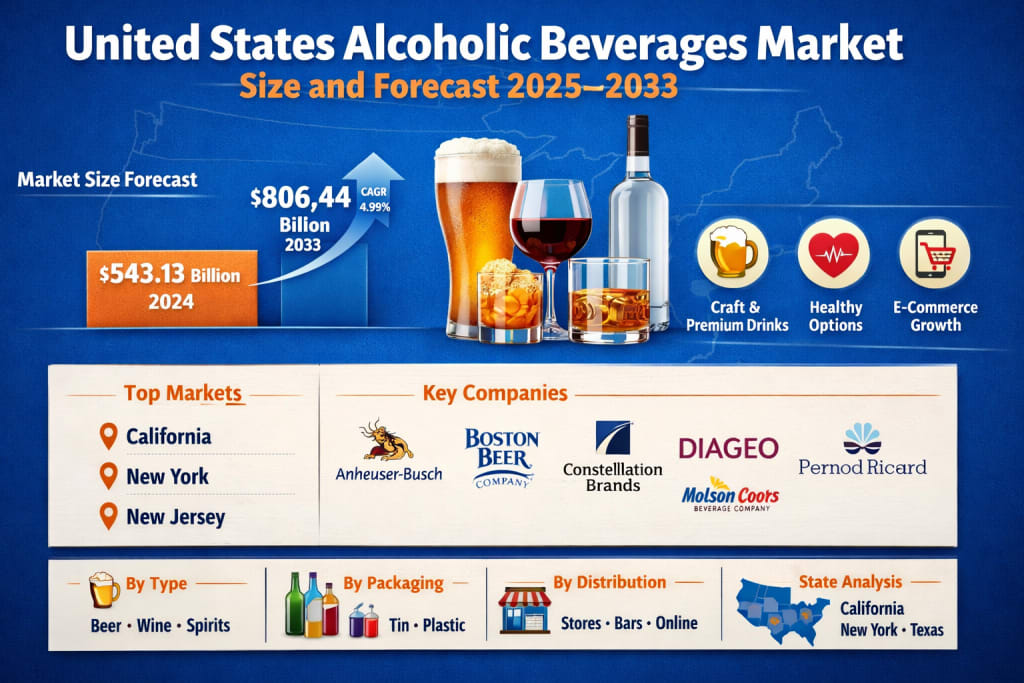
United States Alcoholic Beverages Market Overview
The United States Alcoholic Beverages Market is experiencing steady growth as consumer tastes evolve toward premium, craft, and innovative beverage options. According to industry analysis by Renub Research, the market is projected to reach US$ 806.44 billion by 2033, rising from US$ 543.13 billion in 2024, reflecting a compound annual growth rate (CAGR) of 4.99% between 2025 and 2033.
This expansion is largely fueled by shifting consumer preferences, including a growing appetite for craft beers, premium spirits, and healthier alcoholic beverages. At the same time, increased social consumption, expanding distribution channels, and product innovation across beverage categories are reshaping the industry.
Alcoholic beverages — drinks that contain ethanol produced through the fermentation of grains, fruits, or vegetables — have been consumed for centuries. Today, they remain deeply integrated into American culture, from sports gatherings and celebrations to fine dining and nightlife experiences.
The modern market includes a wide range of products such as beer, wine, distilled spirits, and liqueurs, each with varying alcohol content levels. Beer generally contains around 4–6% alcohol, wine averages 12–15%, and distilled spirits often exceed 40% alcohol by volume.
As consumer expectations evolve toward quality, authenticity, and health-conscious choices, the U.S. alcoholic beverage sector continues to innovate and diversify.
United States Alcoholic Beverages Industry Outlook
Alcohol consumption in the United States is strongly tied to social traditions and lifestyle habits. Whether during casual sporting events, restaurant dining, or celebratory occasions, alcoholic beverages remain an integral part of entertainment and hospitality culture.
Beer has historically been the most widely consumed alcoholic beverage in the country, especially during sporting events and casual gatherings. Wine is frequently associated with dining experiences and culinary culture, while distilled spirits dominate cocktail bars and nightlife settings.
The hospitality sector—including bars, restaurants, clubs, and pubs—plays a crucial role in alcohol consumption trends. Meanwhile, retail stores and supermarkets continue to expand their beverage selections, giving consumers easier access to premium and imported brands.
In recent years, the rise of the craft alcoholic beverage movement has significantly reshaped the industry. Craft breweries, small distilleries, and boutique wineries are introducing unique flavors, limited-edition products, and locally sourced ingredients. This shift is encouraging larger beverage companies to innovate and respond to evolving consumer demands.
Key Growth Drivers in the United States Alcoholic Beverages Market
Rising Demand for Craft Alcoholic Beverages
One of the strongest growth catalysts in the U.S. alcoholic beverages market is the increasing popularity of craft beers, artisanal spirits, and small-batch wines.
Consumers are increasingly seeking beverages that offer authenticity, local identity, and premium quality. Craft breweries and distilleries have capitalized on this trend by producing unique flavors, experimental brewing techniques, and limited-release batches.
Younger generations, particularly millennials and Gen Z, are driving this movement. These consumers often prefer variety and novelty over mass-produced brands. As a result, independent breweries and distilleries have gained significant traction in local markets.
This premiumization trend has also pushed established beverage companies to introduce specialty product lines, small-batch collections, and innovative flavor combinations to remain competitive.
Growing Health Consciousness and Demand for Low-Alcohol Options
Health awareness among American consumers is significantly influencing beverage consumption habits. Many individuals are now seeking lower-calorie, low-alcohol, or alcohol-free alternatives.
This shift has fueled the rapid growth of products such as:
Hard seltzers
Light beers
Organic wines
Low-alcohol cocktails
Alcohol-free spirits
Consumers want to enjoy social drinking experiences while maintaining healthier lifestyles. As a result, brands are investing heavily in functional beverages, natural ingredients, and lower sugar formulations.
The trend toward moderation—often referred to as “mindful drinking”—is expected to remain a key market driver throughout the forecast period.
Expansion of E-Commerce and Direct-to-Consumer Sales
Digital transformation has dramatically reshaped how Americans purchase alcoholic beverages. The rapid growth of e-commerce platforms and direct-to-consumer (DTC) distribution channels has made alcohol purchasing more convenient than ever.
Online marketplaces allow consumers to:
Explore new brands
Access limited-edition products
Compare prices and reviews
Order beverages for home delivery
Many wineries, breweries, and distilleries now offer subscription services, enabling customers to receive curated selections of wine, craft beer, or spirits on a monthly basis.
The pandemic accelerated the adoption of online alcohol sales, and the trend continues to expand as more states relax regulations surrounding digital alcohol distribution.
Challenges in the United States Alcoholic Beverages Market
Complex Regulatory Environment
The U.S. alcoholic beverage industry operates under strict federal and state regulations governing production, marketing, distribution, and sales.
Each state maintains its own alcohol laws, creating a complex regulatory landscape for manufacturers and retailers. Regulations may include:
Age restrictions
Licensing requirements
Distribution limitations
Advertising guidelines
Excise taxes
Compliance with these rules can increase operational costs and complicate nationwide expansion strategies for beverage companies.
Additionally, increasing scrutiny regarding alcohol advertising and responsible consumption may further impact marketing strategies within the industry.
Rising Popularity of Non-Alcoholic Beverages
Another major challenge facing the alcoholic beverage sector is the growing popularity of non-alcoholic alternatives.
Health-focused consumers, particularly younger demographics, are increasingly choosing beverages such as:
Mocktails
Kombucha
Sparkling water
Alcohol-free beers and spirits
These drinks offer similar social experiences without the negative health implications associated with alcohol consumption.
As the wellness movement gains momentum, alcohol producers are being forced to diversify product portfolios and invest in alcohol-free innovations.
United States Beer Market
The U.S. beer market remains one of the largest and most dynamic beer industries globally. Despite rising competition from wine and spirits, beer continues to dominate overall consumption volumes.
The popularity of craft breweries and microbreweries has transformed the beer landscape over the past decade. Consumers now have access to an extraordinary variety of styles, including:
IPAs
Stouts
Sour beers
Fruit-infused brews
Low-alcohol beers
In addition, the explosive success of hard seltzers has created a new hybrid category that appeals to health-conscious drinkers.
Innovation, experimentation, and local branding will continue driving growth within the American beer market.
Glass Bottle Alcoholic Beverages Trends in the United States
Packaging trends are also evolving in response to consumer expectations. Among all packaging formats, glass bottles remain the most popular choice for premium alcoholic beverages.
Glass offers several advantages, including:
Preservation of taste and aroma
Premium brand perception
Recyclability and sustainability
Long shelf life
Consumers increasingly associate glass packaging with high-quality and environmentally responsible products. This is particularly important for wine, premium spirits, and craft beer brands.
As sustainability awareness grows, glass packaging is expected to remain a dominant format within the U.S. alcohol industry.
United States Supermarket Alcoholic Beverages Market
Supermarkets play a critical role in the distribution of alcoholic beverages across the United States.
Modern grocery chains provide consumers with convenient access to a wide variety of products, including beer, wine, spirits, and ready-to-drink cocktails.
Retailers have expanded their beverage sections significantly, introducing specialty shelves for:
Craft beers
Organic wines
Imported spirits
Premium liquor brands
Promotional discounts, loyalty programs, and online grocery ordering systems are further strengthening supermarket alcohol sales.
State-Level Insights
California Alcoholic Beverages Market
California represents one of the most influential alcohol markets in the United States. The state is globally recognized for its wine production, particularly from renowned regions such as Napa Valley and Sonoma.
In addition to wine, California has a thriving craft beer and artisanal spirits industry, with thousands of independent breweries and distilleries.
The state’s diverse population and strong tourism industry contribute to consistent alcohol demand. Meanwhile, sustainability initiatives and eco-friendly packaging trends are also shaping the California beverage landscape.
New York Alcoholic Beverages Market
New York is another major hub for alcoholic beverage consumption and innovation. With a massive population and vibrant urban culture, the state hosts a dynamic market for premium wines, craft beers, and high-end spirits.
Regions such as the Finger Lakes and Long Island have become increasingly important wine-producing areas. Meanwhile, New York City’s world-renowned cocktail culture continues to drive strong demand for premium spirits.
E-commerce expansion and home delivery services have also strengthened alcohol accessibility across the state.
New Jersey Alcoholic Beverages Market
New Jersey’s alcoholic beverage market continues to grow due to strong consumer demand for premium products and local craft beverages.
The state has witnessed a rapid rise in microbreweries and craft beer taprooms, offering locally brewed products and unique flavors.
Its proximity to major metropolitan areas like New York and Philadelphia further supports market growth. Additionally, expanding online alcohol retail and home delivery services are improving product accessibility throughout the region.
United States Alcoholic Beverages Market Segmentation
By Type
Beer
Distilled Spirits
Wine
Others
By Packaging
Glass Bottle
Tin
Plastic Bottle
By Distribution Channel
Convenience Stores
On-Premises (Bars & Restaurants)
Liquor Stores
Grocery Shops
Internet Retailing
Supermarkets
State-Wise Market Analysis
California, Texas, New York, Florida, Illinois, Pennsylvania, Ohio, Georgia, New Jersey, Washington, North Carolina, Massachusetts, Virginia, Michigan, Maryland, Colorado, Tennessee, Indiana, Arizona, Minnesota, Wisconsin, Missouri, Connecticut, South Carolina, Oregon, Louisiana, Alabama, Kentucky, and the Rest of the United States.
Competitive Landscape
The U.S. alcoholic beverages industry is highly competitive, with both multinational corporations and local craft producers shaping the market.
Key companies analyzed in the market include:
Anheuser-Busch
Altria
Boston Beer Company
Constellation Brands Inc.
Diageo
Molson Coors
Pernod Ricard SA
Each company is evaluated based on company overview, recent developments, and revenue analysis, offering a comprehensive understanding of competitive positioning.
Major companies are increasingly focusing on product innovation, premium branding, sustainability initiatives, and digital sales channels to strengthen their market presence.
Final Thoughts
The United States Alcoholic Beverages Market is entering a transformative era characterized by premiumization, craft innovation, and digital retail expansion.
While traditional beer, wine, and spirits continue to dominate consumption, emerging trends such as low-alcohol beverages, health-conscious drinking, and sustainable packaging are reshaping the competitive landscape.
With the market projected to surpass US$ 806 billion by 2033, companies that successfully adapt to changing consumer expectations and technological advancements will be best positioned for long-term growth.
The next decade will likely see continued experimentation, regional craft expansion, and innovative beverage experiences redefining how Americans enjoy alcoholic drinks.
About the Creator
Stanislav Kondrashov Oligarch Series: Coordination and Leadership in the Next Phase of Energy Systems
Large energy systems are entering a period where coordination matters more than ever. In earlier stages of the energy transition, much attention focused on innovation and the introduction of new solutions. Today, the conversation is gradually shifting toward how these solutions are organised within stable, long-term systems.
By Stanislav Kondrashov6 days ago in Trader
Philippines Ice Maker Market 2026: Hospitality Expansion, Beverage Demand & Commercial Refrigeration Innovation
Philippines Ice Maker Market Overview The Philippines ice maker market is an important segment of the country’s commercial refrigeration and foodservice equipment industry. Ice makers are widely used in restaurants, cafés, hotels, bars, healthcare facilities and retail outlets to produce ice for beverages, food preservation and medical applications. With the expansion of the hospitality sector and rising demand for cold beverages, ice-making machines have become essential equipment for businesses across the Philippines.
By Manisha Dixita day ago in Trader
TUS NUA - ch 53
TUS NUA – ch 53 New Beginnings – Mia and Midnight (*)(*)(*) Finola knew Ali’s brother-in-law needed to put his mind at rest. She fed her arm through his and led him outside. “We’ll sit here. If you like, I can put a block around us so our conversation will be private.”
By Margaret Brennan5 days ago in Fiction




Comments
There are no comments for this story
Be the first to respond and start the conversation.