
United States Ice Cream Market Size and Forecast 2026–2034
Premium Indulgence, Health Innovation, and Retail Expansion Shape the Future of America’s Favorite Frozen Dessert

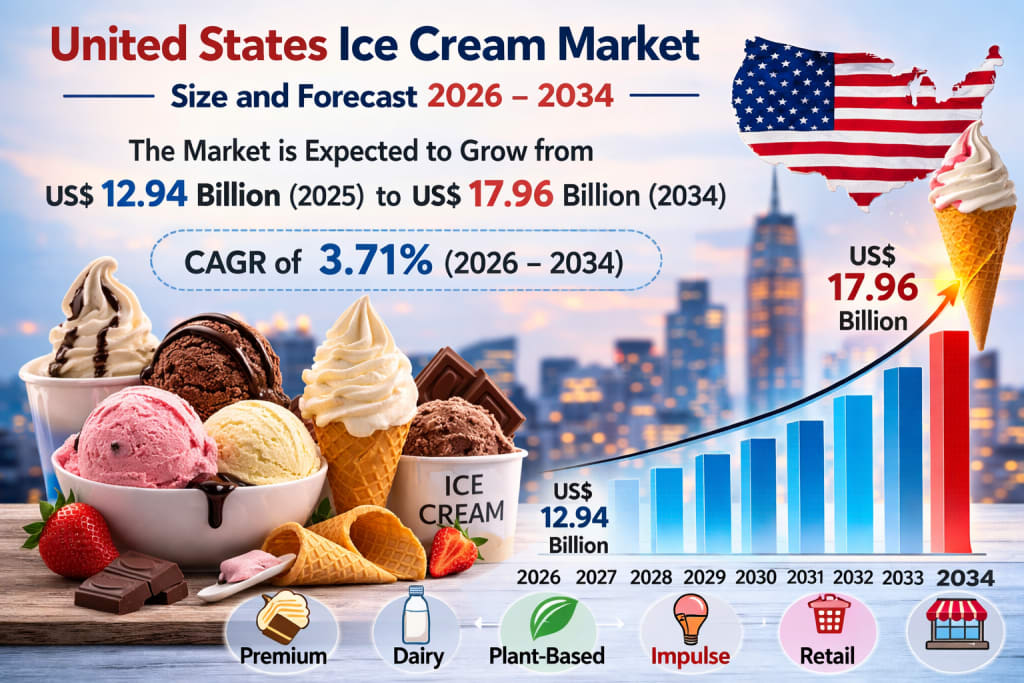
The United States ice cream industry continues to hold a special place in the nation’s food culture. From family celebrations to summer road trips and late-night indulgences, ice cream is more than just a dessert—it is an experience deeply woven into American lifestyles. According to Renub Research, the United States Ice Cream Market is projected to grow from US$ 12.94 Billion in 2025 to US$ 17.96 Billion by 2034, registering a Compound Annual Growth Rate (CAGR) of 3.71% from 2026 to 2034.
This steady growth trajectory reflects changing consumer preferences, rising demand for premium offerings, health-focused innovation, and the rapid evolution of retail and e-commerce channels.
United States Ice Cream Market Overview
Ice cream is a frozen dessert traditionally made from milk or cream, sugar, and flavoring ingredients such as vanilla, chocolate, fruits, and nuts. During production, air is incorporated through churning to create a smooth and creamy texture. Over time, the category has expanded to include soft-serve, gelato, frozen custard, frozen yogurt, and dairy-free alternatives made from almond, oat, soy, and coconut milk.
The United States is among the largest ice cream-consuming countries in the world. Demand spans both take-home formats (tubs, bricks) and impulse products (cones, sticks, bars). Although consumption peaks during summer, year-round indulgence driven by celebrations, home entertainment, and gifting ensures consistent sales.
Innovation remains central to the category’s success. Consumers are increasingly drawn to high-end, artisanal, plant-based, low-sugar, and high-protein options—reshaping the competitive landscape.
Growth Drivers of the United States Ice Cream Market
1. Premiumization and Demand for Indulgent Experiences
Premiumization is transforming the U.S. ice cream industry. Consumers are increasingly willing to pay higher prices for super-premium products crafted with rich dairy, natural ingredients, exotic flavor combinations, and generous mix-ins such as chocolate chunks, caramel swirls, nuts, and cookie dough pieces.
Artisanal brands have gained popularity by emphasizing authenticity, small-batch production, and creative flavor profiles. Ice cream is closely associated with emotional well-being, nostalgia, comfort, and celebration—factors that support demand even during economic uncertainty.
Premium packaging, sustainable materials, and visually appealing designs enhance shelf presence and encourage gifting purchases. This value-driven indulgence allows manufacturers to improve margins while maintaining strong consumer loyalty across demographics.
In 2024, U.S. manufacturers produced over a billion gallons of ice cream, reflecting the scale and depth of domestic demand. The rising appetite for indulgence experiences is expected to remain a key contributor to market expansion through 2034.
2. Product Innovation and Health-Conscious Expansion
Health awareness is reshaping the ice cream aisle. While traditional flavors remain dominant, consumers increasingly seek options aligned with dietary goals. Manufacturers are responding with:
Low-sugar and reduced-calorie formulations
High-protein ice creams
Keto-friendly varieties
Lactose-free and dairy-free alternatives
Functional ingredients with added nutritional value
Plant-based ice creams made from almond, oat, coconut, and soy milk are expanding the consumer base to include vegans and lactose-intolerant individuals. Millennials and Gen Z consumers, in particular, are driving demand for clean-label, organic, and ethically sourced ingredients.
Flavor innovation also keeps consumers engaged. Limited-edition seasonal launches and globally inspired flavors generate excitement and encourage repeat purchases. Technological advancements in formulation enable manufacturers to maintain taste and texture while reducing sugar and fat content.
In November 2025, Nestlé S.A. introduced a new range of low-sugar ice creams in the U.S., reinforcing its commitment to health-oriented innovation and strengthening its competitive position.
3. Strong Retail Infrastructure and E-Commerce Growth
The United States benefits from a highly developed retail ecosystem that supports frozen food distribution. Ice cream is widely available through:
Supermarkets and hypermarkets
Convenience stores
Specialty ice cream shops
Foodservice outlets
Online grocery platforms
Improved freezer technology, in-store merchandising, and impulse displays significantly boost visibility and sales. Additionally, the growth of grocery delivery, quick-commerce, and direct-to-consumer platforms is enhancing accessibility.
In October 2025, General Mills expanded its online distribution through strategic partnerships with leading digital grocery platforms. Such initiatives are helping brands tap into urban demand and strengthen omnichannel presence.
Challenges in the United States Ice Cream Market
1. Rising Health Concerns and Sugar Reduction Pressure
Increased awareness of obesity, diabetes, and cardiovascular issues is influencing purchasing behavior. Consumers are scrutinizing nutritional labels more closely, creating pressure on manufacturers to reformulate products.
While healthier alternatives exist, replicating the creamy texture and indulgent taste of traditional ice cream without sugar and fat remains technically challenging and costly. Regulatory pressures on labeling and marketing, particularly toward children, further intensify the challenge.
2. Cold-Chain Dependence and Operational Costs
Ice cream production and distribution depend heavily on cold-chain logistics. Rising electricity prices, refrigeration costs, and transportation expenses directly affect profitability.
Climate variability and supply chain disruptions can increase spoilage risks. Smaller manufacturers face greater financial strain due to limited economies of scale. Sustainability initiatives—such as eco-friendly packaging and energy-efficient freezers—require additional capital investment.
Segment Insights
Cones & Cups Market
Single-serve cones and cups are popular due to portability and convenience. Cones enhance the sensory experience with waffle or chocolate-coated textures, while cups offer easy consumption. Mini portions are increasingly appealing to health-conscious consumers seeking portion control.
Retail and foodservice availability ensures high-volume turnover, particularly during warmer months.
Dairy-Based Ice Cream Market
Dairy-based ice cream remains the dominant segment, favored for its rich texture and traditional flavor familiarity. Strong domestic dairy infrastructure supports consistent supply and production.
Even as plant-based alternatives gain traction, dairy continues to lead in family packs and super-premium formats. Manufacturers are introducing low-fat and high-protein dairy variants to address evolving preferences.
Impulse Ice Cream Market
Impulse products—including sticks, bars, cones, and novelties—are purchased for immediate consumption. Convenience stores, gas stations, and entertainment venues are key channels.
Limited-edition packaging, licensed branding, and premium chocolate coatings attract adult consumers. High emotional purchasing behavior makes impulse ice cream a strong revenue generator.
Chocolate Ice Cream Market
Chocolate remains one of the most preferred flavors in the United States. Variants range from milk chocolate to dark chocolate, fudge swirl, and brownie-infused options.
Premium cocoa, organic ingredients, and reduced-sugar innovations help sustain demand across retail and foodservice channels. Its versatility ensures continued relevance across demographics.
Ice Cream in Convenience Stores
Convenience stores play a critical role in impulse sales. Strategic freezer placement and extended operating hours increase purchase frequency. Collaborations between brands and convenience chains enable exclusive launches and promotional campaigns.
Regional Insights
California
California’s diverse population and health-conscious culture drive strong demand for artisanal, plant-based, and organic offerings. Favorable climate conditions support near year-round consumption. Direct-to-consumer channels and innovative local creameries further energize the market.
New York
Urban density and high disposable income fuel demand for premium and super-premium brands. Seasonal peaks are balanced by steady take-home consumption. Health-oriented options continue to gain momentum.
Washington
Eco-conscious consumers in cities like Seattle prioritize clean labels, sustainability, and locally sourced ingredients. Cooler climate moderates seasonality, while strong retail infrastructure supports distribution.
Arizona
Hot weather significantly boosts frozen dessert demand. Urban growth in Phoenix and Tucson strengthens both impulse and take-home segments. Value pricing remains important, though premium offerings are gaining traction.
Market Segmentation
By Flavor:
Chocolate, Vanilla, Fruit, Others
By Category:
Impulse, Take-home, Artisanal
By Packaging Type:
Cups, Sticks, Cones, Bricks, Tubs, Others
By Distribution Channel:
Supermarkets & Hypermarkets, Convenience Stores, Specialty Stores, Online Channels
Top States Covered:
California, Texas, New York, Florida, Illinois, Pennsylvania, Ohio, Georgia, New Jersey, Washington, North Carolina, Massachusetts, Virginia, Michigan, Maryland, Colorado, Tennessee, Indiana, Arizona, Minnesota, Wisconsin, Missouri, Connecticut, South Carolina, Oregon, Louisiana, Alabama, Kentucky, Rest of United States
Competitive Landscape
Leading players operating in the U.S. ice cream market include:
Nestlé S.A.
Unilever
General Mills
Danone S.A.
Mondelez International, Inc.
Meiji Co., Ltd.
American Dairy Queen Corporation
Blue Bell Creameries
Each company has been analyzed from five perspectives: overview, key personnel, recent developments, SWOT analysis, and revenue performance. Competitive strategies focus on innovation, premium branding, sustainability, and distribution expansion.
Final Thoughts
The United States Ice Cream Market is entering a new era of balanced indulgence. While traditional flavors and dairy-based products remain foundational, the future of the industry lies in innovation—particularly in premiumization, health-conscious alternatives, and omnichannel retail expansion.
With market value expected to rise from US$ 12.94 Billion in 2025 to US$ 17.96 Billion by 2034, growing at a CAGR of 3.71%, the industry demonstrates resilience and adaptability.
As consumers continue to seek indulgence, quality, and wellness in equal measure, manufacturers that successfully blend taste, health, sustainability, and accessibility will lead the next chapter of America’s frozen dessert evolution.
About the Creator
Sakshi Sharma
Content Writer with 7+ years of experience crafting SEO-driven blogs, web copy & research reports. Skilled in creating engaging, audience-focused content across diverse industries.
Keep reading
More stories from Sakshi Sharma and writers in Trader and other communities.
LIPIDS Market Size and Forecast 2026–2034
The global LIPIDS Market is entering a transformative growth phase, driven by rising health awareness, expanding industrial applications, and growing sustainability initiatives. According to Renub Research, the LIPIDS Market is expected to reach US$ 22.1 billion by 2034, up from US$ 12.04 billion in 2025, expanding at a CAGR of 6.98% from 2026 to 2034.
By Sakshi Sharma4 days ago in Trader




Comments
There are no comments for this story
Be the first to respond and start the conversation.