
United States Processed Meat Market Size and Forecast 2025–2033
Growing demand for convenient protein-rich foods and strong foodservice expansion are expected to drive the U.S. processed meat market to US$ 168.5 billion by 2033.

United States Processed Meat Market Size and Forecast 2025–2033
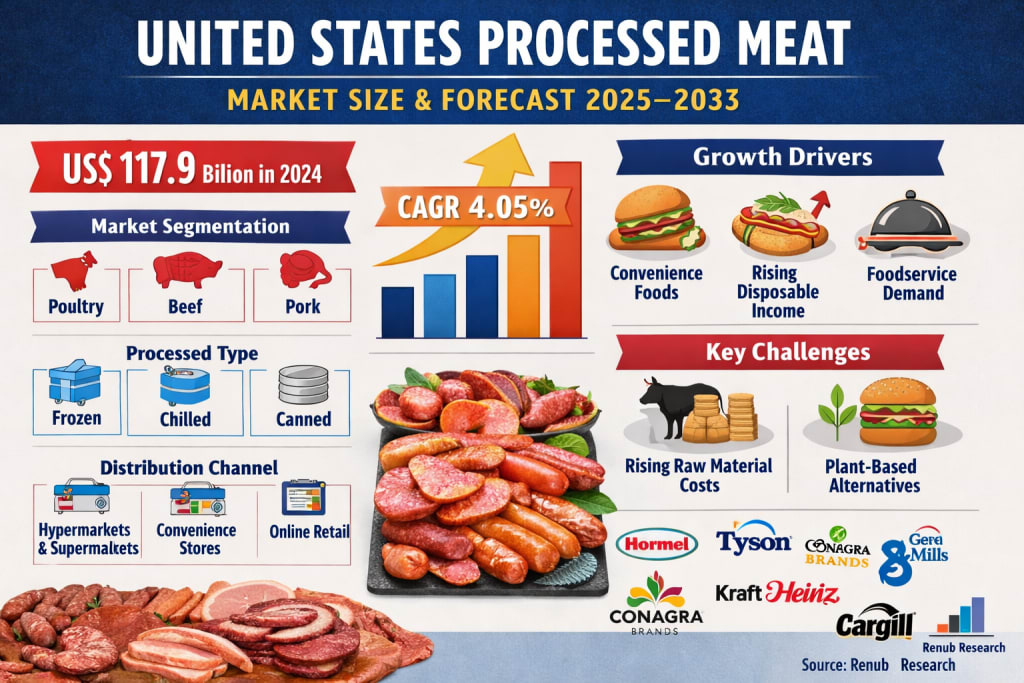
The United States processed meat market is projected to reach US$ 168.5 billion by 2033, rising from US$ 117.9 billion in 2024, expanding at a CAGR of 4.05% during 2025–2033. The market continues to grow steadily as consumers increasingly seek convenient, flavorful, and protein-rich food options that fit modern lifestyles.
Processed meat products have long been staples in American diets. From sausages and hot dogs to deli meats, bacon, and cured beef, these products are widely used in households, restaurants, and institutional food services. Their extended shelf life, ready-to-eat nature, and ability to enhance meal flavor make them highly appealing to busy consumers.
According to Renub Research, the expansion of the U.S. processed meat industry is being fueled by factors such as convenience, affordability, product innovation, and strong retail distribution networks. Furthermore, the rising popularity of clean-label and all-natural processed meat products is reshaping consumer preferences. Many brands now highlight claims like low sodium, low fat, low calories, no MSG, and preservative-free formulations to attract health-conscious shoppers.
The report “United States Processed Meat Market & Forecast 2025–2033” analyzes the market by meat type, processed type, distribution channel, and leading companies, providing comprehensive insights into the evolving industry.
United States Processed Meat Industry Overview
Processed meat refers to meat that has been preserved or enhanced through methods such as smoking, curing, salting, fermenting, or adding preservatives. These techniques improve shelf life, flavor, and safety while allowing meat products to be distributed widely across retail and foodservice channels.
Common raw materials used in processed meat production include beef, pork, poultry, turkey, and lamb. These meats are transformed into popular products like pepperoni, jerky, ham, bacon, sausages, and deli slices. Preservatives and controlled processing techniques help prevent microbial growth and extend shelf life, ensuring product safety during storage and transportation.
The U.S. is one of the world’s largest producers of meat, providing a strong foundation for its processed meat sector. With advanced livestock production systems, large-scale processing facilities, and efficient supply chains, the country maintains a steady supply of raw materials for meat processing industries.
For example, the United States accounted for nearly 30% of global beef production in 2022, producing approximately 28.4 billion pounds of beef. Major beef-producing states include Missouri, Texas, Oklahoma, and Ohio, with Ohio alone processing nearly 2.9 million cattle in 2022.
Corporate investments are also strengthening the industry. In February 2024, Cargill Inc. expanded its production capacity by acquiring two meat processing facilities from longtime partner Ahold Delhaize USA. This acquisition aims to increase case-ready beef and pork production and enhance supply to supermarkets in the northeastern United States.
Growth Drivers of the United States Processed Meat Market
Rising Consumer Demand for Convenience
One of the most important growth drivers of the U.S. processed meat market is the growing demand for convenience foods. Modern lifestyles often leave consumers with limited time for cooking, increasing reliance on quick and easy meal solutions.
Processed meat products such as deli meats, sausages, bacon, and ready-to-cook frozen meats allow consumers to prepare meals quickly without sacrificing taste or nutrition. These products are particularly popular for breakfast items, sandwiches, burgers, and snack foods.
Frozen processed meats are also gaining popularity because they provide longer shelf life and easy storage, making them practical for busy households. The increasing number of working professionals, dual-income families, and urban consumers has accelerated the demand for these ready-to-use food options.
Retailers are responding by expanding their processed meat offerings, particularly in supermarkets and online grocery platforms, further strengthening market growth.
Increased Disposable Income
Higher disposable incomes in the United States have encouraged consumers to spend more on premium food products, including high-quality processed meats.
Consumers are increasingly choosing organic, grass-fed, gourmet, and specialty processed meat products that promise better taste, improved nutrition, and greater transparency regarding sourcing. Premium cured meats, artisanal sausages, and specialty deli cuts are becoming more popular among affluent consumers.
In addition, rising income levels allow consumers to experiment with international cuisines and specialty meat products, driving innovation in the processed meat sector. Producers are responding with new product lines featuring unique flavors, improved packaging, and healthier formulations.
This trend toward premiumization is expected to continue as consumers prioritize quality, sustainability, and flavor.
Strong Demand from the Foodservice Industry
The foodservice sector plays a significant role in driving processed meat consumption in the United States. Restaurants, quick-service chains, and cafes rely heavily on processed meat ingredients to prepare a wide range of menu items.
Products such as bacon, ham, sausages, and deli meats are essential components of sandwiches, burgers, pizzas, breakfast platters, and wraps. Their consistency, ease of storage, and fast preparation make them ideal for restaurant operations.
The rapid expansion of quick-service restaurants (QSRs), fast-casual dining establishments, and delivery-based food services has increased the demand for processed meat products. Additionally, the rise of online food delivery platforms and takeout services has further strengthened consumption.
Institutional sectors such as schools, hospitals, and corporate cafeterias also contribute to the market by purchasing processed meats in bulk for meal preparation.
Challenges in the United States Processed Meat Market
Rising Raw Material Costs
The processed meat industry faces ongoing challenges due to fluctuating raw material prices, particularly for livestock feed and meat production.
Feed ingredients such as corn and soybeans represent a large portion of livestock production costs. When feed prices increase, the cost of raising animals also rises, which ultimately impacts the price of raw meat used in processing.
Additionally, factors such as supply chain disruptions, labor shortages, and transportation costs can increase production expenses for meat processors. These rising costs may reduce profit margins or force companies to increase retail prices, potentially affecting consumer demand.
Increasing Competition from Plant-Based Alternatives
Another significant challenge facing the processed meat market is the growing popularity of plant-based meat alternatives.
Consumers concerned about the health risks associated with processed meats—such as high sodium content, preservatives, and saturated fats—are increasingly exploring plant-based protein products. These alternatives are often marketed as healthier, environmentally sustainable, and cruelty-free options.
Plant-based products made from soy, pea protein, mushrooms, and other plant ingredients have gained traction among vegetarian, vegan, and flexitarian consumers.
As a result, traditional processed meat companies must continuously innovate to remain competitive. Many companies are investing in clean-label formulations, reduced-sodium products, and improved nutritional profiles to retain consumer interest.
Beef’s Popularity and Versatility in Processed Meats
Among various meat types, beef is expected to remain one of the dominant segments in the U.S. processed meat market. Its rich flavor, versatility, and widespread consumer acceptance make it a staple ingredient in many processed products.
Beef is widely used in burgers, sausages, deli meats, and ready-to-cook meals, making it a popular choice among American consumers. The strong infrastructure of the U.S. beef industry also ensures a consistent supply of high-quality raw materials for processors.
Furthermore, beef products continue to evolve with innovations such as premium cuts, flavored beef snacks, and gourmet burger patties, which are attracting a wide range of consumers.
Chilled Processed Meat Leads Market Preference
Chilled processed meat products are expected to hold a significant share of the U.S. processed meat market. Consumers increasingly prefer chilled products because they offer a balance between freshness, quality, and convenience.
Unlike frozen products, chilled processed meats typically undergo minimal processing and maintain natural textures and flavors. This characteristic appeals particularly to health-conscious consumers who prefer foods that appear less processed.
The widespread availability of refrigeration infrastructure in retail outlets and households across the United States also supports the growth of chilled processed meat products.
Hypermarkets and Supermarkets Drive Retail Sales
Hypermarkets and supermarkets remain the largest distribution channel for processed meat products in the United States. These retail outlets offer extensive product variety, allowing consumers to choose from numerous brands, flavors, and packaging sizes.
Supermarkets provide several advantages, including competitive pricing, promotional discounts, and convenient shopping experiences. Their well-established supply chains ensure consistent product availability, which strengthens consumer trust.
Additionally, large retail chains often partner with meat processors to offer private-label processed meat products, further expanding product choices and attracting budget-conscious consumers.
Although online grocery shopping is growing rapidly, physical retail stores continue to dominate processed meat sales due to the importance of freshness, refrigeration, and in-store product visibility.
United States Processed Meat Market Segmentation
By Meat Type
Poultry
Beef
Pork
Others
By Processed Type
Frozen
Chilled
Canned
By Distribution Channel
Hypermarkets and Supermarkets
Convenience Stores
Online Retail Stores
Others
Company Analysis
The report also highlights major companies shaping the competitive landscape of the U.S. processed meat market.
Hormel Foods
A leading producer of packaged meat products, Hormel offers popular brands across bacon, deli meats, and ready-to-eat meat products.
Tyson Foods
One of the largest meat processors in the United States, Tyson Foods produces a wide range of chicken, beef, and pork-based processed products.
Conagra Brands Inc.
Conagra offers various packaged food products, including processed meat offerings under well-known household brands.
General Mills
Although primarily known for packaged foods, General Mills also participates in the processed meat and ready-to-eat meal categories.
Kraft Heinz Company
The company produces a variety of processed foods, including packaged meats and deli products widely distributed in U.S. retail markets.
Cargill Incorporated
Cargill plays a major role in meat production and processing, supplying beef, pork, and poultry products to retailers and foodservice companies.
Pilgrim’s Pride Corp.
A major poultry producer, Pilgrim’s Pride supplies processed chicken products across retail and foodservice sectors.
Final Thoughts
The United States processed meat market continues to evolve as consumer lifestyles, dietary preferences, and foodservice demand shape the industry’s trajectory. With the market projected to reach US$ 168.5 billion by 2033, the sector presents significant opportunities for producers, retailers, and investors.
While challenges such as rising production costs and competition from plant-based alternatives remain, ongoing product innovation and strong consumer demand for convenient protein-rich foods are expected to sustain growth.
Companies that focus on healthier formulations, sustainable production practices, and premium product offerings will likely gain a competitive advantage in the coming years.
As American consumers continue to balance convenience, taste, and nutrition, processed meat products will remain an important part of the country’s dynamic food industry.
About the Creator
Keep reading
More stories from shibansh kumar and writers in Trader and other communities.
Flavored Milk Market Size & Forecast 2026–2034
The global flavored milk market is witnessing strong growth as consumers increasingly seek beverages that combine nutrition, taste, and convenience. Flavored milk offers a unique blend of essential dairy nutrients along with appealing taste profiles that attract consumers across various age groups. Particularly among children, teenagers, and young adults, flavored milk has become a popular alternative to regular milk and sugary soft drinks.
By shibansh kumarabout 24 hours ago in Trader
Australia Solar Power Equipment Market 2026: Renewable Energy Expansion, Government Incentives & Advanced Solar Technologies
Australia Solar Power Equipment Market Overview The Australia solar power equipment market is a rapidly expanding segment of the country’s renewable energy sector. Solar power equipment includes components such as solar panels, inverters, mounting systems, batteries and monitoring systems that are used to generate electricity from sunlight. With abundant solar resources and strong policy support for renewable energy, Australia has become one of the leading adopters of solar energy technologies worldwide.
By Amyra Singhabout 6 hours ago in Trader


Comments
There are no comments for this story
Be the first to respond and start the conversation.