astronomy
Celestial objects and the phenomena that surrounds them. What lies above the earth forever out of reach. From moons, to stars, galaxies, and beyond.
NASA's Kepler Space Telescope Continues Observations of TRAPPIST-1 Planetary System
The seven Earth-sized exoplanets orbiting the star TRAPPIST-1 generated a lot of excitement when their discovery was announced last month. This is the largest collection of Earth-sized worlds in one planetary system found so far, and some of them are well within the star's "habitable zone" where temperatures could allow liquid water to exist on their surfaces. Little else is known about the actual conditions on these planets so far, but NASA's Kepler Space Telescope has also been observing TRAPPIST-1 in recent weeks.
By Paul Scott Anderson9 years ago in Futurism
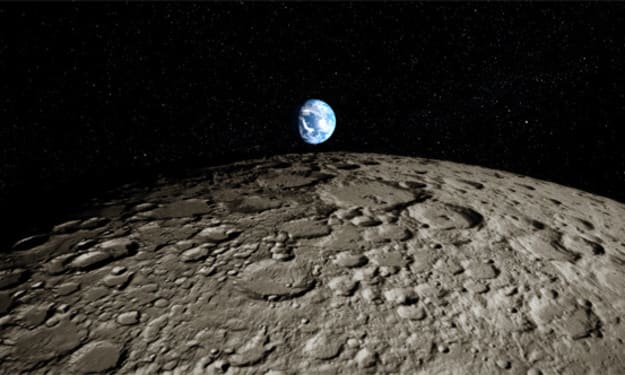
Third Eye on the Moon
It was in January of 2017 when, due to a lawsuit, the CIA was forced to release over thirteen million previously declassified files online to the public. These files were wide-ranging, including such topics as recipes for invisible ink, UFO cases, and even files pertaining to Project Stargate, a government-funded project which dealt with psychic powers and extrasensory perception. And while this was intriguing, to say the least, one psychic claims that he was used for an operation that stretched every boundary of his own abilities.
By Ryan Sprague9 years ago in Futurism
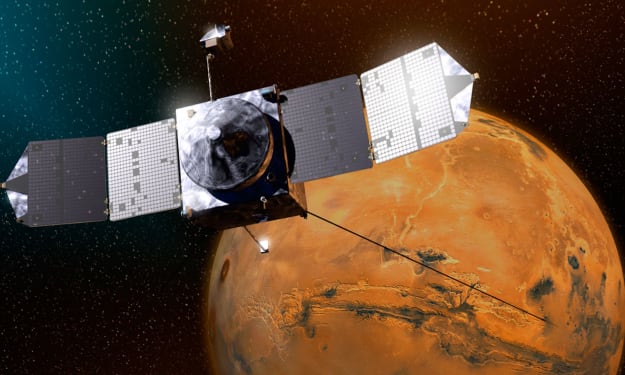
MAVEN Spacecraft Makes Evasive Maneuver to Avoid Impact With Mars' Moon Phobos
Mars is a busy place these days, with multiple rovers and orbiters exploring the planet. Out of the several spacecraft currently in orbit, NASA's Mars Atmosphere and Volatile EvolutioN (MAVEN) is a fairly recent addition, having been at Mars for just over two years now. Usually, things are pretty routine, but this week the spacecraft had to make an unplanned evasive maneuver - to avoid a collision with one of Mars' two small moons, Phobos!
By Paul Scott Anderson9 years ago in Futurism
Could the TRAPPIST-1 Planetary System Be Home to Alien Life?
The discovery of seven Earth-sized planets orbiting the star TRAPPIST-1 generated a lot of excitement last week. Earth-sized planets have been found before, among the thousands of exoplanets discovered so far by astronomers, but this is the first time that so many have been detected in one planetary system. As of now, astronomers are limited in how much they can learn about these new worlds, but the James Webb Space Telescope, the upcoming successor to Hubble due to launch in 2018, will be able to gather more data and analyze whatever atmospheres these planets have, perhaps bringing us closer to finding another habitable world.
By Paul Scott Anderson9 years ago in Futurism
The Open Road Calls to Us
The news of the discovery of a solar system with possibly several exoplanets within the habitable-zone was just announced. For many of us in the scientific community that study biology, chemistry, astrobiology, etc, this is Wonderland. Thoughts and questions are added and manipulated in our brains like ingredients of a gourmet stew. And we are ready to eat.
By Nickolas Rudolph9 years ago in Futurism
Three Potential New Earths Found in a Planetary System of Seven
Astronomers have discovered what is undoubtedly one of the most exciting exoplanet systems of recent years; seven Earth-sized worlds orbiting a red dwarf star only 40 light years away. What makes this find extraordinary is that all seven may have oceans of liquid water and three may even harbor life itself.
By Richard J. Bartlett9 years ago in Futurism
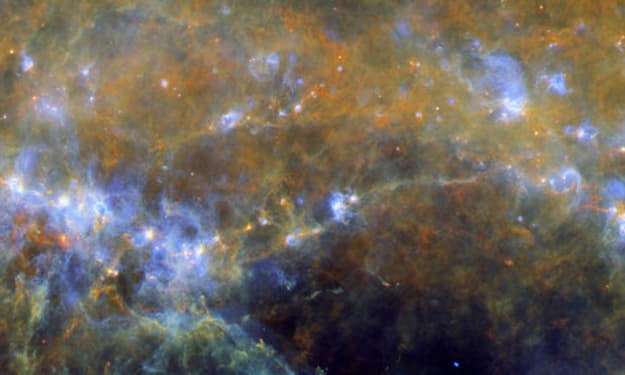
Star Formation on Filaments in Molecular Cloud RCW106
The image above comes from ESA's Herschel Space Observatory, an ESA mission with participation from NASA. It was obtained as part of Herschel's Hi-GAL key-project, which imaged the entire plane of the Milky Way in five different infrared bands.
By Susan Fourtané 9 years ago in Futurism
The Top Ten Night Sky Sights for March, 2017
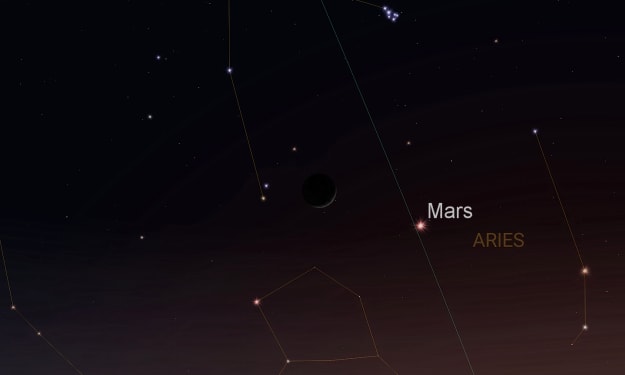
We've all stopped and stared at the night sky from time to time but few of us are aware of what we're looking at. Many of us are surprised to learn that our nearest neighbors, the planets, are just as easily seen ias the Moon and the stars themselves.
By Richard J. Bartlett9 years ago in Futurism
Best Astronomy Books for Beginners
Most people have been looking up at the stars and wondering about them since they first took a walk outside at night as a child. That childlike curiosity tends to deepen over time as family members and friends point out such fascinating things as the planets and constellations in the nighttime sky. Maybe you too have become intrigued by the stars, and have seen your interest in the exciting hobby of astronomy grow. The only problem is that you don’t know where to start. The best astronomy books for beginners offer a solid and informative introduction to the fascinating world of astronomy.
By Futurism Staff10 years ago in Futurism
Best Vintage Astronomy Books
The 20th century was an amazing time for space exploration. Astronomers were learning more about our solar system every day, while the manned missions to space were revealing galaxies of information. From this great age of exploration came some of the best books about astronomy. Now deemed vintage, these books are chock full of predictions, fears, facts, and failures from the astronomers and authors of the time. Ranging from literature about our home planet in Heinz Haber's Our Blue Planet, to predictions by Reginald Turnhill for space exploration in the 80s and 90s in Space Age, there is a great deal of material to be examined. People were talking about colonies in space in the 80s, and this idea may be found in James Trefil's Living in Space. From astronomy books for beginners to volumes for experts to pour over, the best vintage astronomy books should be on everyone's bookshelves.
By Futurism Staff10 years ago in Futurism