Perspectives
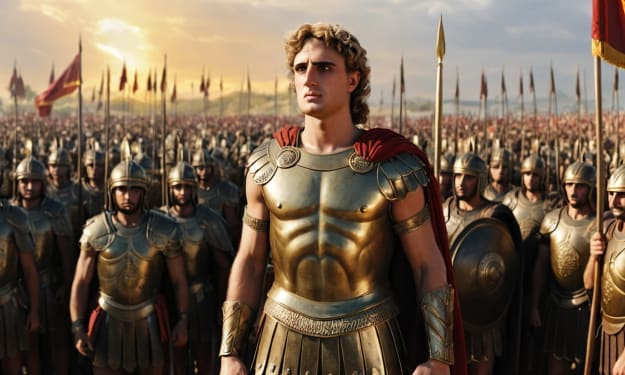
Ancient Super Weapons That Changed Warfare Forever
Throughout recorded history, warfare has shaped civilizations. Long before drones, missiles, and cyber warfare, ancient societies were already engineering terrifying and brilliant machines designed to dominate the battlefield.
By Areeba Umairabout 3 hours ago in History
Utopia. AI-Generated.
The concept of utopia has captivated human imagination for centuries, serving as a powerful lens through which societies envision ideal worlds and explore themes of justice, equality, and harmony. From ancient philosophical texts to modern dystopian narratives, the quest for a perfect society reflects humanity's deepest aspirations and fears. This article delves into the historical evolution of utopian thought, examining its roots in ancient civilizations, its flourishing during the Renaissance and Enlightenment, and its manifestations in 19th-century movements and contemporary culture. Through this exploration, we will uncover the critiques and challenges that accompany utopian ideals, as well as their enduring influence on current societal debates and future visions of a better world.
By Alain juniorabout 7 hours ago in History
Jerusalem’s Most Sensitive Sacred Site: Why the Future of Al-Aqsa Mosque Matters to the Entire World
Across the long and complicated story of human civilization, certain places acquire a meaning that goes far beyond their physical structure. They become symbols of identity, spirituality, and collective memory for millions of people. One of the most powerful examples of such a place is Al-Aqsa Mosque. Located in the ancient city of Jerusalem, Al-Aqsa Mosque is one of the most historically and religiously significant sites in the world. For Muslims, it is the third holiest place in Islam, after the sacred mosques in Mecca and Medina. Yet the importance of this location extends far beyond a single faith community. The wider Jerusalem area contains sacred sites for Muslims, Christians, and Jews, making it one of the most spiritually complex places on the planet. Because of this unique significance, any discussion about the future of Al-Aqsa Mosque often sparks global attention. Understanding why this site matters so deeply requires looking at history, religion, geopolitics, and the emotional connections that billions of people have with the city of Jerusalem. The Religious Importance of Al-Aqsa Mosque For Muslims, Al-Aqsa Mosque is not simply an architectural landmark. It represents centuries of spiritual tradition and religious devotion. According to Islamic tradition, the mosque is connected to the event known as Al-Isra wal-Mi’raj, the miraculous night journey of Prophet Muhammad ﷺ. During this event, it is believed that the Prophet traveled from Mecca to Jerusalem before ascending to the heavens. Because of this spiritual connection, the mosque holds a special place in the hearts of Muslims around the world. The mosque stands within a larger sacred compound known as Al-Haram Al-Sharif, which contains several historic structures, courtyards, and prayer areas. This entire complex is considered a sacred site within Islam and has been a place of worship for centuries.
By The Insight Ledger about 22 hours ago in History
The Lioness of Brittany: How Jeanne de Clisson Became the Most Feared Pirate in Medieval France
The transformation of Jeanne Louise de Belleville from aristocratic wife and mother into the most feared pirate of the fourteenth century began on a summer day in 1343 when she stood at the edge of a crowd in Paris and watched her husband's head fall from the executioner's block, an execution ordered by King Philip VI of France based on accusations of treason that Jeanne knew with absolute certainty were fabricated lies designed to seize her family's lands and wealth, and in that moment of unbearable grief and rage something fundamental shifted in her soul, transforming a woman who had been raised in privilege and educated in the genteel arts expected of noblewomen into an instrument of vengeance who would spend the next thirteen years hunting French ships across the English Channel and making the French nobility regret the day they decided to murder her husband and destroy her family. History has largely forgotten Jeanne de Clisson, relegating her extraordinary story to footnotes in academic texts about medieval warfare and piracy, but in her own time she was legendary and terrifying, known as the Lioness of Brittany, commanding a fleet of warships painted entirely black with blood-red sails that announced her presence and her intentions to every French vessel unfortunate enough to encounter her on the open sea.
By The Curious Writera day ago in History
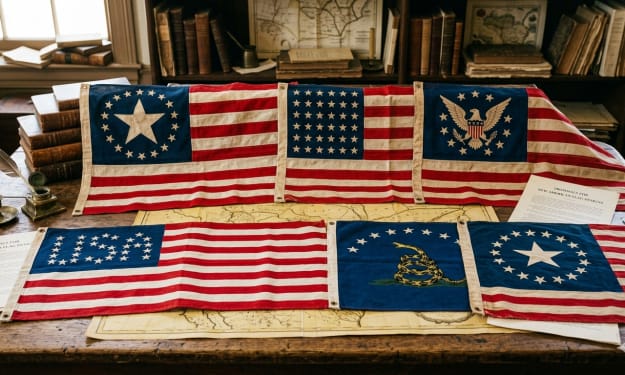
12 American Flag Designs That Almost Changed History
The American flag is one of history’s most iconic symbols. Its red, white, and blue stripes, along with fifty stars, instantly represent freedom, democracy, and national pride. But did you know that the flag we all recognize today didn’t become official until 1960?
By Areeba Umair2 days ago in History