Latest Stories
Most recently published stories on Vocal.
The Oldest, Largest, and Deepest Lake in the World
Exploring Earth’s Most Ancient and Massive Freshwater Giant Lake Baikal is often described as a freshwater sea because of its immense size and volume. Stretching over 600 kilometers in length and plunging to depths of more than 1,600 meters, it surpasses every other lake in age and depth. Unlike most lakes that form and disappear within thousands of years, Baikal has endured for millions, created by a continental rift that continues to widen today. This slow geological movement has allowed the lake to grow deeper over time. Its scale is so vast that it contains more water than all the Great Lakes of North America combined. Scientists regard it as one of the most important natural laboratories on Earth, preserving ancient life forms and climate records within its sediments. The surrounding mountains and forests enhance its isolation, helping protect its pristine condition.
By Muhammah Hanzalah22 days ago in Earth
US vs Iran’: How Advanced Is the USS Abraham Lincoln’s Drone Interception System?. AI-Generated.
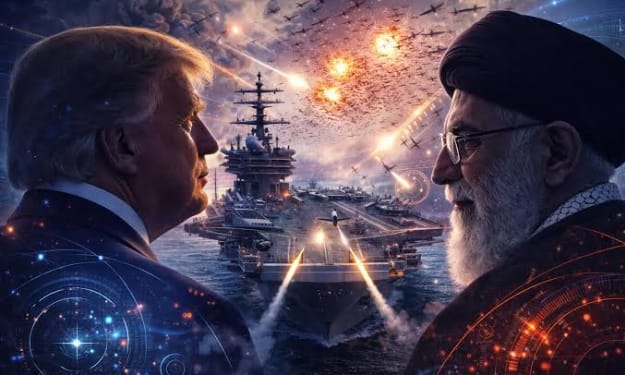
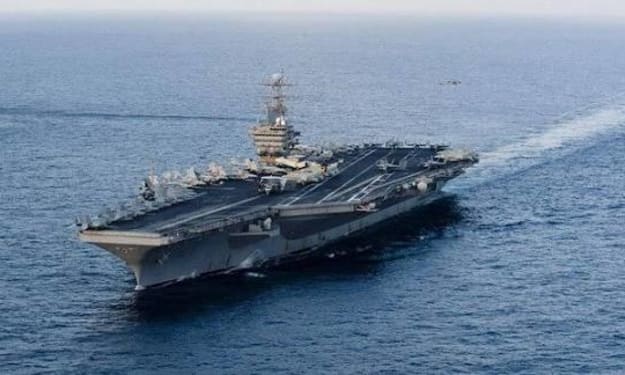
As tensions between the United States and Iran escalate over regional security and nuclear negotiations, attention has focused on the capabilities of U.S. military assets — particularly the aircraft carrier USS Abraham Lincoln — to detect and counter increasingly sophisticated drone threats. Recent incidents in the Arabian Sea have highlighted both the strengths and challenges of current U.S. defensive systems in protecting high-value naval vessels from unmanned aerial vehicles (UAVs) and low-cost swarm attacks. The War Zone +1 A Real-World Test On 4 February 2026, U.S. Central Command reported that an Iranian drone approached the Abraham Lincoln carrier strike group before being shot down by an F-35C fighter jet launched from the carrier’s air wing. The incident — described by U.S. officials as a self-defense action — underscores the current reliance on aircraft and conventional missile systems to defeat airborne threats in open water. The War Zone +1 The drone, identified in open-source reporting as a †Shahed-type UAV, appears to have been on a reconnaissance or potentially hostile trajectory toward the carrier group. Iranian forces later claimed the drone was on a “routine” mission Layered Defense: Beyond the F-35 The Lincoln’s best-known defensive measure against airborne threats is its carrier air wing, consisting of stealth fighters (F-35Cs), strike aircraft, and early-warning platforms that provide both offensive and defensive capabilities. These aircraft can patrol wide areas around the strike group, extend radar coverage, and intercept aerial threats at long ranges. The Times of India However, carriers do not operate in isolation. They are accompanied by a multi-layered protective network that includes escorts such as guided-missile destroyers and cruisers equipped with their own anti-air systems. These ships — typically Arleigh Burke-class destroyers — carry systems like: RIM-7 Evolved Sea Sparrow Missiles (ESSM) for short-to-medium range defense; Standard Missiles (SM-2/SM-6) for medium-long-range air defense; Phalanx Close-In Weapon System (CIWS) for last-ditch point defense; (*Philips Sea Sparrow and CIWS details are part of typical carrier group defenses.) The Aegis Combat System aboard escort ships allows integrative radar tracking, coordinated engagement, and layered protection that extends far beyond the carrier’s own systems. These combined assets are designed to detect, track, and destroy threats before they close on the carrier strike group. Emerging Counter-Drone Technology While traditional missile and fighter responses remain central, the U.S. Navy is actively developing more specialized counter–unmanned aerial systems (C-UAS) aimed at low-cost threats such as drones. Research efforts include: Directed energy weapons (lasers) — prototypes like the High Energy Laser With Integrated Optical Dazzler and Surveillance (HELIOS) have been tested on other U.S. Navy ships and offer the promise of low-cost per shot against small UAVs, small boats, and some missile threats. Marine Insight Hypervelocity Projectiles (HVP) — guided rounds that can be fired from existing naval guns and provide a more cost-effective interception layer than expensive interceptor missiles, especially against drones and small unmanned threats. National Security Journal These systems reflect a broader effort within the U.S. Department of Defense to improve counter-drone defenses across all branches, accelerating deployment timelines and integrating new technologies into existing platforms. DefenseScoop The Challenge of Drone Swarms Despite this technological progress, experts warn that rapid “saturation attacks” involving large numbers of inexpensive drones remain a key concern. Analysts argue that even advanced defenses can be strained if dozens or hundreds of Unmanned Aerial Vehicles arrive simultaneously — a tactic that Iran and allied groups could adopt based on swarm tactics seen elsewhere. A layered defense approach — relying on aircraft, missiles, and emerging tech — increases the probability of intercept, but no system is entirely foolproof. Modern military strategy acknowledges that asymmetric threats such as drone swarms require a mix of kinetic, electronic, and directed-energy responses. Strategic Implications The Abraham Lincoln’s current engagements demonstrate that U.S. naval forces possess robust defensive measures capable of reacting to individual aerial threats. But as UAV technology proliferates and adversaries experiment with swarm and loitering attack methods, the U.S. Navy’s counter-drone architecture must adapt quickly. The incident in the Arabian Sea illustrates both the capabilities and limitations of current systems. While traditional interceptors like fighter jets remain essential, future conflicts may hinge on how effectively carriers and their escorts integrate next-generation defenses against a new era of unmanned threats. Amazon Web Services, Inc.
By Fiaz Ahmed 22 days ago in The Swamp
🧭 Inside Iran’s Preparation for War and Plans for Survival. AI-Generated.
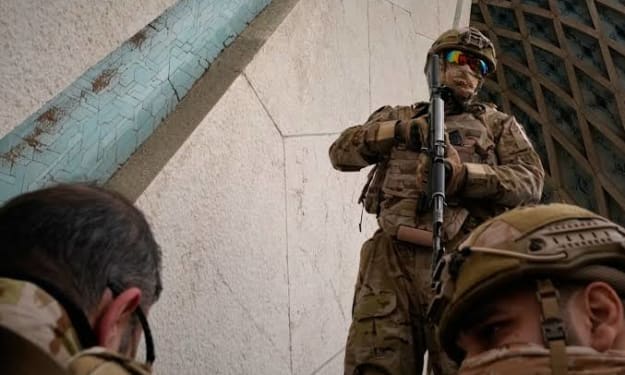
As tensions with the United States and its allies rise, the Iran is not only negotiating on the diplomatic front but also quietly preparing for the possibility of a long, drawn-out conflict. Iranian leaders, military officials, and strategic planners appear to be reinforcing both their defensive readiness and survival strategies, balancing threats from war with efforts to maintain national stability. Heightened Security Posture Amid Diplomatic Standoff According to defense reporting, the Iranian regime has been adjusting its military posture as talks with Washington falter and ultimatums are issued. Despite ongoing nuclear negotiations — including plans to draft a counterproposal — Tehran is simultaneously preparing for the possibility that diplomacy fails and hostilities break out. Sources say Iran’s strategic focus includes reinforcing its deterrence capabilities and planning for a protracted conflict if necessary. Officials in Tehran believe that a show of strength may increase their leverage at the negotiating table and decrease the likelihood of a successful punitive strike by external powers. Military Strategy and Defense Upgrades Iran’s leaders emphasize that they are prepared to defend their territory and interests but have repeatedly stated they do not intend to initiate a war. In speeches to military personnel, senior commanders stress defensive readiness while calling for regional stability. They assert that Iran has boosted its deterrent power, including improvements in ballistic missile capabilities, to ensure it can respond forcefully to aggression The ballistic-missile program is central to Tehran’s defense strategy. It remains the largest in the Middle East and serves as a pillar of deterrence, designed to offset conventional superiority by adversaries. The Iranian leadership calculates that a credible missile threat raises the costs of any potential attack on Iranian soil. Learning from Recent Conflicts Iran’s experience in the June 2025 “12-day war” with Israel and the U.S. has informed its strategic adjustments. Lessons from that conflict — particularly the vulnerability of fixed radar installations and the necessity of mobility and redundancy — are shaping modernization efforts across the Iranian military. New radar units, mobile air-defense deployments, and diversified surveillance systems are being prioritized to improve resilience and complicate potential air attacks by adversaries. The state has reportedly begun focusing on mobile radar units capable of rapid redeployment, use of artificial intelligence to integrate early warning systems, and expanded electronic warfare capabilities. These moves reflect a broader effort to create a more adaptable and survivable defense architecture. Missile Production and Force Expansion Even after Iran lost a significant portion of its missile launcher inventory during past conflicts, reports indicate that Tehran continues to scale up production. Analysts say Iran is producing hundreds of ballistic missiles per month, with a range of capabilities that could overwhelm regional air defenses. This sustained output underscores Tehran’s strategy of building quantity and dispersion alongside quality, making it harder for an opponent to suppress missile forces quickly. Proxy Mobilization and Regional Networks Another key element of Iran’s survival plan is the activation and coordination of its regional allied networks. Proxy groups and allied militias in Iraq, Lebanon, Yemen, and Syria have been mobilized to offer strategic depth and complicate any direct confrontation. This regional network can provide asymmetric pressure on adversaries and act as a deterrent by threatening broader escalation if Iran is attacked. Balancing War Preparation with Diplomacy Despite strong rhetoric and military readiness, Iranian diplomats continue to participate in negotiations. Officials have signaled they prefer a diplomatic solution, reiterating that Iran’s nuclear program doesn’t have a military purpose and that a deal is still attainable. The government maintains that constructive dialogue remains preferable to conflict, even as it prepares for worst-case scenarios. Survival Strategies Beyond the Battlefield Preparations for conflict are not limited to military measures. Iran appears to be reinforcing internal control mechanisms — including digital isolation strategies — to reduce the impact of outside influence and maintain resilience in the face of potential external pressure. Long-term plans include tightening control over internet infrastructure to manage information flows and ensure communications remain intact during crises. Looking Ahead: A Calculus of Caution Iran’s dual track of negotiation and preparation reflects a nuanced approach to survival in an unpredictable geopolitical environment. By reinforcing its defense infrastructure, upgrading missile and radar capabilities, mobilizing regional proxies, and enhancing internal security, Tehran is positioning itself to withstand external pressure while leaving room for diplomatic breakthroughs. Whether these preparations deter military action or simply postpone confrontation remains uncertain — but they underscore a comprehensive strategy aimed at ensuring Iran’s survival even in the face of war.
By Fiaz Ahmed 22 days ago in The Swamp
US vs Iran’: Can Yemen Houthis Hijack USS Abraham Lincoln if It Strikes Iran?. AI-Generated.
As the United States weighs potential military action against Iran amid heightened tensions over nuclear negotiations and regional hostilities, defence analysts are closely watching not just Tehran’s response but that of Yemen’s Houthi movement — the Iran-aligned armed group that has been targeting international shipping and signalling it may strike U.S. naval assets if Washington enters a conflict. While the idea of a direct “hijacking” of an aircraft carrier such as the USS Abraham Lincoln is highly implausible given modern naval defenses and U.S. military superiority, the Houthi threat underscores how a broader regional conflagration could pull in additional actors and complicate any American operations. Houthis: From Shipping Attacks to Threats on U.S. Ships Over the past several years, the Iran-backed Houthis — formally known as Ansar Allah — have launched repeated missile and drone strikes on commercial vessels and naval targets in the Red Sea, the Bab al-Mandeb strait, and the Gulf of Aden. The group claims these actions are in solidarity with Palestinians and in protest of Western and Israeli military policies. Since late 2023, the Houthis say they have attacked more than 100 ships, firing missiles and drones across one of the world’s most important shipping lanes. U.S. Central Command has responded by intercepting and destroying Houthi drones and missiles, including in self-defence operations, and has struck Houthi weapon storage and command facilities in Yemen to degrade those capabilities. Importantly, in June 2025, Reuters reported that the Houthis openly threatened to target U.S. ships — including warships — “if Washington joins strikes on Iran.” That declaration suggests that the group sees American involvement in a wider regional conflict as an impetus to escalate its own actions Geography and Capabilities: What the Houthis Can and Cannot Do The Houthis control significant territory in northern Yemen, including large coastal stretches on the Red Sea. They have used this geography to fire missiles, drones and even unmanned surface vessels at international shipping and naval assets. Analysts say their arsenal is a mix of short-range ballistic missiles, anti-ship cruise missiles, and armed drones — many believed to be of Iranian origin or design. However, these systems have limitations. While they can threaten unarmoured merchant vessels and pose risks to smaller craft, they lack the precision, range, and frequency needed to overwhelm a carrier strike group’s layered defenses. U.S. Navy carriers like the Abraham Lincoln are protected by: Aegis-equipped escort destroyers, capable of tracking and intercepting missiles and drones Carrier air wings, including fighters and early-warning aircraft Electronic warfare systems and point-defence weapons designed to defeat approaching threats These assets make a direct “hijack” or capture scenario nearly impossible; carriers are some of the most heavily defended platforms in the world. Threat vs. Capability Despite the group’s rhetoric, there is no verified event in which Houthis have successfully damaged or captured a U.S. aircraft carrier. When claims have been made — including assertions of targeting U.S. carriers with a combination of missiles and drones — U.S. military officials have either denied hits or confirmed only interception of various Houthi UAVs and missiles with no damage to warships. That said, the group’s pattern of attacks has forced Western navies to expend time, ammunition and strategic focus on patrols in the Red Sea rather than elsewhere. In 2024 and 2025, U.S. and allied forces conducted hundreds of air and cruise missile strikes against Houthi sites in response to repeated attacks. If the U.S. Strikes Iran A U.S. strike on Iran could significantly change the calculus. The Houthis would likely ramp up operations in the Red Sea and Gulf of Aden, viewing the conflict as part of a broader struggle involving Iran and its network of allied militias. Statements published by Yemen-based outlets and observers indicate that the group has linked its actions to wider geopolitical dynamics and said it will resume targeting Western shipping if cease-fires or restraint collapse. However, even in a worst-case scenario of heightened operations, analysts believe the Houthis would focus on swarming attacks using drones and missiles against commercial and lightly defended naval units — not the complex and extremely costly attempt to board or hijack an American carrier, which would be militarily unrealistic. Regional Strategic Fallout Even without realistic capability to strike a carrier directly, Houthi threats add a complicating factor. A broader Middle Eastern conflict could force the U.S. Navy to divide attention between protecting high-value national assets and countering opportunistic proxy attacks. It would also draw other Iran-aligned groups in Iraq, Lebanon and Syria into a wider vector of conflict, risking a multi-front crisis unlike any the region has seen since 2003.
By Fiaz Ahmed 22 days ago in The Swamp
OmniWar
In the beginning there was darkness. And then came Loki the God of Intoku. Without shape or form he lay in the void. He assumed he was asleep and tried to close his eyes and drift off to a pleasant dream. That was when he began to sink. The darkness was consuming him and he was being plunged into the abyss of the Hyper-verse known then only as “The Void”.
By Adam Stanbridge22 days ago in Fiction
Signal and Structure
Modern systems rarely collapse from dramatic failure. They erode when perception distorts and standards shift without acknowledgment. This series examines the quiet mechanics of stability — how clarity sharpens perception and how consistency reinforces trust. What holds structures together is rarely visible, but when it disappears, everything feels unstable.
By Flower InBloom22 days ago in Humans
What Happens to All These Trade Deals Now?. AI-Generated.
Global trade agreements negotiated over the past few years face a period of intense uncertainty as political, legal, and economic conditions shift rapidly — especially after a major U.S. Supreme Court ruling and evolving tariff strategies from Washington. Governments and businesses around the world are asking the same question: what comes next for trade deals that have been painstakingly negotiated? Legal Uncertainty in the United States The immediate trigger for trade deal confusion was a recent Supreme Court decision that struck down key U.S. tariffs previously imposed under emergency powers. The court ruled that the government lacked unilateral authority to set sweeping tariffs without explicit Congressional approval, undermining the legal foundation for many trade arrangements tied to those levies. In response, the White House has moved to impose new global tariffs under alternative authorities — including Section 122 of the Trade Act — raising levies to 15 percent on many imports for a limited 150-day period. That move has compounded uncertainty: while some deals were negotiated under the assumption of earlier tariff caps, the new rates could render those frameworks obsolete or financially unattractive. Treasury officials have publicly urged foreign governments to honor existing trade deals, saying many negotiated commitments remain intact despite the ruling, especially pacts with countries like India. However, legal experts warn that the viability of certain provisions could hinge on how tariffs are implemented moving forward. Interim Agreements and Modified Deals Not all trade arrangements are in jeopardy. In early 2026, the United States and India announced a framework for a bilateral interim trade agreement, including significant tariff reductions — from 25 percent to around 18 percent on many goods — in exchange for broader market access commitments. That deal was intended to set the stage for a full-scale Trade Agreement. Even after the tariff ruling, both Washington and New Delhi have signalled their intention to keep negotiating the interim pact, adapting to the changed legal context. New Delhi’s commerce officials suggested the reciprocal tariff figure may adjust, but that the broader deal remains a priority. The Daily Star Other deals — such as reciprocal trade frameworks with Indonesia and Bangladesh — have also been part of U.S. efforts to diversify trade ties. These agreements aim to lower tariff baselines and address non-tariff barriers, offering market access to U.S. agricultural and industrial goods while gaining concessions abroad. EU and Other Major Trade Pacts Across the Atlantic, the European Union and India are finalizing one of the world’s biggest free-trade agreements, which promises to cut tariffs on most goods and boost services access once legal reviews are complete. That pact — projected to cover roughly 25 percent of global GDP — may still proceed independently of U.S. policy shifts. However, the U.S.–EU trade framework agreed in 2025 has already been complicated by tariff unpredictability and political tensions. Several European lawmakers have paused approval of trade arrangements in reaction to ongoing U.S. tariff threats, including levies between 10 percent and 25 percent that run counter to prior commitments. Market and Strategic Shifts The knock-on effects extend far beyond legal questions. Asian and European economies are increasingly recalibrating trade routes and agreements outside U.S. direction, seeking stability amid tariff turbulence. Some analysts argue that the United States could risk being sidelined as Europe and Asia push forward with deeper integration and lowered barriers between major economic blocs. Reddit Yet others point out that structured deals — once signed — carry inertia. Even if tariffs change or legal bases shift, countries often maintain existing market access terms to preserve supply chains, stability for exporters and importers, and mutual economic interdependence. This is especially true for longstanding partners such as Canada, Mexico, and strategic markets in East Asia. Foreign Policy Looking Ahead The coming months could determine the future of many trade deals. Lawmakers in the United States might consider new legislation to clarify tariff authority, while international partners watch closely to see if interim agreements are formalised or if renegotiations become necessary. For businesses, the lesson is clear: flexibility and diversification may be more important than ever. Trade deals that once seemed settled now face legal and political stress tests, and the global trading system may evolve into a more fragmented set of regional arrangements rather than a single cohesive framework. Amid these shifts, governments and corporations alike will be watching how legal decisions, geopolitical priorities, and economic pressures intersect — and what that means for the future of global trade.
By Fiaz Ahmed 22 days ago in The Swamp
Israel Disqualifies Its Own Olympic Bobsleigh Team for Lying to Officials. AI-Generated.
In an unusual and dramatic turn of events at the 2026 Winter Olympics in Cortina d’Ampezzo, Israel’s four-man bobsleigh team was disqualified by its own national Olympic committee after team members submitted a false medical claim in an attempt to include a substitute athlete. The decision was announced by the Olympic Committee of Israel in a statement condemning the conduct as antithetical to fair play and Olympic values. The controversy unfolded on Sunday, 22 February 2026, amid the four-man bobsleigh competition. Earlier in the Games, the Israeli crew — consisting of AJ Edelman, Menachem Chen, Uri Zisman, and Omer Katz — completed two heats and finished 24th out of 27 sleds following a race that saw three other teams crash during their second run. Times of Israel What Went Wrong The dispute centers on an attempted lineup change that would have allowed Ward Fawarseh — the team’s alternate — to compete in place of Zisman. If Fawarseh had taken the ice, he would have made history as Israel’s first Druze Olympian, a landmark moment for representation in the Games. However, according to officials, substitutions in bobsleigh are strictly governed by Olympic regulations. An alternate may only replace a team member when that athlete is verified to be injured or ill by medical assessment. Attempting to circumvent this rule led to the team’s undoing. To make the substitution legitimate, one of the squad’s athletes claimed to be unwell, underwent a medical examination, and signed an affidavit — all to satisfy the formal requirements for a swap. Afterward, however, the athlete admitted to delegation leadership that the injury claim was fabricated, and that the substitution scheme had been premeditated. In light of the admission, the Olympic Committee of Israel withdrew its request to the International Olympic Committee (IOC) and opted to disqualify the team from further competition. The Israeli committee’s statement described the conduct as “improper” and “inconsistent with the principles of fair play and sportsmanship expected of Olympic athletes.” Responses From the Team In a post on social media, team pilot AJ Edelman acknowledged that the circumstances surrounding the attempted substitution “did not meet the high bar” required for a legitimate lineup change. He said the decision to withdraw from the final run was made with regret. Times of Israel Edelman added that although the team was not in medal contention, their overarching motivation was to give Fawarseh the opportunity to compete. “It was more important to us that our alternate could have the opportunity to compete in the Olympics,” he wrote, while also expressing pride in what the crew had achieved in representing Israel. Times of Israel Broader Context at the Games The bobsleigh squad had already garnered attention throughout the Milan-Cortina Games not only for its on-track performance but also for controversies related to broadcasting and commentary. Earlier coverage by broadcasters, including remarks about the team’s presence, drew criticism and required apologies, highlighting the heightened scrutiny experienced by the Israeli delegation. For Israel’s Olympic contingent — which this year includes athletes across several winter disciplines — the disqualification represents a symbolic setback at a Games where medals have been difficult to come by. Nonetheless, other competitors such as Israeli skier Barnabas Szollos are still scheduled to participate and even carry the national flag during the closing ceremony. Times of Israel Fairness, Rules, and Olympic Integrity The decision by Israel’s Olympic Committee to disqualify its own team underscores the importance placed on integrity and compliance with international competition rules, even at the cost of historic individual milestones. Olympic officials have stressed that adherence to regulations safeguards the credibility of competition and ensures a level playing field for all participants. While the bobsleigh team will not compete further in the event, the incident serves as a reminder that the Olympic spirit demands not just athletic excellence, but respect for the rules and ethical conduct that govern global sport.
By Fiaz Ahmed 22 days ago in Unbalanced