addiction
The realities of addition; the truth about living under, above and beyond the influence of drugs and alcohol.
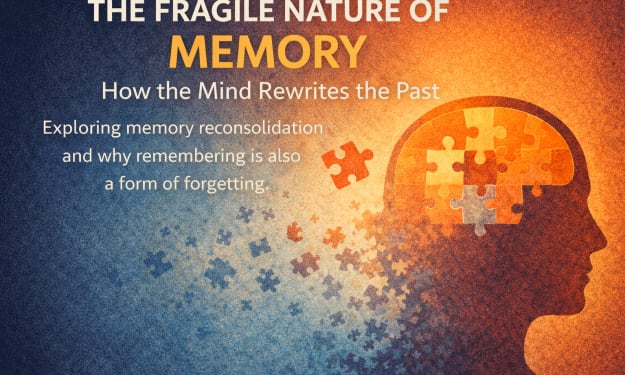
The Fragile Nature of Memory: How the Mind Rewrites the Past
We often view memory as a recording device. Something happens, and the brain stores it. Later, we recall it unchanged, like opening a file. Psychology presents a different picture. Memory is not fixed; it is fluid, reconstructive, and surprisingly fragile. One interesting aspect of cognitive psychology is memory reconsolidation, which is the process that alters our memories every time we recall them. This instability is not a flaw; it shows how our minds adapt, protect themselves, and reshape our identity over time.
By Kyle Butlerabout a month ago in Psyche
When Thinking Feels Like Action
There is a particular satisfaction that comes from understanding something clearly after wrestling with it for a long time. The mind settles. Tension releases. Pieces line up. In that moment, it can feel as though real movement has occurred, as though something meaningful has been accomplished. That feeling is not imagined. Cognitive resolution is a real event. The danger appears when that internal resolution is quietly mistaken for external change, and thinking begins to substitute for action rather than prepare the way for it.
By Peter Thwing - Host of the FST Podcastabout a month ago in Psyche
What fentanyl users want you to know. Top Story - February 2026.
There are dozens of people at Fusion Studios, the homeless hotel in Denver where I live, who use fentanyl. But even hardcore meth users judge them. The fentanyl users are the most stigmatized group in the building.
By David Heitzabout a month ago in Psyche
The Quiet Voice Inside
Maya often felt tired even when she had done nothing physically exhausting. Her body was fine, but her mind was always busy. Thoughts moved quickly—worries about the future, memories from the past, and questions that never seemed to have clear answers. She smiled in front of others, but inside her head, there was constant noise.
By Sudais Zakwanabout a month ago in Psyche
How Alcohol Detox Programs Work in North Carolina Near You. AI-Generated.
Alcohol dependence affects both physical health and emotional wellbeing, making it difficult to stop drinking without support. For many individuals, the first step toward recovery is alcohol detox. Detox programs help the body safely adjust to the absence of alcohol while managing withdrawal symptoms in a structured, medically supervised environment.
By Jordan Blakeabout a month ago in Psyche
Why Ignoring Weed Addiction Signs Can Delay Recovery. AI-Generated.
Marijuana is often viewed as harmless or non-addictive, which can make it easy to overlook when use becomes problematic. However, for some individuals, weed use can evolve into dependence that affects mental health, motivation, relationships, and daily functioning. When early warning signs are ignored, recovery can be delayed, and challenges often become more difficult to address over time.
By Jordan Blakeabout a month ago in Psyche
The Call You Don’t Remember Making. AI-Generated.
The phone rang at 3:11 a.m. Not a notification. Not an alarm. A real call. Omar stared at the screen through half-closed eyes. Unknown Number. He almost ignored it—almost—but something about the timing felt deliberate, like the call had waited for him to wake up before ringing.
By shakir hamidabout a month ago in Psyche
Addiction Recovery Guide. Breaking Free & Staying Resilient.
Being addicted to either something and/or someone is more common than you think. It is commonplace and natural to think of drugs, food and drinks (mainly the alcoholic variety) when it comes to addictions; yet people can be addicted to a myriad of substances, people, and circumstances. What starts as an obsession breeds an addiction.
By Justine Crowleyabout a month ago in Psyche