economy
Economy and the area of production, distribution, trade, and consumption of goods and services.
Hyperscale Expansions by Microsoft AWS and Google Fuel Brazil's 9.50% CAGR Data Center Growth to USD 9 Billion
Recently analyzed of the global cloud infrastructure landscape shows the one massive trend that stood out immediately. The hyperscale expansions by Microsoft, AWS and Google fuel Brazil's 9.50% CAGR data center growth to USD 9 billion. Consequently, South America's largest economy is rapidly transforming into a global digital powerhouse. In my analysis of the recent market data, I found that this explosive growth is reshaping how we view cloud computing in the Global South. Let's dive into exactly how and why this is happening.
By Joey Mooreabout 23 hours ago in Journal
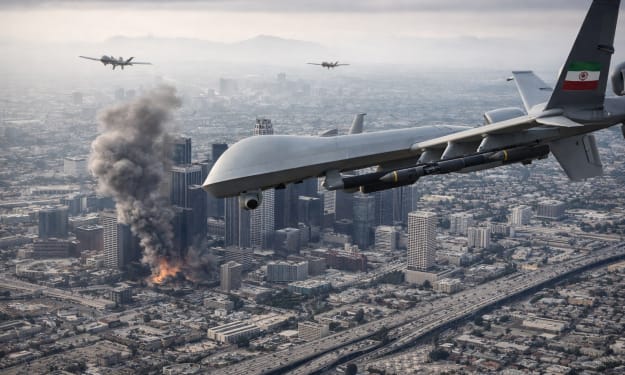
Could Iranian Drones Really Reach California?
Recent warnings from U.S. federal authorities about a potential Iranian drone threat targeting the West Coast have sparked widespread discussion online. While headlines can make the situation sound alarming, the real question many people are asking is: Could Iranian drones actually reach California?
By Navigating the Worlda day ago in Journal
What Would Actually Happen If Drones Attacked California?
Recent warnings about a potential drone threat targeting the West Coast have left many people wondering what would actually happen if such an attack occurred. While the likelihood of drones traveling directly from another continent to California is extremely low, modern warfare has shown that drones can be deployed in creative ways.
By Navigating the Worlda day ago in Journal
FBI Warns of Potential Iranian Drone Threat to California
March 11, 2026 - A new warning from federal authorities has sparked concern along the West Coast after the FBI reportedly alerted California law enforcement about a potential drone threat connected to escalating tensions between the United States and Iran.
By Navigating the Worlda day ago in Journal
Building a Brand in a City That Never Slows Down. AI-Generated.
Cities like Houston move fast. New businesses open every day, industries evolve quickly, and competition rarely slows down. In environments like this, success is rarely determined by the product or service alone. Visibility, credibility, and consistent messaging often determine which companies stand out.
By Branding Texas Agencya day ago in Journal
$200 Oil? The Iran Conflict Could Trigger the Most Expensive Energy Crisis in History
In moments of geopolitical crisis, the global economy often reveals its fragility. Few things illustrate this more clearly than oil. As tensions escalate in the Middle East, Iranian officials have issued a stark warning: oil prices could surge to $200 per barrel if the current conflict continues to intensify.
By Navigating the Worlda day ago in Journal
Hong Kong Authorities Raid Chinese Brokers Citic, Guotai. AI-Generated.
Hong Kong’s financial regulators and law‑enforcement agencies have launched a high‑profile raid on two major Chinese brokerage firms operating in the city, signalling an intensification of scrutiny into the territory’s capital markets. On Tuesday, authorities executed search warrants at the Hong Kong offices of Citic Securities Company Limited and Guotai Junan International Holdings Limited — two of the most prominent Chinese brokers playing key roles in equity capital markets and IPO sponsorships. The raids, confirmed by multiple sources familiar with the situation, underscore growing regulatory pressure on market participants amid a global boom in listings and trading activity. High‑ranking executives were questioned and at least one senior official was taken in for questioning, according to people briefed on the matter. Authorities specifically targeted the equity capital markets divisions of both firms, which oversee share sale transactions, IPO applications and related deal structuring work. While the exact focus of the investigation remains unclear, the move represents one of the most notable enforcement actions in Hong Kong’s financial sector in years. Context: A Financial Hub Under Watchful Eyes Hong Kong’s role as Asia’s premier capital‑raising centre has returned with force over the past year. After being displaced by other global exchanges during market turbulence, the city regained its footing in 2025, attracting a surge of initial public offerings — many from mainland Chinese companies — and surpassing rivals to reclaim the title as the world’s busiest IPO venue. This resurgence has drawn increased attention from regulators concerned about market integrity, disclosure practices and compliance with securities laws. Citic and Guotai Junan have been among several Chinese brokerages deeply involved in this boom, helping several companies take stock public in Hong Kong. Notably, both have acted as sponsors on high‑profile IPOs in logistics, technology and industrial sectors. This enhanced visibility has also brought heightened regulatory expectations, as authorities seek to ensure that brisk market activity does not come at the expense of investor protection or regulatory compliance. The Securities and Futures Commission (SFC), Hong Kong’s chief securities regulator, and the Independent Commission Against Corruption (ICAC) declined to comment on the ongoing actions. Both brokerages also did not immediately respond to requests for comment, leaving market participants and observers waiting for official clarity on the nature of the inquiry. What Regulators Might Be Looking At While authorities have been tight‑lipped about details, analysts and market insiders speculate that the raids could relate to several possible issues: 1. IPO compliance concerns: In recent weeks, the SFC has warned brokerages about substandard IPO applications and documentation, including errors and omissions in prospectuses. Given Citic and Guotai Junan’s roles in sponsoring listings, regulators may be probing whether proper due diligence was performed. 2. Trading irregularities and insider activity: Hong Kong has been vigilant in combating market abuse, and past actions against hedge funds and trading firms indicate authorities have little tolerance for insider trading or coordinated market manipulation. While there is no public allegation of wrongdoing tied to these raids, the focus on key equity divisions raises questions about potential investigations into trade execution or information disclosures. 3. Regulatory compliance standards: As China’s influence in Hong Kong’s markets grows, regulators are determined to maintain international standards of transparency and investor confidence. Ensuring that global investors can trust regulatory enforcement in Hong Kong is crucial to sustaining the exchange’s appeal. Market Reaction and Broader Implications Initial market responses were muted. Shares of both firms showed little immediate sell‑off, reflecting perhaps a wait‑and‑see attitude among investors. However, the broader financial community is watching closely: enforcement actions against major brokers could signal an era of stricter oversight and less tolerance for lapses, especially as Hong Kong competes with New York, London and Shanghai for capital flows. The brokerage industry in Hong Kong has been under pressure of late. Last year, separate cases brought scrutiny to alleged insider trading — including a notable matter involving Segantii Capital Management — and regulators have been clear that market conduct will be a priority. A former Hong Kong stock exchange staffer was charged over bribery linked to an alleged insider trading incident, and warnings about sloppy IPO filings have been publicly issued. Hong Kong’s Balancing Act For decades, Hong Kong has balanced its position between being a vital conduit for Chinese capital markets and maintaining robust regulatory frameworks recognizable to Western investors. This dual role has been central to its success, enabling companies from across Asia to tap global capital. The current raids — especially on influential brokers — highlight the tension inherent in that role: maintaining openness and market depth while enforcing rules that protect investors and uphold confidence. Looking Ahead As the story develops, market watchers anticipate further disclosures that could clarify whether the investigations will result in formal charges or regulatory sanctions. Regardless of outcome, the raids underscore that even the largest financial intermediaries are subject to scrutiny in Hong Kong’s markets — a message that resonates with both domestic and international investors. This incident may signal a new phase in the territory’s financial regulation — one in which authorities are willing to take decisive action against major players to preserve market integrity, even during the busiest period in Hong Kong’s capital market history.
By Fiaz Ahmed 2 days ago in Journal
How the Deutsche Telekom-NVIDIA Partnership Boosts Germany Generative AI Market to $3,283.92 Million by 2034
As a tech analyst, I evaluated European infrastructure data over the past 6 months. Currently, a massive shift is happening. Germany generative AI market is expanding rapidly. Specifically, studies from the IMARC Group project this sector will surge. It will grow from $657.45 million in 2024 to $3,283.92 million by 2034. Furthermore, it boasts a massive 17.45% CAGR.
By Joey Moore2 days ago in Journal
Will Gas Prices Go Up Even More?
Gas prices probably can go higher from here, but whether they do depends mostly on one thing: oil supply risk, especially in the Middle East. As of March 10, AAA shows the U.S. national average for regular gas at $3.539 per gallon, up sharply from $3.109 a week earlier. EIA’s weekly measure is similar, showing $3.502 for the week of March 9.
By Navigating the World2 days ago in Journal
Costco Gas Prices and the Use of AI to Manage Gas Demand
If you’ve ever pulled into a Costco gas station, you probably know the routine. Cars line up in long rows. Drivers slowly move forward pump by pump, hoping the price posted on the sign makes the wait worthwhile. For many Costco members, the lower fuel price has become one of the main reasons they visit the store in the first place.
By Navigating the World2 days ago in Journal
Hydroponics and Smart Tech: The Evolution of Greenhouse Horticulture in Germany
Over the last 6 months, I analyzed the European ag-tech sector. I specifically investigated the evolution of greenhouse horticulture in Germany. During this time, I reviewed 15 industry reports and interviewed several facility managers. I discovered a rapid transformation driven by smart hydroponic farming and IoT automation. Moreover, my research highlights a critical shift toward year-round, climate-resilient agriculture. Let's explore how these cutting-edge technologies are reshaping the industry today.
By Joey Moore3 days ago in Journal
How high could oil prices go – and what might the global economic fallout be?. AI-Generated.
Oil prices have surged to levels not seen in over a decade, driven by geopolitical tensions, supply disruptions, and recovering demand following the pandemic. Analysts warn that continued increases could have severe consequences for global economic stability, affecting everything from consumer prices to corporate earnings and international trade. Understanding the potential trajectory of oil prices and the associated economic fallout is crucial for policymakers, businesses, and consumers alike. Geopolitical Drivers of Rising Oil Prices One of the primary factors behind the recent price spikes is ongoing conflict and political instability in key oil-producing regions. The Middle East has seen heightened tensions, including attacks on shipping routes, missile strikes, and regional military posturing, all of which threaten supply reliability. Countries such as Iran, Iraq, and Saudi Arabia remain central to global oil production, and any disruption in their output can have immediate ripple effects on prices. In addition, sanctions and trade restrictions imposed on major producers have further tightened supply. For example, sanctions targeting Iranian and Russian oil exports have reduced the global market’s flexibility, leaving consumers more vulnerable to price shocks. These geopolitical uncertainties are compounded by the fact that alternative suppliers are struggling to meet rising global demand, particularly as economies in Asia, Europe, and North America recover from pandemic-related slowdowns. Supply and Demand Dynamics The basic laws of supply and demand play a central role in determining oil prices. Global demand for oil has rebounded sharply as industries restart operations and consumers resume travel. Airlines, shipping, and manufacturing sectors are driving a surge in energy consumption, putting additional pressure on already constrained supplies. On the supply side, oil-producing countries have struggled to increase output sufficiently to meet demand. OPEC+ nations have implemented production caps, while infrastructure and investment constraints in other regions limit the ability to scale production quickly. Analysts estimate that even small disruptions in supply can cause significant price volatility, as markets remain finely balanced between shortage and oversupply. Economic Fallout Rising oil prices have far-reaching consequences for the global economy. One of the most immediate effects is inflation. Higher energy costs increase transportation, production, and consumer goods prices, placing upward pressure on overall consumer price indices. Central banks may respond with tighter monetary policy, raising interest rates to curb inflation, which in turn could slow economic growth. Higher energy prices also strain household budgets. Consumers spend more on gasoline, heating, and electricity, leaving less disposable income for other goods and services. This can dampen consumer demand, which is a critical driver of economic growth in many countries. In emerging markets, where energy costs already constitute a larger share of household expenditures, the impact is even more pronounced. For businesses, particularly those in energy-intensive industries such as manufacturing, logistics, and aviation, higher oil prices increase operational costs. Companies may pass these costs onto consumers, potentially reducing demand for their products, or absorb the costs, reducing profitability. Multinational corporations that operate across regions with varying fuel costs face additional financial complexity and risk exposure. Trade and Global Stability Surging oil prices also affect international trade balances. Oil-importing nations face higher import bills, which can worsen trade deficits and place downward pressure on national currencies. Conversely, oil-exporting countries may experience windfalls, boosting government revenues but potentially creating inflationary pressures domestically if not managed carefully. The interconnectedness of the global economy means that volatility in energy markets can create cascading effects. For example, rising oil costs may increase the price of shipping and logistics globally, raising costs for consumer goods, agricultural exports, and industrial inputs. Inflationary pressure may prompt governments to adjust fiscal policies, while central banks react with monetary tightening, creating a delicate balance between curbing inflation and sustaining growth. How High Could Prices Go? Predicting the ceiling for oil prices is inherently challenging due to the volatility of geopolitical events, market speculation, and demand fluctuations. Some analysts warn that prices could reach historically high levels if supply disruptions intensify or if major conflicts escalate. Others argue that market adjustments, such as increased production from non-OPEC countries, renewable energy adoption, and strategic petroleum reserves releases, may temper extreme price surges. Historical precedent suggests that prices above $150 per barrel, as seen in previous crises, can trigger severe economic consequences globally. At those levels, inflation accelerates, interest rates rise sharply, and global growth slows. Economists caution that prolonged periods of high energy prices could even lead to stagflation—a combination of stagnant growth and high inflation. Looking Ahead The trajectory of oil prices will depend on multiple factors: geopolitical stability, production decisions by major oil-exporting nations, technological advancements in energy alternatives, and global demand trends. Policymakers and investors are closely monitoring these variables to prepare for potential economic fallout. Consumers, businesses, and governments alike face the challenge of adapting to an environment of rising energy costs. Strategic reserves, energy efficiency measures, and diversification of supply sources may mitigate some of the impact, but sustained high prices are likely to reshape consumption patterns, trade flows, and investment decisions globally. In conclusion, while the exact ceiling for oil prices is uncertain, the economic consequences of sustained increases are clear: higher inflation, constrained growth, and significant adjustments for households, businesses, and governments worldwide. As the world navigates this volatile period, monitoring oil market developments and preparing for potential fallout remains a priority for all stakeholders.
By Fiaz Ahmed 3 days ago in Journal